
Selecting Rod Ends for Exhaust Bypass Valves
An exhaust bypass valve linkage sits between hot exhaust hardware and a cooler actuator. Choose the rod end by how hot each joint runs, then by salt exposure, thread and swing angle.
What the Rod Ends Do on an Exhaust Bypass Valve
An exhaust bypass valve, such as a turbo wastegate or an exhaust cutout, opens a second path around the turbine or the silencer. A flap on a shaft does the work. An actuator turns that shaft through a short arm and a link.
The rod end is the swivel joint at the end of that link. It carries push and pull from the actuator to the arm, and it allows for the arc the arm sweeps and for small misalignment between the two brackets. A rigid joint in that place would bind or bend the actuator rod.
The joint matters because the valve sits beside hot exhaust and the whole car shakes it. Patents on turbocharger linkages note that the ball and race of a rod end are exposed to heat from nearby hardware, and some add heat shields for that reason. Play in the joint becomes lost valve travel, so the flap opens late or does not close fully. On a modified car, road salt and spray add corrosion.
Choosing the Rod End by Heat Zone and Salt
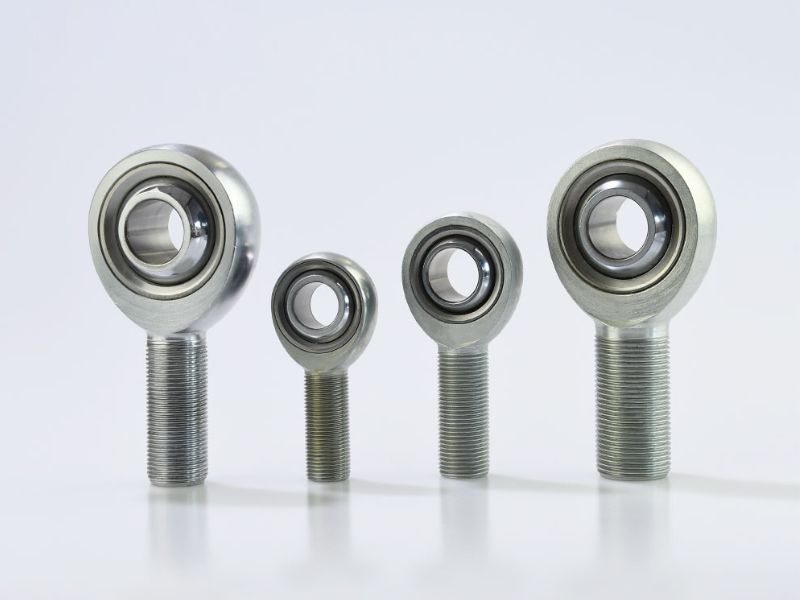
Start with where each joint sits. A link often runs from a hot bracket near the valve to a cooler actuator, so the two ends may need different joints. A PTFE liner has a lower temperature ceiling than a metal-to-metal joint. Near the valve, a CM/CF rod end with no liner is the safer start. Check any liner against the temperature you measure.
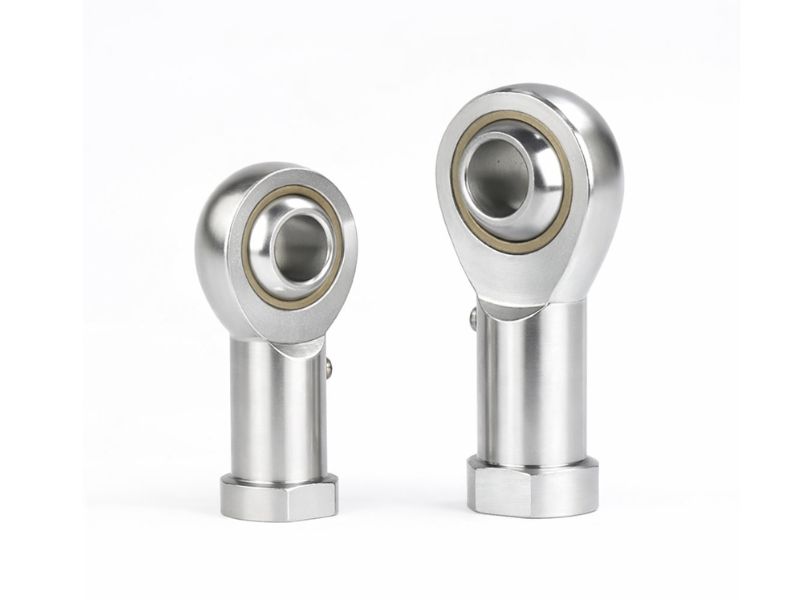
On the cooler end, a JMX/JFX rod end with a PTFE liner runs without grease. A bronze-race SATK/SITK rod end carries more load, but it needs a grease fitting that someone can reach, which is rare under a car. XM/XF has a nylon race and suits light, dry, cool duty only.
The standard housing is 304 with a 440C ball. Choose 316 where the car sees winter road salt or coastal air, and 17-4PH where the load calls for a stronger housing. Check the bracket, bolt and jam nut as well, because a stainless rod end on rusting steel still ends up seized.
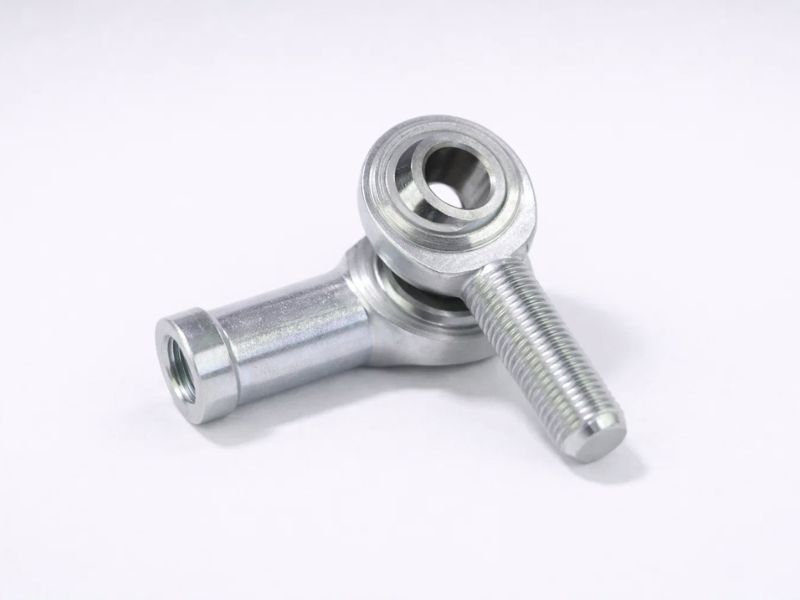
Choose male or female thread to match the arm or the actuator rod. Fit a left-hand thread at one end of the link, and the valve preload can be set by turning the link while both joints stay attached. Add jam nuts to hold the setting, and use anti-seize on the threads, because stainless threads can gall and heat cycling makes it worse. Standard rod ends tilt about 10 to 15 degrees, extended versions about 25, so check the arm sweep.
Recommended Series

Tell Us Where the Joint Lives
Send the bore, thread, bracket width, arm sweep, and the heat and salt exposure at each end of the link. A photo or drawing of the old rod end also helps us match the series.