Motion & Linkage
Stainless Steel Universal Joints
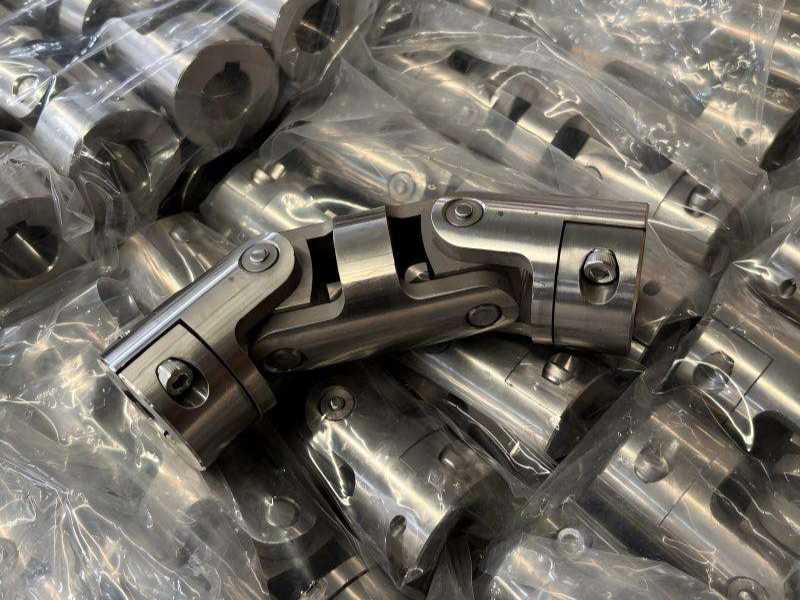
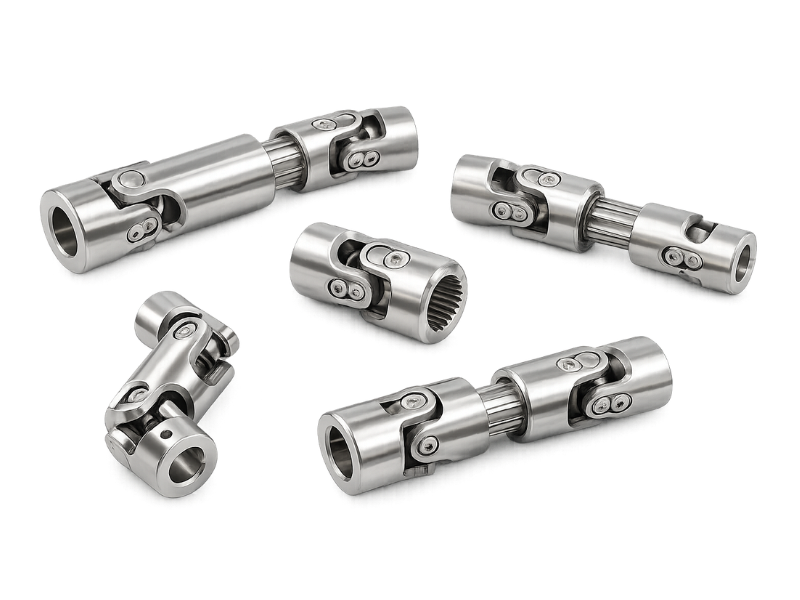
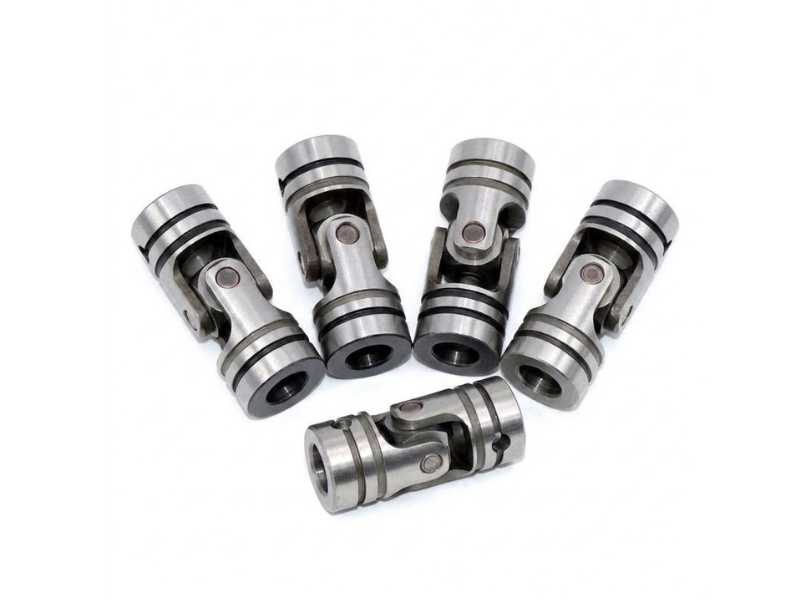
304 and 316L stainless steel universal joints (cardan joints / u-joints) — single, double and telescopic types. Needle bearing and pin-and-block configurations. Bore 6 mm–50 mm. Max operating angle 45°. Food-grade, marine and industrial. Custom bore, keyway and assembly.
- ISO 9001 Certified
- Custom OEM Solutions
- Fast Global Shipping
- Technical Support


Product Range
Types of Stainless Steel Universal Joints
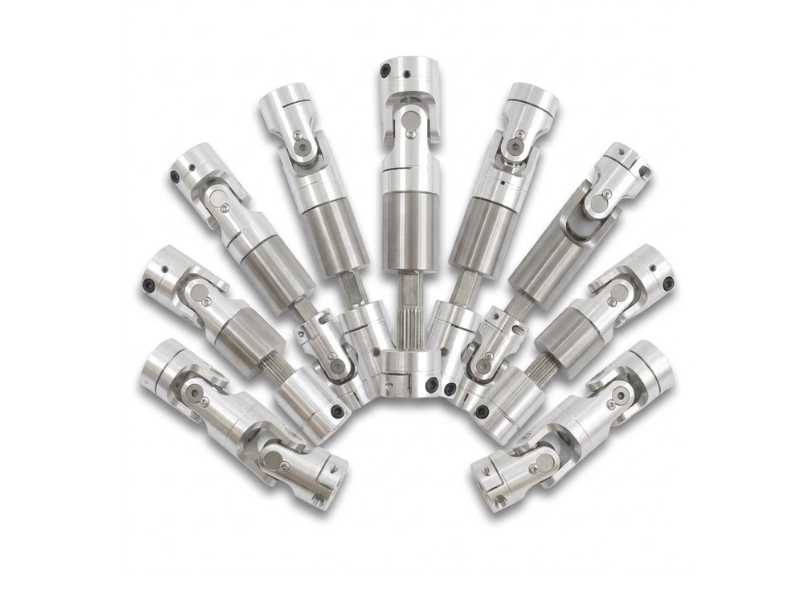
Profab Machine manufactures stainless steel universal joints in 304 and 316L as standard. 316L throughout for yokes, cross pins, and fasteners where the environment demands it. Operating angles, torque ratings, and bore configurations are confirmed against your application before production begins.


Single Universal Joint
Max 45° (P&B)
Max 30° (needle)
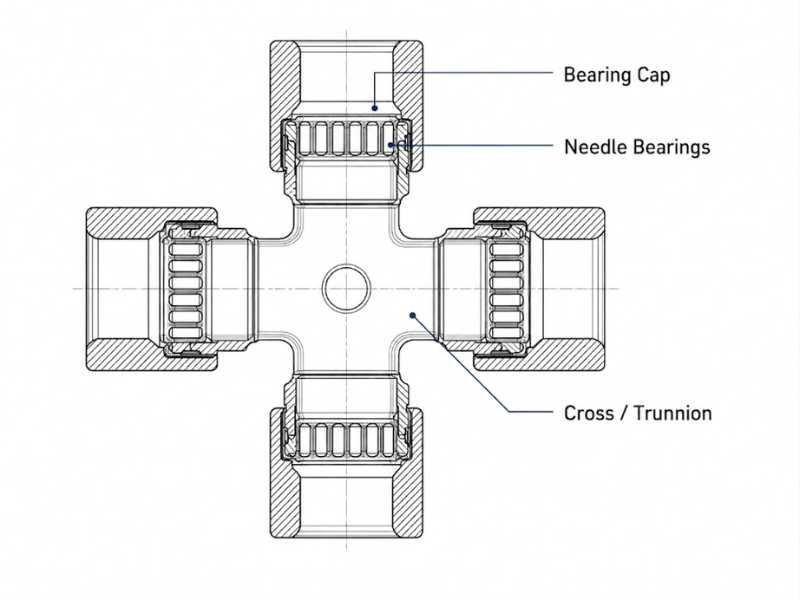
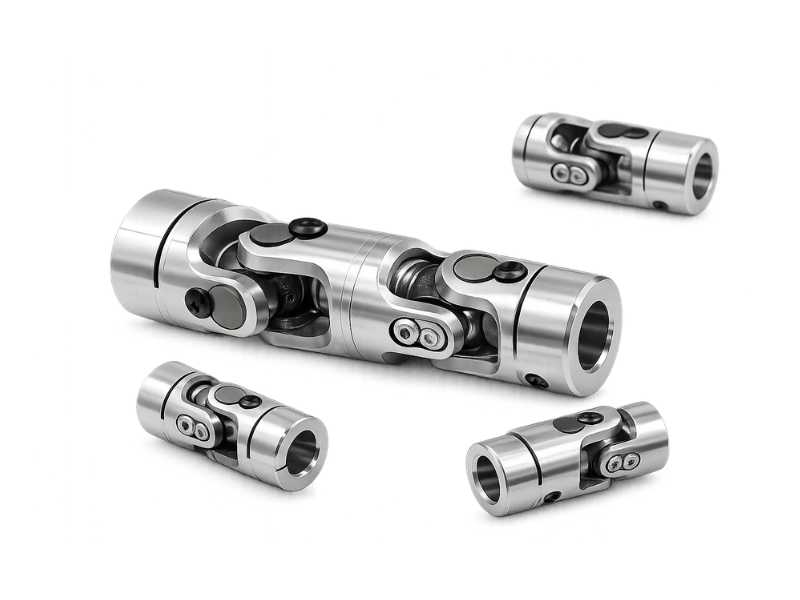
One cross/spider connecting two yokes. The standard configuration for the vast majority of power transmission and motion control applications. Transmits torque through a single angular bend of up to 45° (pin-and-block) or 30° (needle bearing). Above 15°, it can cause vibration and bearing fatigue in precision drives. For applications above 15° where constant velocity output is required, specify a double universal joint.


Double Universal Joint
Near-Constant Velocity
30°–45°
Two single u-joints connected in series through a centring yoke (also called a centre block or intermediate yoke). Double u-joints are the correct specification for steering columns, parallel offset shaft arrangements, and any drive requiring smooth output at operating angles above 15°. The combined length is longer than a single joint, so confirm the axial envelope before specifying.


Telescopic Universal Joint
Axial float
Steering column
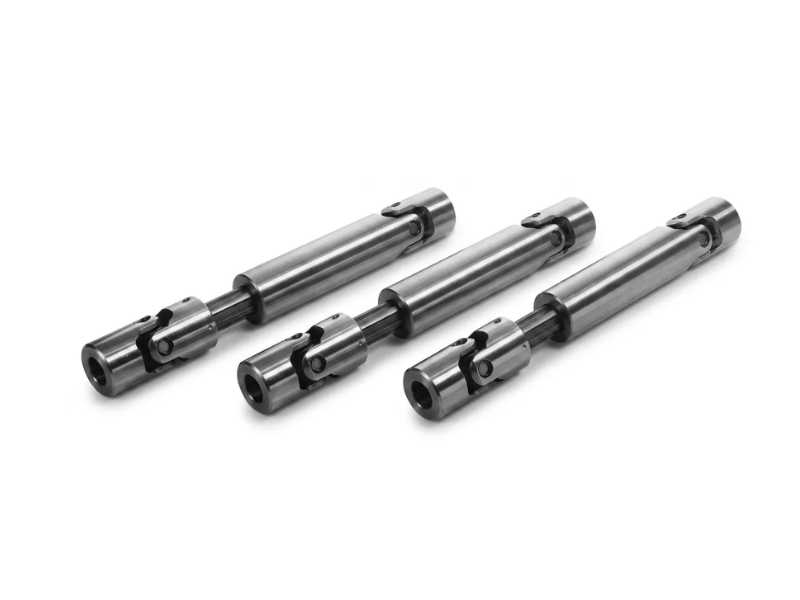
A telescopic universal joint combines a sliding spline with a single or double cardan joint. The spline absorbs axial length changes between the driving and driven shafts. This makes it suitable for steering columns, PTO drivelines, and applications where thermal expansion or mounting float causes shaft length variation. Available in stainless steel with sealed needle bearings or pin-and-block configuration. Custom spline lengths and bore sizes on request.
Size & Torque Reference
Standard Bore Sizes & Torque Ratings
Torque values below are for 316L stainless single joints at the nominal operating angle (15°). Torque capacity decreases as operating angle increases. At 30° it is approximately 70% of the rated value; at 45° (pin-and-block only) approximately 50%. Always confirm torque at your actual operating angle.
| OD (approx.) | Standard Bore Range | Max Torque (at 15°) | Max RPM (Needle) | Max RPM (Pin & Block) | Bearing / Construction Type |
|---|---|---|---|---|---|
| 12 mm | 4–6 mm | 0.8 N·m | 3,600 | 1,500 | Needle Bearing |
| 16 mm | 4–8 mm | 1.8 N·m | 3,600 | 1,500 | Needle Bearing |
| 22 mm | 6–12 mm | 4.5 N·m | 3,000 | 1,200 | Needle Bearing / Pin & Block |
| 28 mm | 8–16 mm | 9.0 N·m | 2,500 | 1,000 | Needle Bearing / Pin & Block |
| 35 mm | 10–20 mm | 18.0 N·m | 2,000 | 800 | Pin & Block (Standard) |
| 50 mm | 14–28 mm | 42.0 N·m | 1,500 | 600 | Pin & Block |
| 75 mm | 20–40 mm | 120.0 N·m | 1,000 | 400 | Pin & Block |
| Custom | 3 mm to 50+ mm | Per calculation | Per spec | Per spec | Custom per application |
Operating Angle Selector
Operating Angle & Joint Type Selector
The operating angle is the angle between the input and output shaft axes — not the total deflection of the shaft. It determines velocity variation at the output, bearing load, and service life. Over-specifying the angle causes rapid bearing failure.
| Misalignment Angle | Application & Motion Type | Recommended Joint & Bearing Selection |
|---|---|---|
| 0° – 5° | Shaft alignment correction / High life requirement | Single Joint (Needle or Pin-and-Block) |
| 5° – 15° | Standard angular misalignment / Continuous drive | Single Joint — Needle Bearing |
| 15° – 30° | High angular misalignment / Standard transmission | Single Joint (Needle Bearing or Pin-and-Block) |
| 15° – 30° | High misalignment + Near-Constant Velocity (CV) | Double Joint (Requires equal operating angles on input/output yokes) |
| 30° – 45° | Extreme angular misalignment | Single Joint — Pin-and-Block only (Low speed & ~50% torque derating apply) |
| 45° – 90° | Steering linkages / Parallel offset shafts | Double Joint (45° max per joint — Low-speed / Manual operation only) |
| > 90° | Multi-axis or specialized linkage drives | Custom Design — Consult Profab Machine Engineering Support |
Material Specification
Choosing the Right Grade
Most catalogue stainless u-joints are 303. Most food plant and marine specifications call for 316L. Both are described as “stainless.” One corrodes in a CIP washdown environment within twelve months. The other doesn’t.
303 Stainless
AISI 303 is the most widely machined free-cutting stainless grade. It is suitable for indoor, low-humidity applications with no chloride exposure. It is not suitable for washdown food equipment, marine service, or any environment with regular chloride or acid exposure.
Not recommended
316L Stainless
Profab stainless U-joints are used in food processing, pharmaceutical, marine, and outdoor industrial environments. The 2–3% molybdenum content raises the PREN value to ≥24, improving resistance to chloride pitting at the cross pin surface and yoke bore in washdown and seawater service.
Food · Marine · CIP · Chemical
17-4PH
Tensile strength up to 1,310 MPa in H900 condition — roughly three times that of annealed 316L. Corrosion resistance is comparable to 304 stainless steel. This grade is suitable for high-strength applications in non-chloride environments. Do not specify 17-4PH for marine or saltwater service. Use 316L for those conditions.
Medical · Aerospace · Robotics
Custom Engineering and Material Selection for Industrial Universal Joints
Standard off-the-shelf drive components often fail under unpredicted load spikes, extreme operating angles, or aggressive environments. Profab eliminates early fatigue by offering precision-engineered custom universal joints configured precisely to your torque density and thermal tolerances. Rather than forcing your equipment design around stock catalogs, our team customizes yoke profiles, hub configurations, and lubrication channels to integrate seamlessly into your system architecture.
Material choice dictates field lifespan. We source high-grade alloys, heat-treated steel, and corrosion-resistant 304 or 316L stainless steel depending on your specific operating conditions. For ultra-clean or high-wear environments, we apply advanced surface treatments such as nitriding, electropolishing, or specialized solid lubricants. By matching raw alloy chemistry and pin-block heat treatment to your duty cycle, Profab delivers universal joints that achieve maximum fatigue resistance without unnecessary over-engineering costs.


Heavy-Duty Applications of Profab Universal Joints Across Industries
Profab high-torque universal joints are built to deliver consistent mechanical power across demanding industrial environments where misalignment is unavoidable. In industrial automation, packaging lines, and conveyor systems, our precision pin-and-block universal joints provide compact motion transfer with zero backlash under continuous reversing loads. Their exceptional structural rigidity ensures steady operation through millions of working cycles.
For harsh working environments including chemical processing, food handling, and offshore equipment, our stainless steel universal joints offer reliable resistance to washdowns and corrosive chemical exposure. Whether installed in heavy agricultural machinery steering linkages, high-angle drive shafts, or precision medical positioning equipment, Profab double and single universal joints maintain torque integrity and operational stability under heavy shock loads and high operating angles.


Why Profab
Your Reliable U-Joints Supplier
01
Complete Stainless Steel Construction
We manufacture stainless steel universal joints using corrosion-resistant materials throughout the assembly—not just the yokes. Material combinations are selected according to your operating environment, helping extend service life in food processing, marine, and chemical applications.
02
Custom Machined to Your Drawing
From bore diameter and keyways to splines and special hub designs, every universal joint can be manufactured to your drawing. Our CNC machining capability ensures precise fit without compromising your assembly design.
03
Application-Based Joint Selection
Selecting the wrong joint type can shorten service life dramatically. Our engineers help confirm operating angle, torque, RPM, and bearing type before production, ensuring the right single, double, or telescopic universal joint for your application.


Build a Complete System
Universal Joint Kits & Hardware
Complete your driveline with Profab Machine’s stainless steel U-joint kits—combining precision joints with yokes, drive shafts, needle bearing and flange adapters. Built as an all-in-one package, they deliver zero-maintenance reliability and superior corrosion resistance in severe environments.
Stainless Steel Yokes
Splined Drive Shafts
Cross & Needle Bearing Rebuild Kits
Flange Adapters
FAQ
Common Questions
Not seeing your question? Email us at [email protected] and we typically reply same day.
What is the difference between a single and a double universal joint?
A single u-joint has one cross/spider connecting two yokes. It handles angular misalignment up to 45° (pin-and-block) or 30° (needle bearing). A double universal joint places two single joints in series through a centre yoke. When correctly phased, the velocity fluctuations cancel each other exactly, producing constant-velocity output at combined angles up to 90°.
What is the maximum operating angle for a stainless steel u-joint?
For needle bearing single joints, the maximum operating angle is typically 30°. Double joints achieve a combined maximum of 90° (45° per joint), which covers virtually all parallel offset and steering column applications.
What is the difference between needle bearing and pin-and-block universal joints?
Needle bearings: rolling contact between needle rollers and the cross pin. Lower friction, higher speed capability (to 3,600 RPM), lower operating torque, sealed against contamination. Maximum operating angle 30°. Best for high-speed precision drives, food plant washdown service, and automation applications.
Pin-and-block (also called block-and-pin or solid block): sliding contact between a hardened block and the cross pin. Higher torque capacity for a given joint size, better shock load resistance, can operate to 45° angle. Requires periodic lubrication or a lubricant-retaining boot. Best for low-to-medium speed high-torque applications.
Do I need a boot cover for my stainless steel U-joint?
Yes, if the joint operates in dust, washdown spray, or abrasive media. A nitrile boot extends bearing life by keeping grease in and contaminants out. In CIP washdown environments, replace boots at 12-month intervals. Profab supplies nitrile boot covers sized to each joint OD.
Related Products
Often Ordered Together
Selection Guide
How to Select a Stainless Steel Universal Joint
Bore Diameter
Match your shaft diameter exactly. H7 tolerance as standard. Available: round, keyway, spline, hex, and square bores.
Operating Angle
Measure the angle between input and output shaft axes. This is not the same as total shaft deflection.
Torque Rating
Use the rated torque at your operating angle, not the peak torque at 0°. Torque derates as angle increases.
Bearing Type
Needle bearing: higher speed (to 3,600 RPM), lower friction, sealed and maintenance-free. Pin-and-block: higher shock resistance, operates to 45°, needs periodic grease.
BLOG
Universal Joint Knowledge Base


Universal Joint vs CV Joint Explained
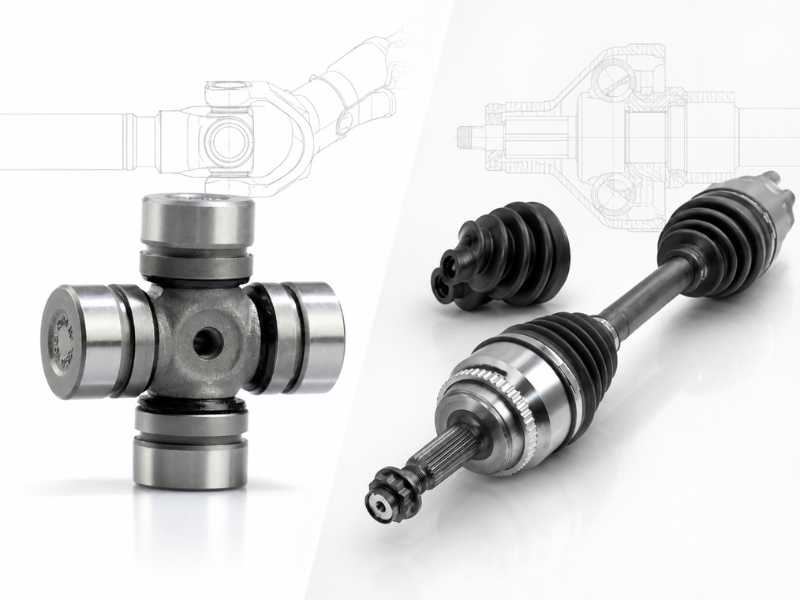
The off-road community calls double cardan shafts ‘CV shafts.’ That’s technically wrong, and the distinction matters when you’re choosing between joint types for a lifted or high-angle application.


2013 Range Rover Sport Universal Joint Guide
Searching for 2013 Range Rover Sport L405 universal joint information will get you the wrong parts. The 2013 Sport is L320, not L405. Here’s the correct drivetrain layout, U-joint count, and the failure point that gets most owners first.


Symptoms of a Bad Universal Joint
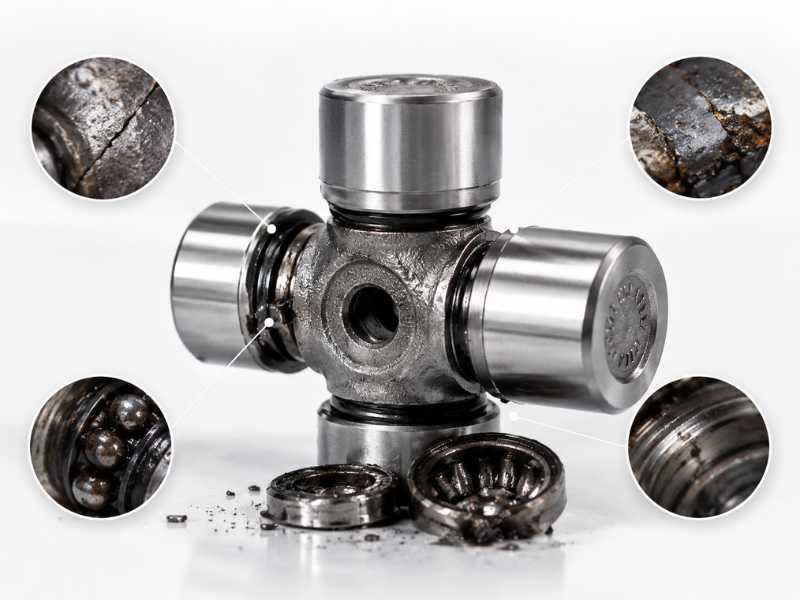
A bad universal joint doesn’t fail suddenly. It announces itself through a predictable sequence of sounds and sensations. Catch it early and you’re replacing one part. Miss it and you’re pulling a driveshaft off the highway.
Factory Direct
Ready to Source Stainless Parts?
If you already have the drawings, please send email to [email protected] directly for an instant quote.
Profab
Request a Quote