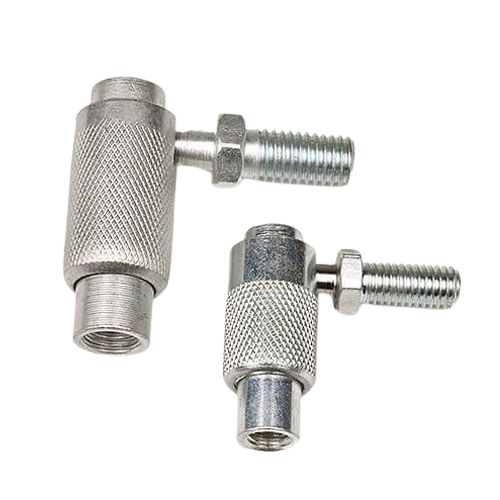
QD Series
- DesignQuick Release with Spring
- Body/Socket304 or 316
- Ball440C standard, 316L or 17-4PH optional
- ThreadLeft/Right Hand
- Size10-32, 1/4-28, 5/16-24, 3/8-24, 1/2-20, Custom
Profab Machine manufactures stainless steel ball joint linkages in QD, ES, QI, and CS series. CNC-machined bodies and studs in 304, 316L, and 17-4PH, with 440C or stainless balls, matched to your thread, retention style, and environment.
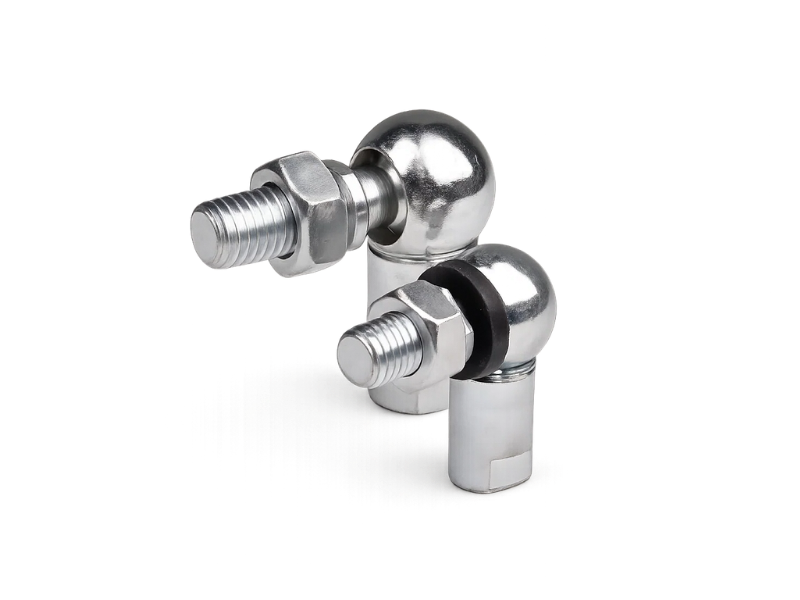
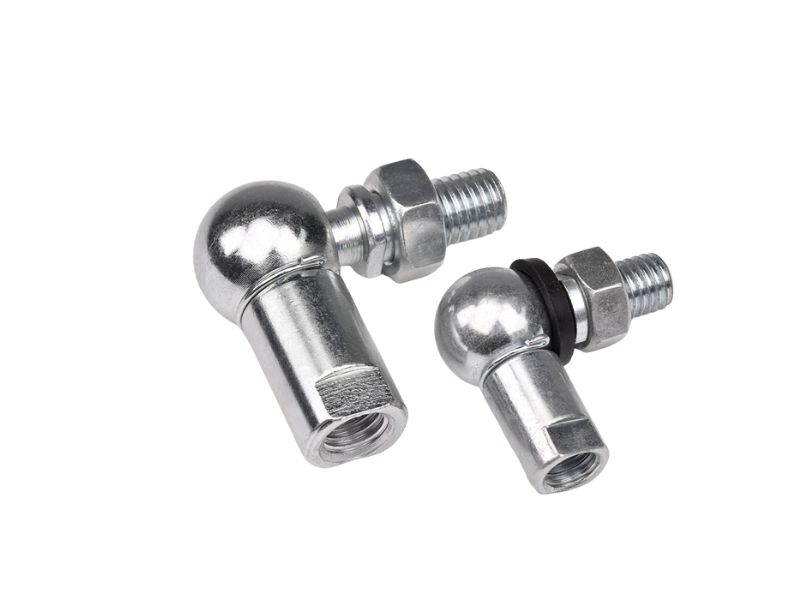
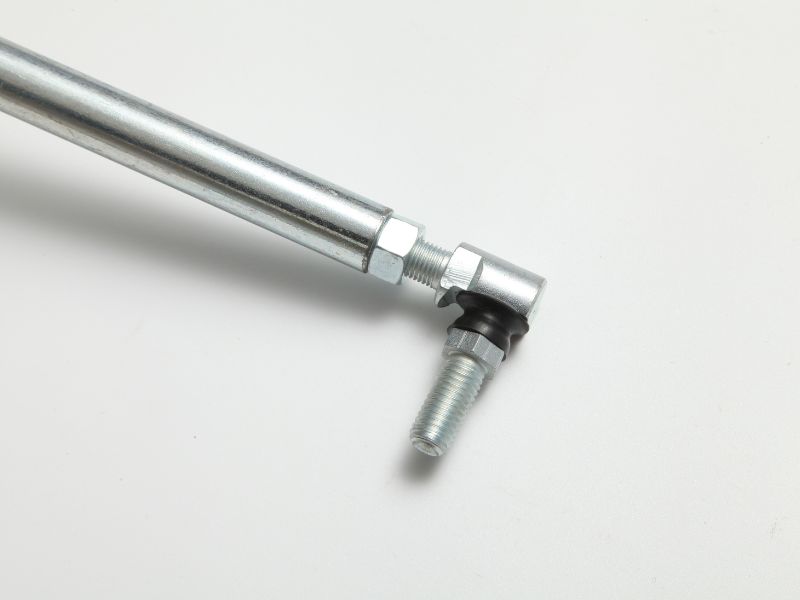
A stainless steel ball joint linkage is a compact ball-and-socket connection: a ball stud seats into a socket housing, supporting loads and transmitting motion between two connected parts while allowing angular movement and accommodating misalignment.
This is a compact ball-and-socket linkage for control and mounting connections. It is not an automotive suspension ball joint, and it is not a through-bore rod end. See Related Products below if you need a rod end instead.
Stainless steel ball joint linkages come in models QD, ES, QI, and CS. These models feature various ball socket types and sizes, providing flexible, durable connections for multiple industries. Profab customizes surface treatment, material, and packaging to your specification.
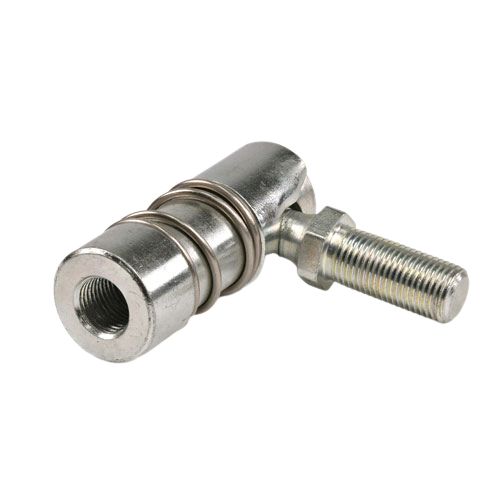
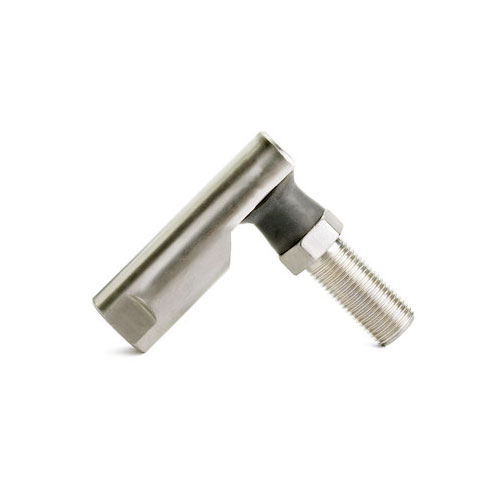
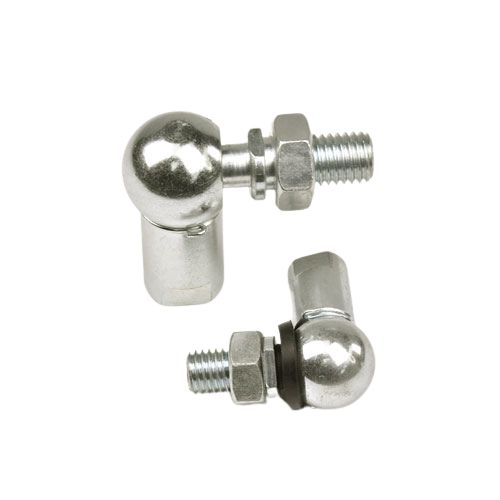
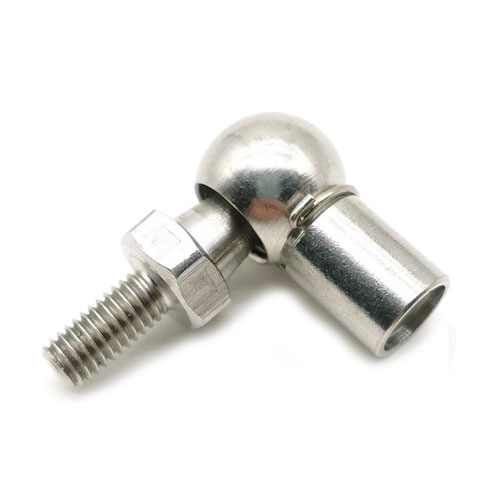
Angled Ball Joint (assembly)
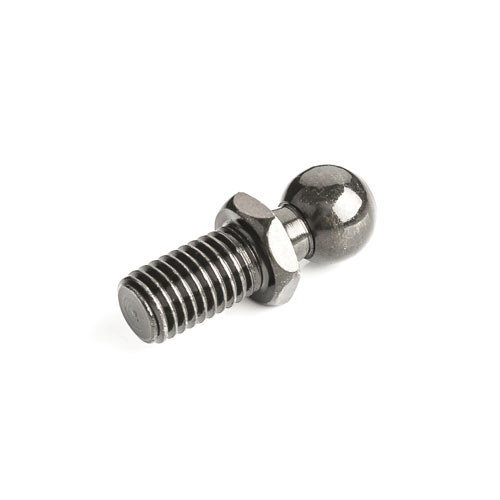
Ball Stud
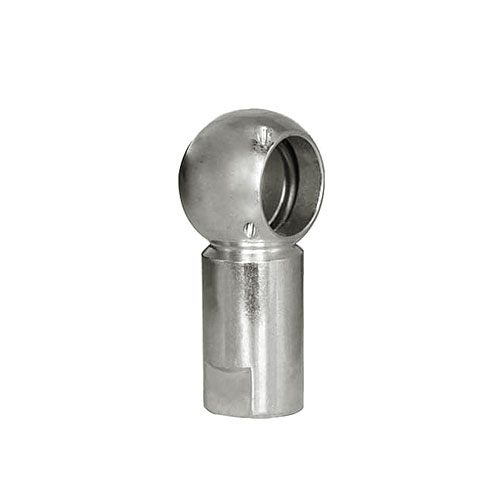
Ball Socket
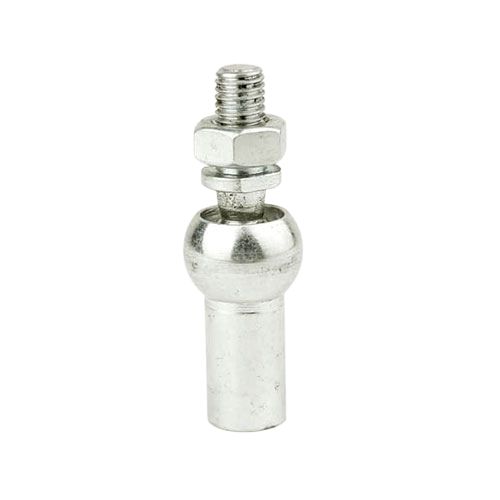
Axial Ball Joints
| Requirement | Recommended Model |
|---|---|
| Frequent tool-free disconnection needed | QD (Quick Release) |
| Outdoor / marine / dusty environment | ES (Rubber-Sealed) |
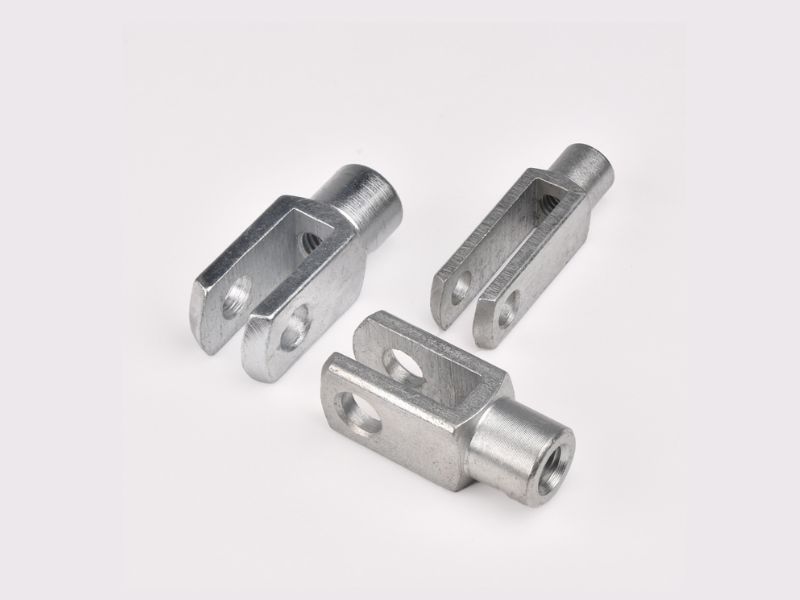
| Pin-through clevis connection | CS (Fork / Clevis) |
| Food zone, CIP washdown | QI + sealing cap, 316L |
| Extreme load / high-cycle applications | CS or QD in 17-4PH H900 |
| Salt spray / marine corrosion | Any series in 316L |
Not sure which model fits your assembly? Describe the load direction, disconnect frequency, and environment in the quote form and we will recommend the right series.
Per DIN 71802, ball joints are available with or without a safety catch clip. Without clip: swivel angle ±18°, ball can be disconnected by pulling beyond the snap-ring retention force. With clip: swivel angle limited to ±15°, but retention force is greatly increased and the ball is much harder to disengage under vibration. Specify the safety catch for applications subject to vibration, shock loads, or reverse loading where unintended disconnection would be a safety risk.
Left-hand (LH) thread ball joints are used in turnbuckle-style assemblies where one end must unthread as the other tightens, allowing length adjustment without disconnecting either end. They are also used in right-hand rotation systems where vibration would loosen a standard RH thread. All four series are available in LH thread on request. Pricing and lead time are confirmed with the quotation.
Standard grade for indoor machinery, automation, and dry or mildly humid environments. Good resistance to cleaning chemicals. Cost-effective for high-volume orders. Not suitable for continuous salt spray or chloride-heavy process environments.
Food Automation Indoor316 / 316L provides higher resistance to chloride-induced pitting and crevice corrosion than 304 stainless steel. Preferred for marine, offshore, washdown, and other corrosive environments requiring improved corrosion resistance.
Marine Chemical PumpsA precipitation-hardened martensitic grade — ≥1,310 MPa tensile strength in the H900 condition, well above 316 at the same cross-section. Used where load rating, not corrosion resistance, is the primary constraint, such as high-cycle or high-load linkages.
High-Load High-CycleProfab manufactures stainless steel ball joint linkages to the specific requirements of each sector — matching material grade, socket series, and safety configuration to the machine, the environment, and the application.
Filling machine linkage arms run through CIP washdown. Sealed QI joints in 316L keep sanitizer out of the socket while the housing stays clean.
Hatch hinges and steering linkages on deck machinery take salt spray all season. QI series joints in 316L with the sealing cap hold the connection through it.
Throttle and shift linkages disconnect in seconds between runs. QD series in 17-4PH survives high-cycle shifts without the housing deforming.
Gripper pivots and end-effector joints cycle short and often. A 440C ball resists the fretting wear that a softer ball would take on in the same link.
The ball in a DIN 71802-style linkage carries the full contact stress of the joint. Profab CNC-turns and grinds standard industrial balls from 440C stainless steel to a precise spherical radius, resisting fretting wear. 440C balls are heat-treated to HRC 58 through Profab's qualified process network before final grinding. In chloride-rich, marine, or chemical environments, the material pairing between a 440C ball and 316L housing should be evaluated carefully — 316L or 17-4PH stainless balls can be specified instead to better match the housing and reduce galvanic pitting risk.
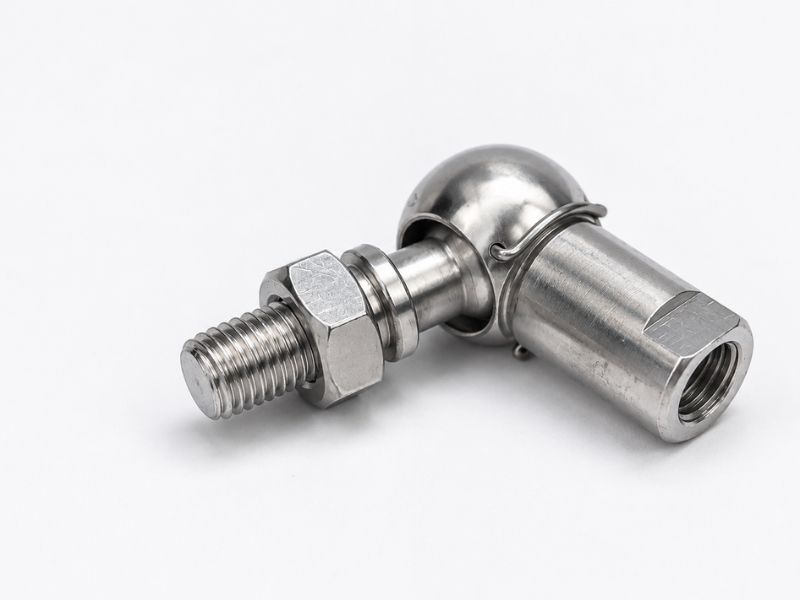
In food processing, the case for stainless is not only corrosion resistance. The snap-ring retention mechanism in a zinc-plated ball joint degrades as the zinc corrodes and the socket contact surface becomes irregular, and retention force can drop below the minimum that keeps the joint engaged during vibration. With a 316L stainless socket, the contact surface stays dimensionally stable across CIP cycles, so properly selected 316L configurations help maintain stable socket geometry and retention performance through repeated washdown. For any link in a filling, packaging, or dosing machine where unplanned disconnection causes product loss or downtime, 316L is the selection — because the retention geometry holds.
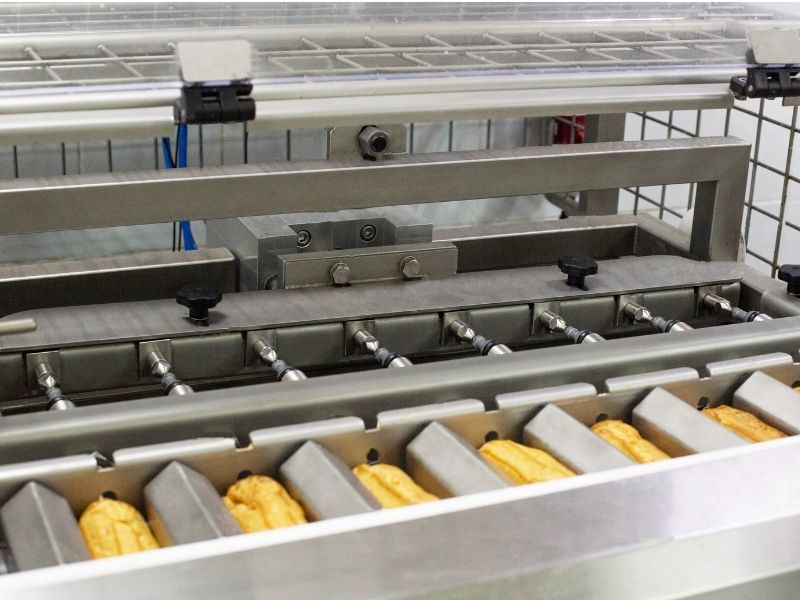
Every ball undergoes in-house CNC grinding with tight spherical radius control, and 440C balls are heat-treated to HRC 58 through our qualified process network — the hardness and surface geometry set the socket retention force and swivel life your linkage depends on.
Thread, ball diameter, and socket bore are checked against your drawing before production, and material grade is confirmed for every 316L and 17-4PH order — documentation is available by arrangement for offshore and food-grade projects.
Standard DIN 71802 dimensions cover M5 to M16 and a range of socket series. Outside that range, our engineering team works from your CAD file, sample part, or dimensional specification to produce custom thread sizes, modified shank lengths, and non-standard socket geometries.
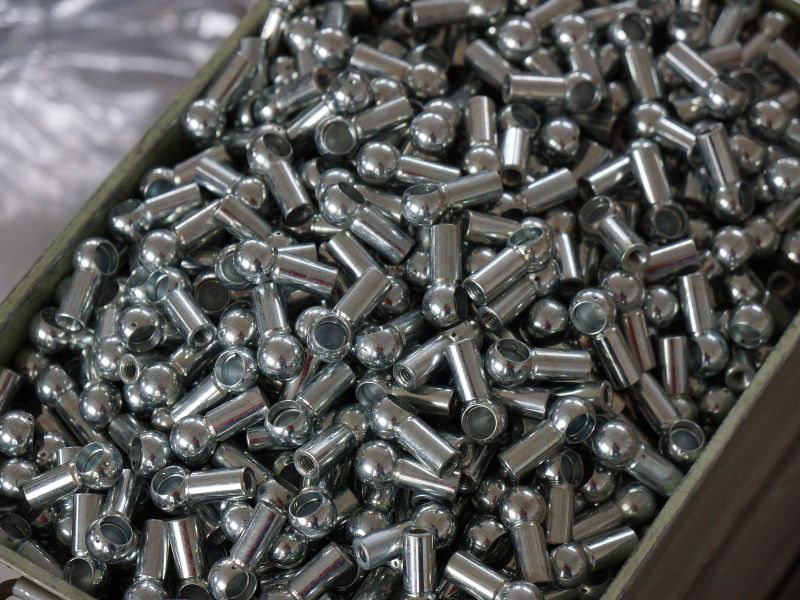
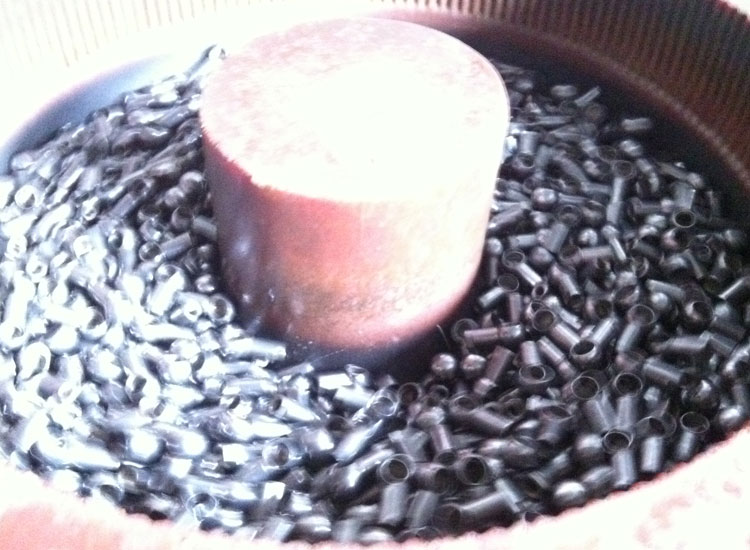
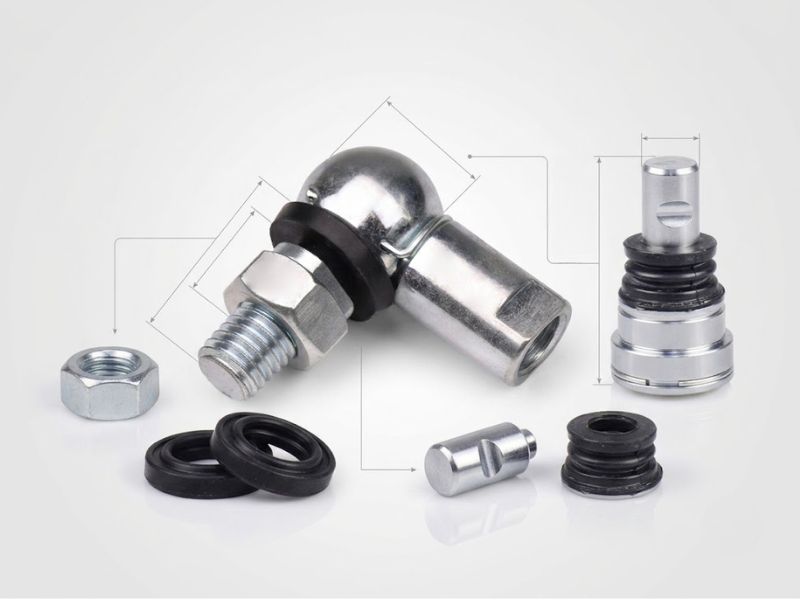
Profab ships matched ball studs and sockets as complete linkages or as standalone replacement components — tell us which part of the assembly you need.
440C, 316L, or 17-4PH ball studs supplied alone to match an existing socket. Send the thread size, ball diameter, and hand to confirm fit.
Socket housings in 304 or 316, with or without safety catch, sold separately when only the socket needs replacing.
Retention hardware for QD and QI quick-release series, sold individually when a worn spring or clip is the only failed part.
Protective caps for CS and sealed QI configurations, specified by series and thread size for washdown or outdoor duty.
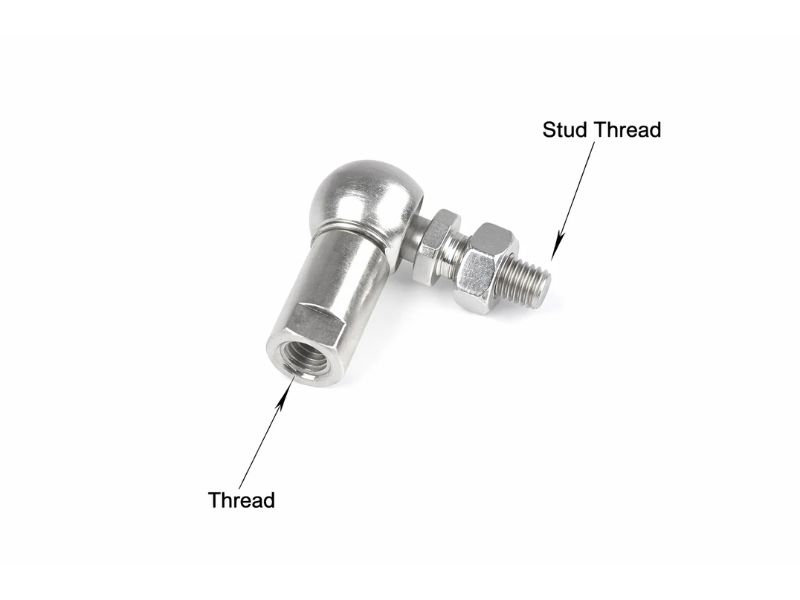
Standard range is M5 to M16 metric coarse. Custom metric fine pitches, imperial UNF/UNC, and non-standard thread forms are available. Specify thread class when the mating component has tolerance requirements tighter than DIN 13 standard.
The threaded stud length determines how much adjustment range is available before the jam nut bottoms out. Extended shank versions are produced to custom lengths for applications requiring more travel adjustment than the standard DIN 71802 shank provides.
Non-standard ball diameters between the DIN size steps are available for applications where the standard snap-ring retention force at the next-larger size exceeds what the mating stud can deliver.
For internally threaded housings, the internal thread can be produced in any metric or imperial pitch the application requires.
| Thread (mm) | Stud Thread (mm) | Thread (inch) | Stud Thread (inch) |
|---|---|---|---|
| M5x0.8 | M5x0.8 | 10-32-2B | 10-32-2A |
| M6x1.0 | M6x1.0 | 1/4-28-2B | 1/4-28-2A |
| M8x1.25 | M8x1.25 | 5/16-24-2B | 5/16-24-2A |
| M10x1.5 | M10x1.5 | 3/8-24-2B | 3/8-24-2A |
| M12x1.75 | M12x1.75 | 7/16-20-2B | 7/16-20-2A |
| M14x1.5 | M14x1.5 | 1/2-20-2B | 1/2-20-2A |
| M14x2.0 | M14x2.0 | 5/8-18-2B | 5/8-18-2A |
| M16x1.75 | M16x1.75 | Custom | Custom |
| Custom | Custom | Custom | Custom |
Passivation is available for every stainless ball joint linkage to remove free iron from machining and restore a uniform chromium oxide layer. For 316L, passivation is particularly important at the snap-ring groove where machining stress concentrates.
Electropolishing removes 20–40 µm of surface material and leaves a micro-smooth, chromium-enriched surface. On ball joint linkage sockets, this reduces the surface roughness that can trap residue near the snap-ring groove — relevant for food and pharmaceutical applications.
Manual or machine polishing to Ra ≤ 0.4 µm. Applied to the external housing surface and shank to minimize residue adherence on external, splash-zone machinery surfaces. Direct product-contact sealing needs are evaluated per application.
Not seeing your question? Email us at [email protected] and we typically reply same day.
No. A ball joint linkage uses a ball stud seated into a socket housing, connected by a snap-ring, spring clip, or staked retention feature. A rod end has a through-bore spherical bearing pressed into a threaded body and generally suits higher-load, multi-axis articulation. Tell us your load path, packaging, and attachment method and we will confirm which one fits.
Without a catch, the joint disconnects when pulled beyond the snap-ring force: swivel angle ±18°. The safety catch locks the ball in the socket and limits swivel to ±15°, making disconnection under vibration or reverse load much less likely.
When selecting ball joints, consider load-carrying capacity, permissible swing angle, sealing and dustproof performance, whether lubrication is required, working temperature and corrosive environment, and installation method.
Operating range depends on model: metal-body joints tolerate a wide range, while rubber-sealed (ES) and sealing-cap configurations are limited by the seal material. Share your temperature requirement with your quote so we can confirm the right series and material.
Series, thread size, grade, hand, safety catch, quantity. DXF or drawing for custom items.
We will work on the best solution based on your request and send you a specific quote within 24 hours.
30 days standard. Samples before full production run on new custom parts.
Sea, air, or express courier.
No hard minimum order quantity, small-batch and prototype runs supported, typically around 100 pieces for a first prototype run.
Most ball joint selection mistakes happen when someone skips the environment question and goes straight to dimensions. Here is the right sequence.
Read More »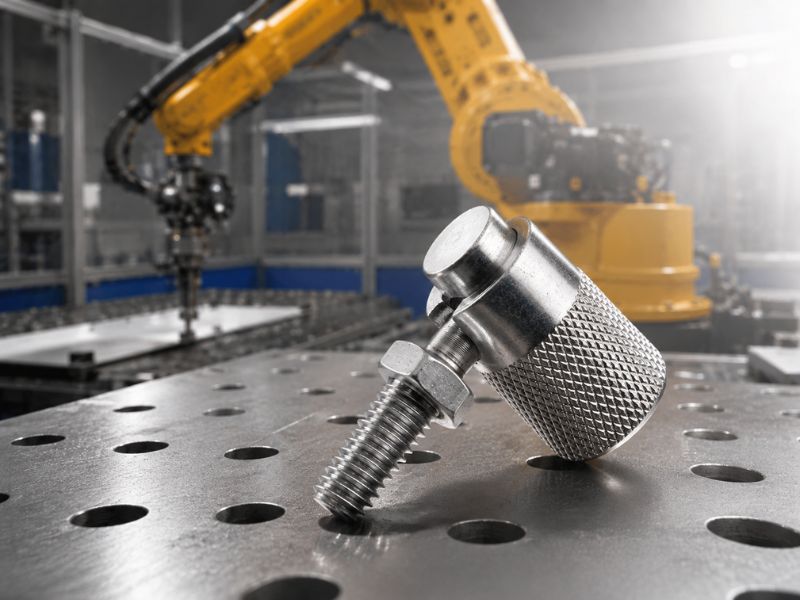
The difference between a standard ball joint and a stainless one is whether the joint still functions after six months in the environment you're putting it in.
Read More »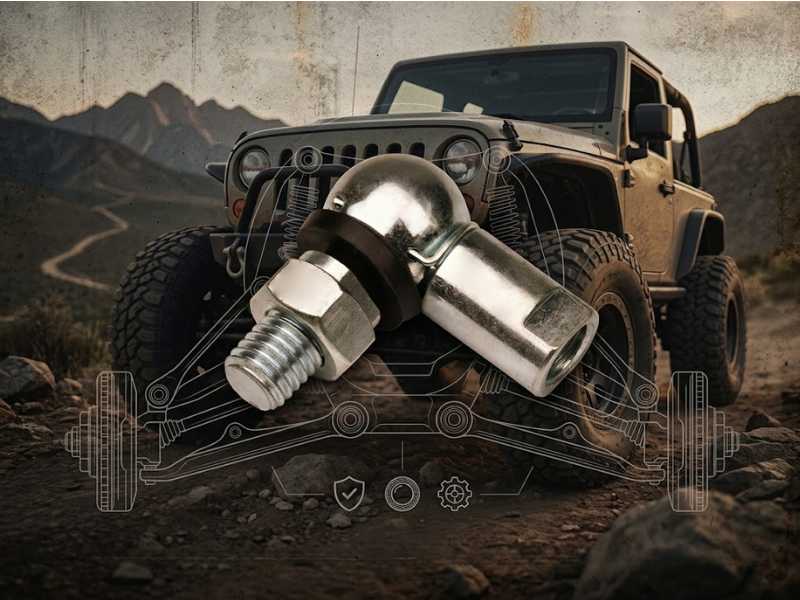
Greasing stainless ball joints on a fixed schedule often misses the actual failure mechanism. Here is what actually determines service life.
Read More »If you already have the drawings, please send email to [email protected] directly for an instant quote.
[email protected] ↗