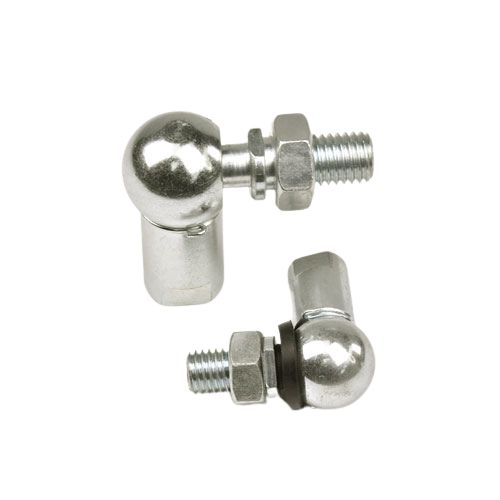

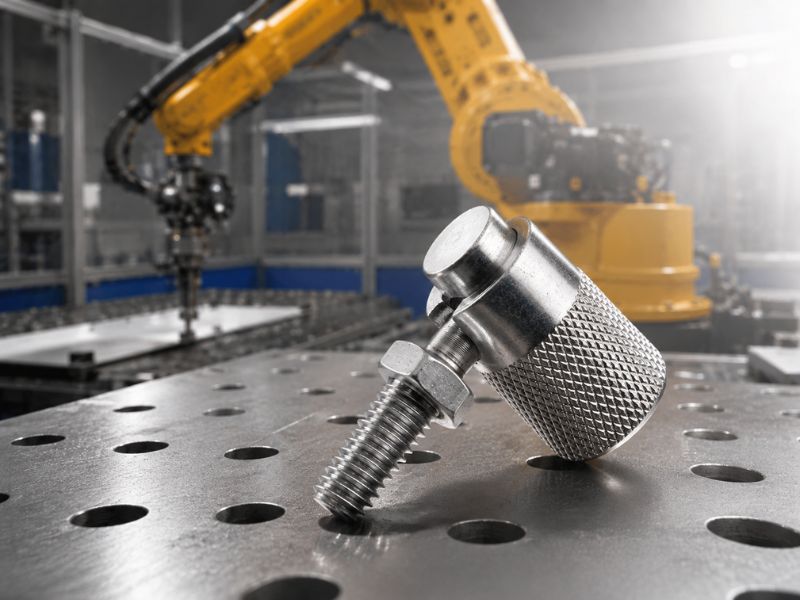
A ball joint is a pivot. It connects two components, allows angular movement between them, and transmits load through the joint in the process. What makes a ball joint stainless steel isn’t about making it stronger for normal loads. It’s about making sure the joint still functions after sustained exposure to the environment it’s operating in.
Standard carbon steel ball joints corrode, seize, and shed debris. In a dry indoor industrial machine, that might take years. In a food processing plant running CIP cycles twice a day, it can happen in weeks. The choice to specify stainless steel is a choice about where the joint will be in six months, not just how strong it needs to be today.
Food Processing and Beverage Equipment
This is the largest application category for stainless steel ball joints, and the engineering reason is specific.
Food processing facilities run CIP (clean-in-place) cycles using sodium hydroxide solutions at 0.5 to 2% concentration, often at 60 to 80°C. Then they rinse, then they may run an acid cycle, then they rinse again. A carbon steel or zinc-plated ball joint in that chemical environment corrodes rapidly. The corrosion products are a contamination risk in the product stream, and the joint itself seizes within a short service interval.
316L is the food and marine grade baseline for a specific reason: the 2 to 3% molybdenum addition raises chloride pitting resistance significantly above 304, which is what makes it suitable for equipment running CIP chemical cleaning rather than just water washdown.
316L stainless steel ball joints resist the alkaline and acid chemistry of CIP cycles without degrading. They don’t contribute metal ions to the cleaning solution. They don’t pit in the presence of chlorinated rinse water. And they meet the surface finish requirements for food-contact hardware, provided they’re specified with the appropriate Ra finish.
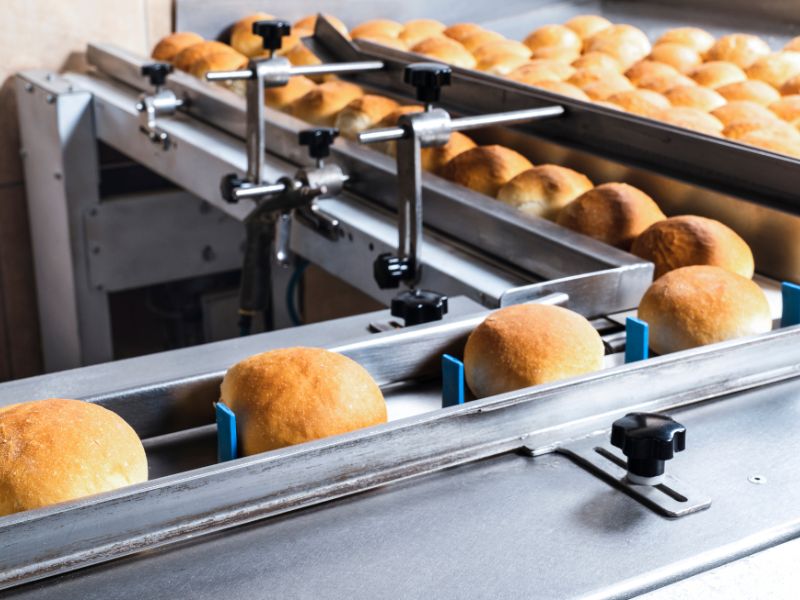
The specific applications within food processing: actuator linkages on filling machines and portioning equipment, gate and valve operating mechanisms on hoppers and tanks, conveyor diverter pivot points, and lid or door linkages on processing chambers. Anywhere a pivot must tolerate repeated chemical exposure and still move freely on demand.
Marine and Offshore Equipment
Saltwater is aggressive toward carbon steel and zinc coatings in a way that’s faster and less forgiving than most inland industrial environments. In constant salt spray, standard ball joints corrode at the bearing interface within a season. The ball seizes in the socket, and the linkage it’s part of loses its range of motion.
316L stainless handles this better than 304 because of the molybdenum content. The key failure mode in marine environments is chloride-induced pitting, and molybdenum specifically raises the threshold at which that pitting initiates.
Stainless ball joints appear in marine applications across: throttle and gear shift linkages on inboard engines, rudder and trim tab control linkages, rigging hardware on sailing vessels, hatch and port operating mechanisms, and stabilizer control linkages on larger vessels. In offshore equipment and subsea structures, Duplex 2205 is sometimes specified where chloride exposure is severe enough that 316L pitting resistance is marginal.
One consideration specific to marine assemblies: galvanic compatibility. A stainless steel ball joint installed between an aluminum bracket and a bronze clevis creates a galvanic cell whenever the assembly is wet. Stainless sits well up the galvanic scale, which means the aluminum corrodes preferentially. This isn’t a reason to avoid stainless ball joints in marine use, but it is a reason to think about the full material stack in the assembly, not just the ball joint in isolation.
Industrial Automation and Pneumatic Systems
In industrial automation, stainless steel ball joints appear most commonly as end fittings on pneumatic cylinder rods. The ball joint at the cylinder rod end allows the cylinder to drive a linkage without requiring perfect alignment between the cylinder axis and the driven mechanism. The angular freedom of the ball joint absorbs misalignment that would otherwise put side load on the cylinder rod and wear the rod seal prematurely.
As JW Winco’s ISO 15552 stainless ball joint specification documents, stainless ball joints in industrial automation are rated for –40°C through 200°C service, covering applications from refrigerated food processing to moderately elevated temperature process equipment.
In standard indoor automation on dry machinery, 304 stainless is usually adequate. The choice of stainless over carbon steel in these applications is often driven by cleanliness requirements, the risk of rust staining on adjacent components, or a facility-wide specification for stainless hardware rather than a specific corrosion threat from the process.
Where the process environment introduces washdown, chemical mist, or high humidity, 316L is the appropriate step up. Pharmaceutical facilities, chemical processing plants, and semiconductor fabs fall into this category.
Agricultural and Outdoor Equipment
Agricultural equipment operates in conditions that combine mechanical shock, mud, water, fertilizer exposure, and extended periods of outdoor storage. Carbon steel ball joints in these conditions corrode at the bearing interface during storage periods, then seize when the machine is returned to service.
Stainless ball joints in agricultural applications appear in: three-point hitch linkages on tractors, implement attachment points, steering linkages on compact utility tractors, and gate and door mechanisms on grain bins and livestock equipment. In heavy-duty draft applications, 17-4PH stainless is sometimes specified where both load capacity and corrosion resistance are required — the precipitation-hardened condition provides significantly higher strength than 316L while maintaining better corrosion resistance than carbon steel.
For tractors and implements that see fertilizer and soil amendment chemicals, 316L is the appropriate choice. Fertilizers containing ammonium compounds are corrosive to carbon steel but not to 316L. Field equipment that sits through a wet winter in an unheated shed will have functional stainless ball joints and seized carbon steel ones when spring arrives.
Solar Tracking and Renewable Energy
Solar panel tracking systems use actuators to rotate panels throughout the day. The actuator linkages use ball joints at the mounting points to allow for angular misalignment between the actuator axis and the panel rotation axis. These systems operate outdoors continuously for 20 to 25-year design lifespans.
The maintenance reality of solar installations makes longevity the primary selection criterion. Most solar farms are not staffed for regular mechanical maintenance. A ball joint that requires replacement every three years imposes a maintenance cost and access difficulty that a properly specified stainless joint avoids entirely over the installation’s life.
304 stainless is typically adequate for solar tracking applications away from coastal environments. Within a few kilometers of salt water, 316L is the appropriate specification to meet the 20-year design life expectation without premature replacement.
Motorsport and Performance Automotive
In motorsport and modified vehicle applications, stainless ball joints appear in suspension linkages, steering connections, and chassis-mounted pivot points where standard rubber-bushed OEM components have been replaced for geometry control. The stainless specification here is less about corrosion and more about maintaining consistent performance in vehicles that see wet conditions, off-road terrain, or are stored between events.
As covered in detail in our post on heim joint steering for big tire builds, the case for stainless in steering and suspension applications on vehicles that also see road use is primarily about maintaining joint freedom across the maintenance intervals a daily-driven vehicle realistically receives.
For dedicated race vehicles that are cleaned and inspected after every event, chromoly ball joints are a reasonable choice on load capacity grounds. For vehicles that see both track and street or trail use, stainless avoids the corrosion-driven tightening that makes a joint need replacement before it’s mechanically worn out.
Choosing the Right Grade
304 handles most dry indoor applications, light outdoor exposure, and non-chloride chemical environments. It’s the right choice for most general industrial and automation uses where stainless is specified for cleanliness or standardization rather than a specific corrosion threat.
316L is required where chloride exposure is significant: saltwater, CIP cleaning cycles, swimming pools, coastal outdoor installations, and chemical process environments containing chloride-bearing compounds. The molybdenum addition is what separates 316L’s performance from 304 in these environments.
17-4PH is the choice when load capacity is the primary constraint and corrosion resistance is secondary. Motorsport, high-cycle fatigue applications, and heavy-load mechanical linkages where the required joint size in 316L would be impractically large.
Profab Machine manufactures stainless steel ball joint linkages in 304, 316L, and 17-4PH, in standard and custom thread sizes, with material certifications available for food, pharmaceutical, and offshore applications.