2 in. Gap Gaff Hooks
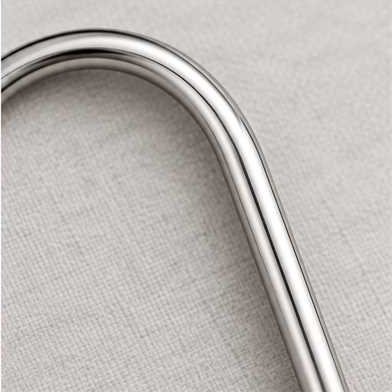
A 2 in. gap suits fish under about 50 lb and slim-bodied species such as dorado, king mackerel, and barracuda.

Profab Machine makes stainless steel gaff hooks in 304, 316, and 17-4PH. Send a drawing or a sample, and we make the hook head to your gap, shaft diameter, point style, and shank. We supply the hook only, so you fit it to your own handle.
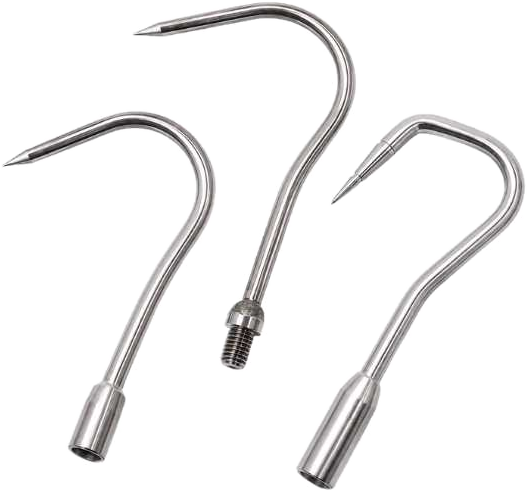
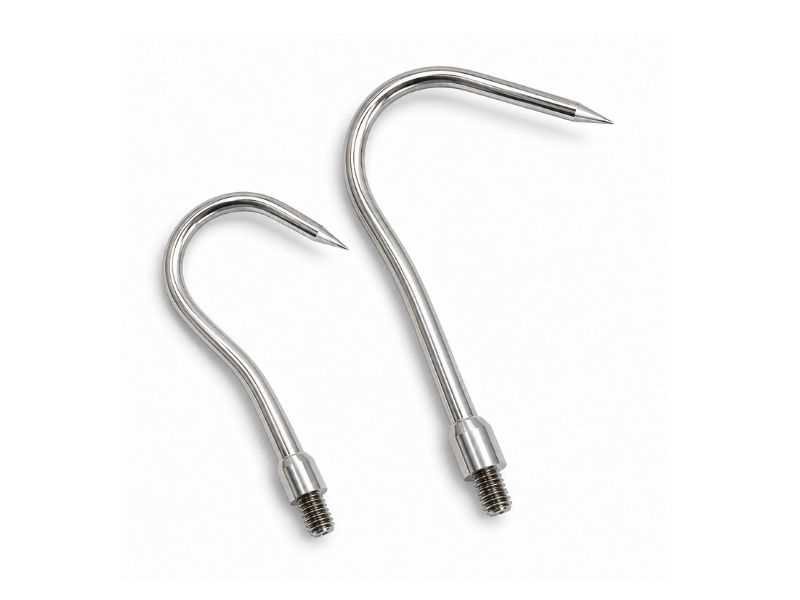
A stainless steel gaff hook is the steel hook head fixed to the end of a gaff handle. When a fish is beside the boat, the angler sets the point in the fish and lifts it aboard. The hook is one bent shaft with a sharp point, and a threaded or plain shank at the other end joins it to the handle.
Salt water, fish slime, and repeated wet and dry cycles corrode carbon steel and plated hooks, and the rust marks the deck and the catch. Stainless steel resists that attack and leaves no rust stain. This page covers hook heads only. A complete gaff, a flying gaff, and a harpoon are different products.
Gaff hooks are specified by gap first, then by point style and shank.
The gap is the distance from the point to the shaft. These ranges are typical industry guidance for the fish you gaff.
A 2 in. gap suits fish under about 50 lb and slim-bodied species such as dorado, king mackerel, and barracuda.
A 3 in. gap covers the middle of the range. It fits fish on both sides of 50 lb, from smaller sport fish to larger ones that need a deeper bite.
A 4 in. gap suits fish over 50 lb. The wider gap gives a deeper bite and a lower chance of tearing out.
A 5 in. gap is the largest size in common use. It is chosen for sharks, large tuna, and jumbo cobia.
The point style sets how the hook enters the fish.
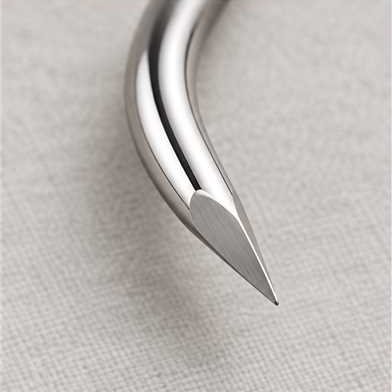
A chisel point is ground with flat faces that meet in a cutting edge. It cuts into the skin instead of pushing against it.
A needle point tapers evenly to a round tip. It is a common point style on machined gaff hooks.
Shank, thread, and finish are set from your drawing. See Custom Configurations below.
The material follows the water the gaff lives in and the fish it has to lift.
316 and 316L stainless steel is the standard material for a gaff hook that lives on a boat. The molybdenum in 316 gives it better pitting resistance against chlorides than 304, which matters on a gaff that is stowed wet and rinsed rarely.
17-4PH is a precipitation-hardening stainless steel that reaches a far higher strength than 316 after aging. Choose it for large-gap hooks that must resist opening under load. It resists corrosion less than 316, so rinse the hook after salt water use.
Plated carbon steel rusts through once the plating chips at the point or the bend, and the rust stains the deck and the catch. Aluminum is light but soft enough to bend under a heavy fish. Stainless steel keeps its shape and its clean surface in salt water.
Other stainless grades such as 304 are available on request.
Gaff hooks reach the water through gaff makers, tackle brands, outfitters, and working boats.
Rod builders and gaff makers buy the hook head to fit their own handles. We make it with the shank and thread that match your handle and ferrule.
Tackle brands add a stainless hook to a gaff line under their own name. We make it to the brand drawing and pack it to the brand spec.
Outfitters stock replacement hooks for gaffs that have bent or corroded. We make the hook to match the original gap and shank.
Charter boats gaff fish all day in salt spray. A 316 hook with the right gap for the target fish is the part that has to last.
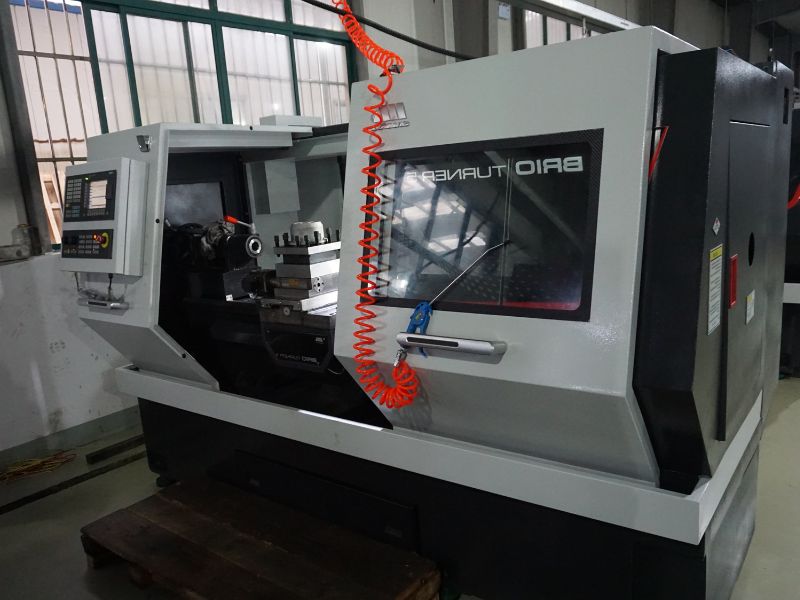
A gaff hook is judged by its point: a needle tip machined to a true taper, or a double-cut chisel edge that bites without pushing. We cut the point on CNC to the angle on your drawing, so every hook in a run enters the fish the same way. Chisel, needle, or your own profile, finished mirror, satin, or bead blast.
The shaft gets the same care. We set the diameter to the gap so the hook keeps its shape under a heavy fish, and the stiffness does not change from the first piece to the last. Your logo goes on the shank, and the hooks arrive packed in your own bags or boxes.
The usual failure on a gaff is the joint, not the hook. A round shank spins in the handle, a loose thread backs out, and a point that cracks or dulls ends the day. Corrosion at the joint makes all three worse.
We cut the thread, the flats, and the ferrule seat to your handle, so the hook seats the same way every time and cannot rotate. Shank diameters from slim to heavy follow your drawing, 316 or 17-4PH is chosen for the water and the fish, and the point is finished so corrosion has no scratch to start from.
Check these points before you request a quote.
| Factor | What to Specify | Why It Matters |
|---|---|---|
| Gap | Distance from the point to the shaft, for example 2, 3, 4, or 5 in. | The size of the fish you gaff sets the gap. |
| Shaft diameter | Diameter of the hook shaft | A wider gap needs a thicker shaft, or the hook opens under load. |
| Point style | Chisel point or needle point | The point style sets how the hook enters the fish. |
| Shank | Threaded, flat-sided threaded, or plain, with the diameter and thread | The shank must match the handle, the ferrule, or the bonding method. |
| Grade | 304, 316 or 316L, or 17-4PH | Salt water use calls for 316 or 316L. |
| Finish | Mirror polish, electropolish, satin, or passivated | The finish sets the look and how salt water attacks the surface. |
| Quantity | Pieces, and whether it is a prototype or production run | Prototype and production runs are quoted separately. |
Common market sizes by fish size. Your handle, your fish, and your load decide the final size.
| Gap | Common Shaft Diameter | Typically Used For |
|---|---|---|
| 2 in. | 1/4 to 5/16 in. (6 to 8 mm) | Fish under about 50 lb and slim-bodied species |
| 3 in. | 5/16 to 3/8 in. (8 to 10 mm) | General offshore use, fish around 50 lb |
| 4 in. | 3/8 to 7/16 in. (10 to 11 mm) | Fish over 50 lb |
| 5 in. | 3/8 in. and up (10 mm and up) | Sharks, large tuna, and jumbo cobia |
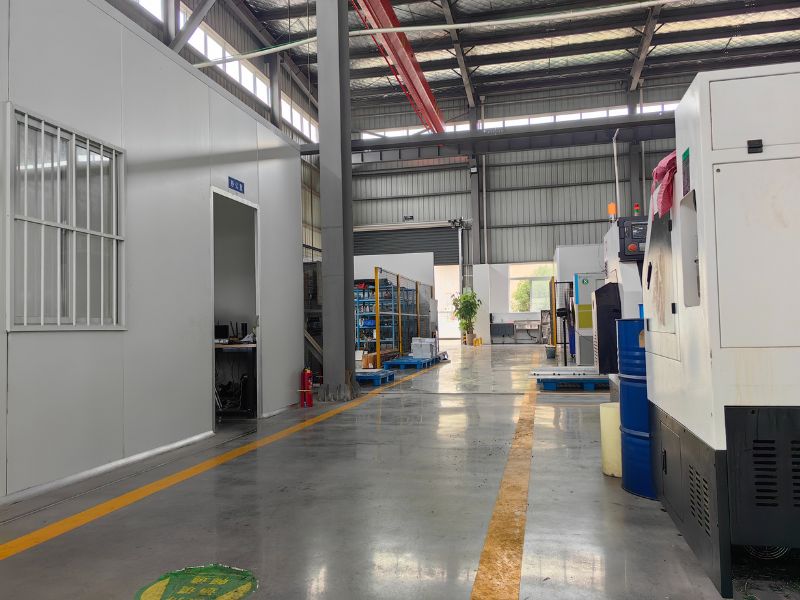
We CNC machine the shank, thread, and point features ourselves, so you deal directly with the factory. Tiered pricing is available on larger orders.
Send a drawing or a worn hook, and we make a matching hook in small batches. A prototype run does not need a large commitment.
Polishing, electropolishing, and passivation services are available for the finish your customers expect on a stainless steel gaff hook.


These three parts join the hook to the handle and protect the point. Each is made to your drawing.
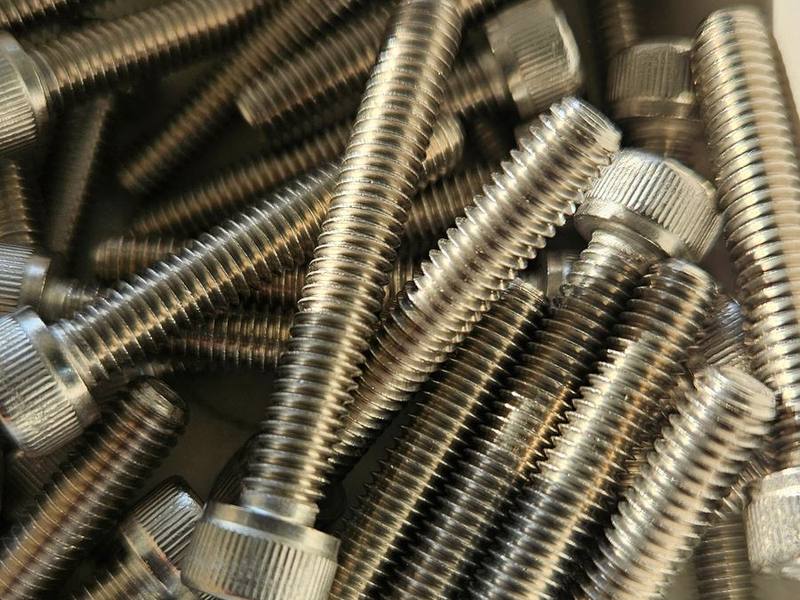
A threaded adapter joins the hook shank to a handle fitting when the two threads differ.
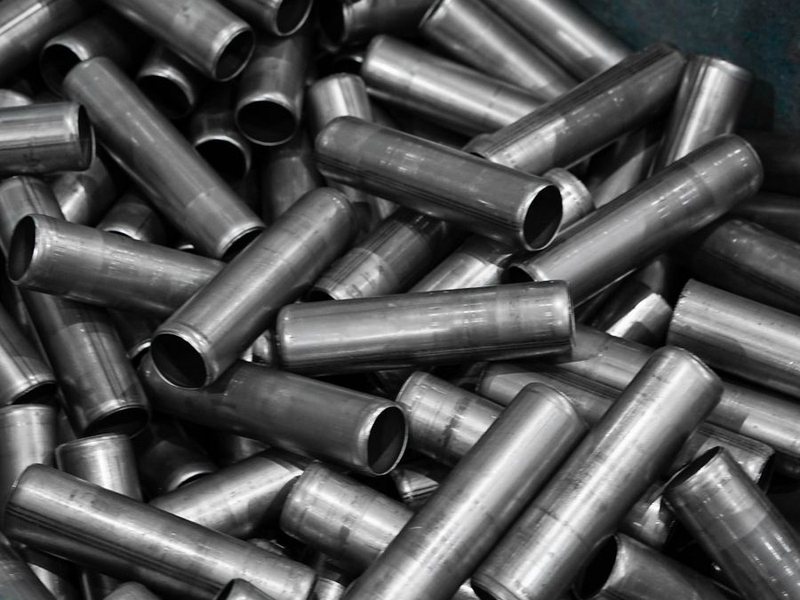
A sleeve or ferrule supports the hook shank where it enters the handle.
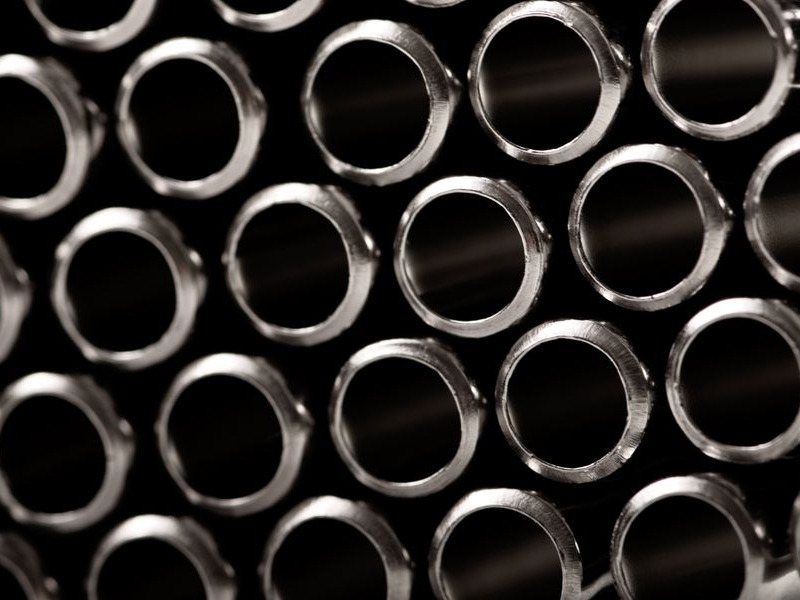
A turned stainless steel point guard covers the point during storage and transport.
Pick the finish when you send the drawing.
A mirror finish gives a bright hook that is easy to wipe clean after use.
Electropolishing removes a thin surface layer and leaves a smoother surface, so salt water has less to hold on to.
A satin or bead-blasted finish gives a matte hook that does not flash in sunlight.
Passivation removes free iron left on the surface by machining and restores the corrosion-resistant layer.
Everything on this list can change from one order to the next.
Set the gap from 2 to 5 in., or to the size on your drawing.
Match the shaft diameter to the gap and the load.
Choose a chisel point or a needle point.
Choose a threaded shank, a flat-sided threaded shank for bonding, or a plain shank.
Choose mirror polish, electropolish, satin, or passivation.
Pack in plain bags, branded bags, or boxes to your spec.
Choose the gap by the size of the fish. A 2 in. or 3 in. gap suits fish under about 50 lb, a 3 in. or 4 in. gap suits larger fish, and a 4 in. or 5 in. gap suits sharks, big tuna, and jumbo cobia. Widen the gap only with a thicker shaft, or the hook can open under load.
Yes. We make hook heads only, and you fit the hook to your own handle. Send the shank diameter and thread, or the handle drawing, so the shank matches.
Yes. Send the hook or a photo with the gap, the shaft diameter, and the shank measurements. If you only have a sample and no drawing, we can reverse-engineer it for an additional fee.
Choose 316 or 316L for salt water. 304 can pit where dried salt stays on the surface, so keep it for fresh water or for hooks that are rinsed after every trip.
Strength depends on the shaft diameter, the grade, and the bend radius. A 2 in. gap hook commonly uses a 1/4 to 5/16 in. shaft and a 4 in. gap hook a 3/8 to 7/16 in. shaft. Tell us the fish and the handle, and we set the diameter and the grade to match.
Gap, shaft diameter, point style, shank, grade, quantity. A drawing or a sample hook for custom items.
A quote follows within 24 hours of your specs.
30 days standard. Samples before full production run on new custom parts.
Sea, air, or express courier.
No hard minimum order quantity, small-batch and prototype runs supported, typically around 100 pieces for a first prototype run.
If you already have drawings, email them to [email protected].
[email protected] ↗