Full Threaded Rod
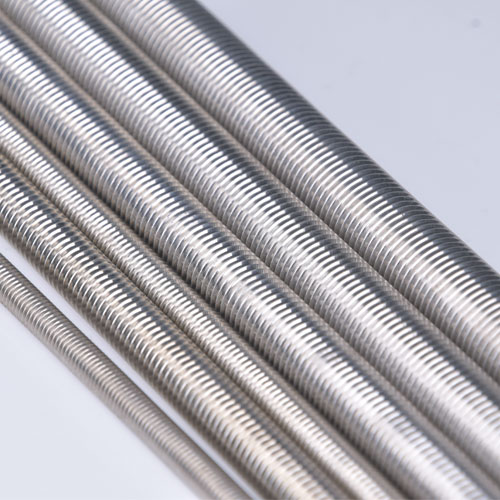
A continuous thread along the whole length, the common choice for hanging, general fastening, and adjustable assemblies. Ends are chamfered. It suits HVAC and MEP hanging, dock and marine hardware, and chemical plant pipe support.

Profab Machine supplies stainless steel threaded rod in 304, 316L, and duplex 2205, cut to your length and threaded to your pitch. Left-hand threads, non-standard pitches, and nuts and washers in a matched grade are available. Send a drawing or sample, and we will quote from it.

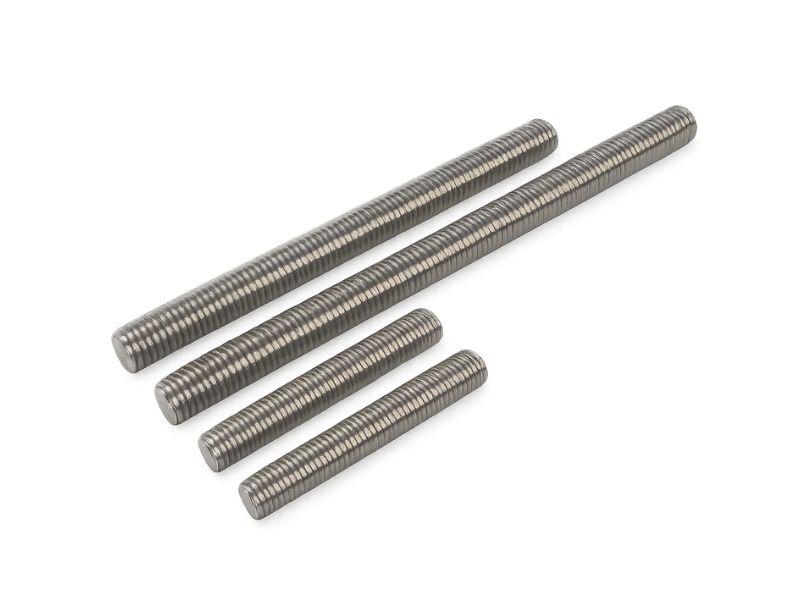
A stainless steel threaded rod is a bar with a continuous thread along its whole length. It is used with nuts and washers to clamp, hang, join, or position parts, and it is cut to length for each job. Stainless steel resists corrosion, so the rod is common in food processing, marine, chemical, and outdoor installations.
A stainless steel threaded rod, or all-thread, carries tension and clamping load through nuts along its full length. A stud has a defined thread length at each end, a tie rod end adds end fittings and adjustment, and a lead screw turns rotation into travel. Specify the rod by thread system, diameter, pitch, length, hand, and grade.
Profab Machine makes each type below to your thread, length, and grade. Send a drawing or sample, or list the thread system, diameter, pitch, and length when you enquire.
A continuous thread along the whole length, the common choice for hanging, general fastening, and adjustable assemblies. Ends are chamfered. It suits HVAC and MEP hanging, dock and marine hardware, and chemical plant pipe support.
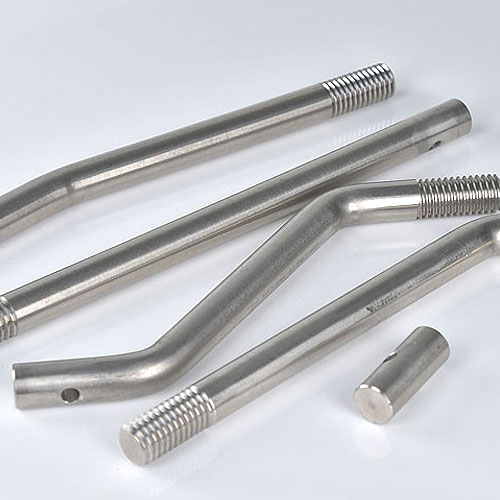
A plain shank with a threaded end. The plain shank resists shear better than a threaded shank under the same side load. One end welds or press-fits into a structure and the other takes a nut, which suits anchor studs, weld-in fasteners, and fixture mounting points.

A smooth shank with a thread at one end, made to your thread length and overall length. It is also called a single-ended threaded bar, weld-on stud, or partial-thread rod. It suits welded linkages, anchor studs, and standoff mounts.

Each end carries its own thread length, and the two ends can have different threads, such as UNF at one end and metric at the other. It suits engine studs, flanged joints, machinery mounting, and tie assemblies.

An internal thread in metric or inch, with the outside diameter and wall thickness specified at order. It is also called a hollow female threaded rod or a threaded sleeve. It suits cable management assemblies, hollow anchor systems, and swage stud fittings.

A trapezoidal thread that turns rotation into straight-line travel. It wears and takes load well, but it is less efficient than a square thread or a ball screw, and whether it self-locks depends on the lead and the friction. It suits lead screws, jacking assemblies, actuator drive rods, valve stems, and press screws.
A threaded rod has a continuous thread and is cut to any length for clamping, hanging, and joining with nuts. A stud has a set thread length at each end, so it is made for one installation, such as a flange or a housing.
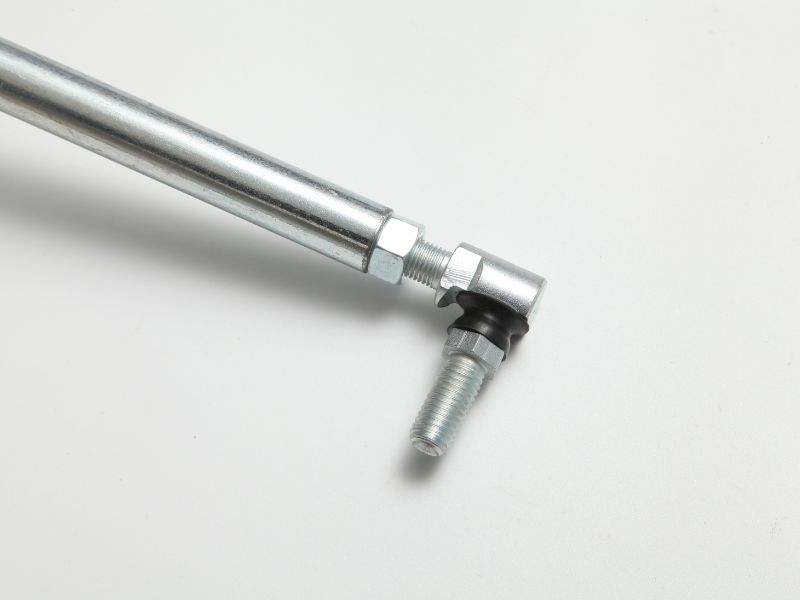
A tie rod end is a complete adjustable linkage with end fittings, and a threaded rod is only one part of it. A lead screw is a motion screw that turns rotation into travel.
See our tie rod ends for adjustable linkages.
Standard thread sizes and stock lengths are below. Larger sizes, other pitches, and left-hand threads are made to order.
| Thread System | Standard Sizes | Standard Lengths |
|---|---|---|
| Metric | M4, M5, M6, M8, M10, M12, M14, M16, M18, M20, M22, M24, M27, M30, M33, M36, M42, M48 | 10 to 50 mm (10, 12, 16, 20, 25, 30, 40, 50), 300 mm, 500 mm, 1 m, 2 m |
| Inch | 10-32, 12-24, and 1/4 in to 2 in | 1 in to 3 in, 8 in, 12 in, 24 in, 36 in, 72 in |
| Custom | Larger sizes, other pitches, and left-hand threads, made to order | Cut to your length |
Typical ranges, for reference only. Confirm sizes, pitch, and thread class against your drawing.
304 suits indoor MEP, dry to mildly humid environments, non-coastal architectural framing, and general industrial fastening. Avoid it in salt spray, high-chloride areas, and direct CIP washdown zones, where crevice corrosion can start.
316L is the standard grade for marine hardware, docks, coastal structures, chemical processing, and sanitary washdown areas. Its 2 to 3% molybdenum protects the thread roots against chloride pitting.
Duplex 2205 has a minimum yield strength of about 450 MPa, against 170 MPa for 316L, along with strong resistance to stress corrosion cracking. It suits offshore platforms, chemical plant hangers, and coastal tie-backs, and the higher strength can allow a smaller rod diameter. It is sourced to order.
Profab Machine offers these finishes through its process network, and we recommend one by grade and environment.
A polished finish suits visible and hygienic uses.
Passivation restores the passive layer after machining, which helps corrosion resistance in marine and offshore settings.
A black oxide finish reduces glare and adds some wear resistance.
A nickel plating adds protection in chemical and harsh environments and can extend service life.
Stainless threaded rod suits places where carbon steel or galvanized rod would corrode, and each installation needs the diameter, thread, length, and grade matched to its load and environment.
316L rod suits dock walkway hanging, marina pontoon frames, tie-backs, and rigging studs, where salt water attacks galvanized alternatives quickly.
316L all-thread and double-end studs suit stainless frames, conveyor rails, tank supports, and CIP cabinet mounting in washdown areas.
316L and duplex 2205 rod suit pipe-rack hanging, vessel supports, pump base studs, and tank anchorage where chlorides, acids, and cleaning agents are present.
304 and 316L rod suit canopy hanging, glazing support frames, balustrade tension, and MEP runs that need a clean stainless finish.
316L and 304 rod suit ground-mount tracking frames, panel mounting, and coastal base-plate anchors, where the rod is embedded and cannot be replaced.
Structural, lifting, seismic, and anchor applications need a project-specific engineering review, and we work from your design values.
Visual checks miss pitch errors and flank-angle errors that make a nut bind. We check thread pitch and major diameter with ring and plug gauges before shipping, and we double-check non-standard threads, such as fine metric, Acme, left-hand, and mixed ends, against your drawing before machining.
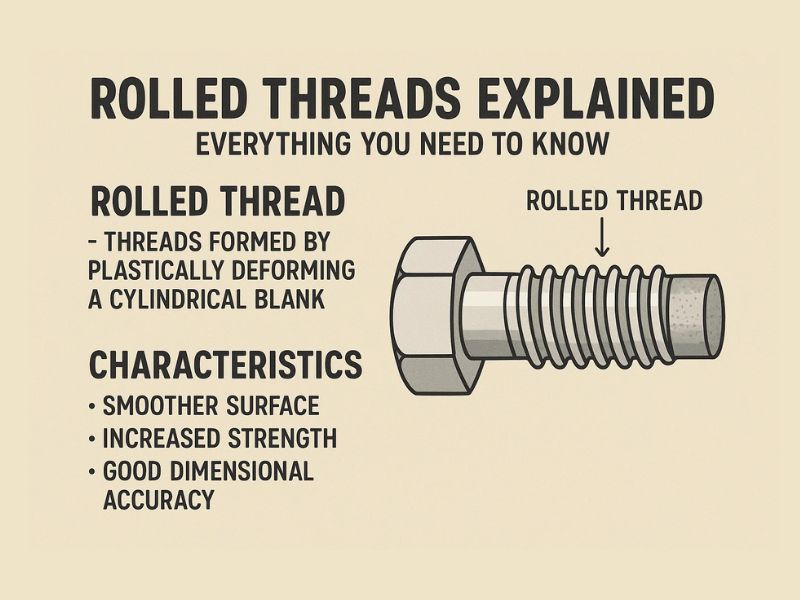
Many distributors stock only standard lengths and set strict minimums. We cut to your exact length, thread to your form, and supply your quantity, whether that is around 100 pieces for a job or a larger OEM run. Left-hand threads, custom pitches, and deburred, chamfered ends are available, and threads are rolled or cut depending on size and quantity.
A 304 nut on a 316L rod gives away the rod’s corrosion resistance at the thread joint, and any stainless pair can gall. We supply hex, heavy hex, and coupling nuts and washers in the matching grade with your rod, and we recommend anti-seize on assembly.

Not seeing your question? Email us at [email protected] and we typically reply same day.
Stainless rod can be used in tension and clamping, but the capacity depends on the grade, thread, nut engagement, and load, so structural, lifting, and seismic jobs need an engineering review. A slender rod in compression can buckle. Tell us the load case and we will confirm the rod size and grade against your design values.
Yes. Stainless rod cuts to any length, and a field cut can leave burrs and a damaged first thread that stop a nut from engaging. We cut, chamfer, and deburr to your length so the ends are ready to assemble.
Stainless threads can gall when they are assembled dry, dirty, or over-torqued, and the damage is worst on reuse. Clean the threads, use an anti-seize or compatible lubricant, and tighten with a controlled torque.
Use 316L in salt and chemical exposure, keep matched-grade nuts and washers on the rod, and clean and inspect the threads on a schedule. Duplex 2205 is an option for offshore and heavily chloride-loaded sites.
Send a drawing or sample if you have one. Otherwise send the thread system, diameter, pitch or TPI, length, hand, grade, end finish, and quantity, plus the nuts and washers you need.
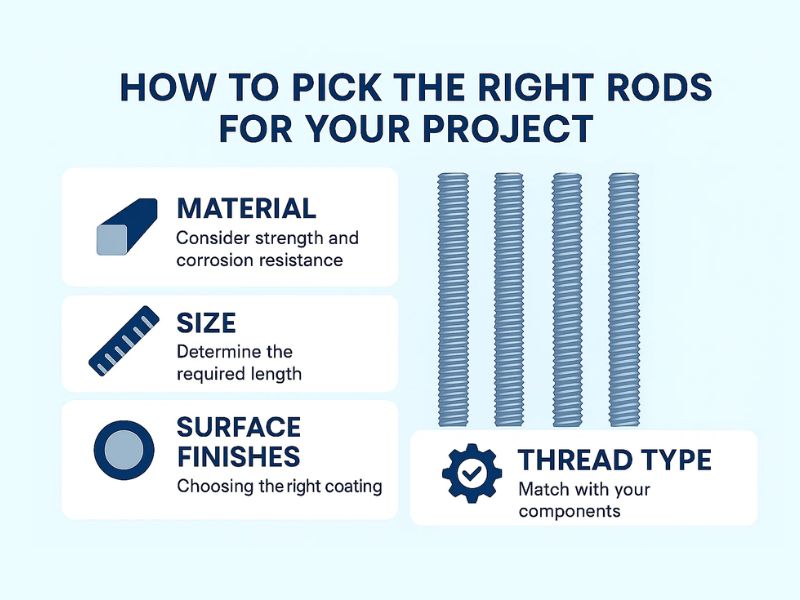
Work through these seven points before you request a quote. Together they cover most of what we need to confirm a part.
| Factor | What to Confirm | Why It Matters |
|---|---|---|
| Thread system | Metric or inch, diameter, and pitch or TPI | Metric and inch threads are not interchangeable. |
| Thread class | Tolerance class and hand | The class decides how nuts fit and run. |
| Length | Overall length and each thread length | Partial and double-end rods need each thread length. |
| Ends | Chamfer, deburr, plain, or machined end | The first thread decides whether a nut starts cleanly. |
| Material | 304, 316L, or duplex 2205, plus the nut grade, and any property class you need | Grade sets corrosion resistance and strength. |
| Environment | Indoor, outdoor, marine, chemical, or washdown | The environment decides the grade and the finish. |
| Load | Tension, clamping, shear, and any compression | Slender rods in compression can buckle. |
Send the thread system, diameter, pitch, length, hand, grade, and quantity, plus a drawing or sample.
Our engineers review your threaded rod request or drawing and send you a specific quote within 24 hours.
Standard lead time for threaded rod is 30 days. Custom designs are sampled before the full production run.
We ship threaded rod by sea, air, or express courier. A tracking number follows once the order ships.
We support small-batch and prototype runs with no hard minimum order quantity. A first prototype run is typically around 100 pieces.
If you already have drawings, email [email protected] directly and we will quote from them.
[email protected] ↗