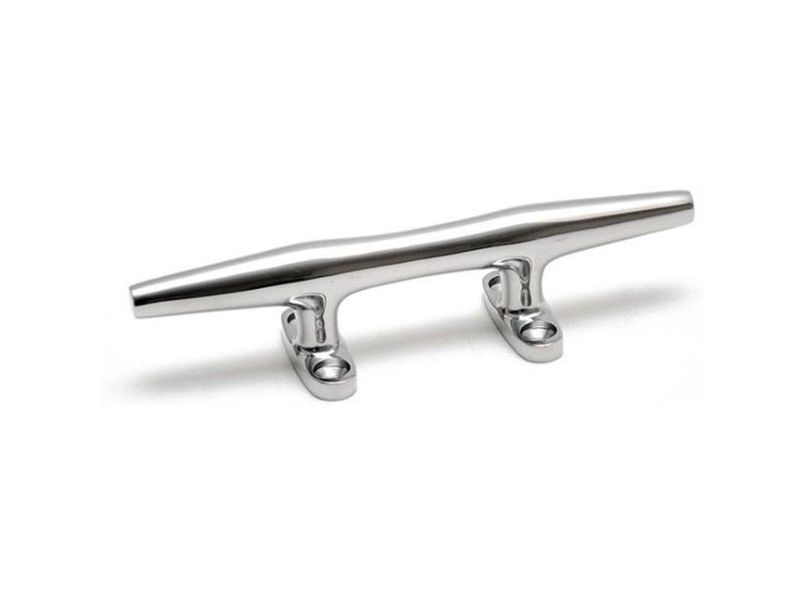
Horn Cleat
- Also calledOpen base cleat
- Material316 SS
- SurfaceMirror polished
- Sizes4"–12"
- MountingThrough-bolt
The most widely used style on docks and deck. Solid two-arm profile gives fast wrap-and-lock for any line diameter.

304 and 316 stainless steel boat cleats in open base, stud mount, folding, and pop-up styles. Sizes from 4 in to 12 in. Custom lengths and finishes on request. Investment cast with full material traceability.
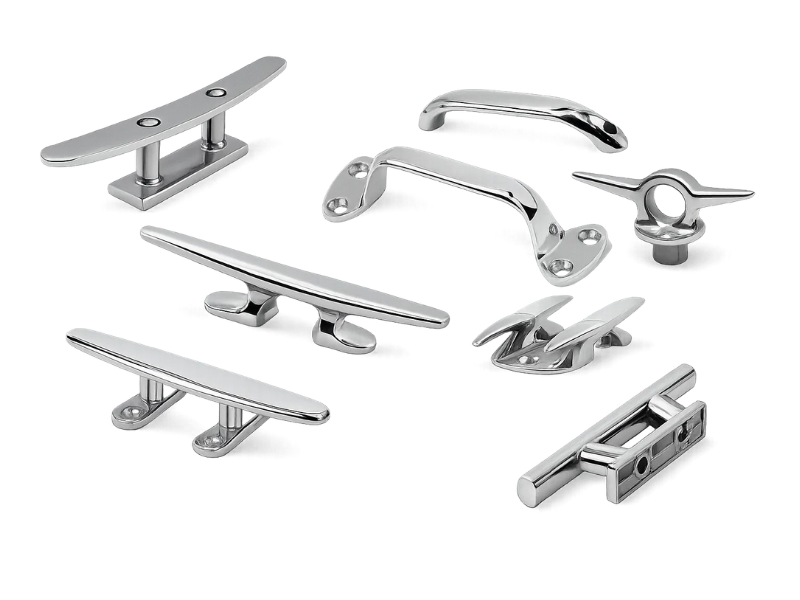
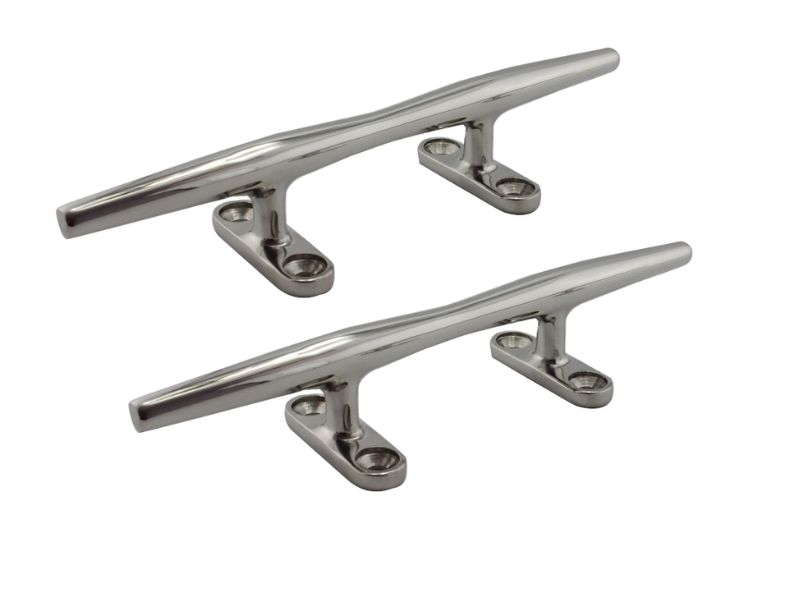
A deck-mounted fitting with two projecting horns that secures mooring, docking, and anchor lines through a figure-eight hitch. The cleat transfers line load into the deck structure. Stainless steel eliminates the corrosion failure path of galvanized or zinc-plated cleats. Once the zinc layer pits in salt spray, the underlying steel rusts through within two to three seasons. A 316 stainless cleat does not rely on a coating for corrosion resistance. The alloy itself resists chloride attack.
Profab supplies four standard cleat configurations in 316 stainless. Each style addresses specific deck layout and loading requirements. Custom profiles are available on request.
The most widely used style on docks and deck. Solid two-arm profile gives fast wrap-and-lock for any line diameter.
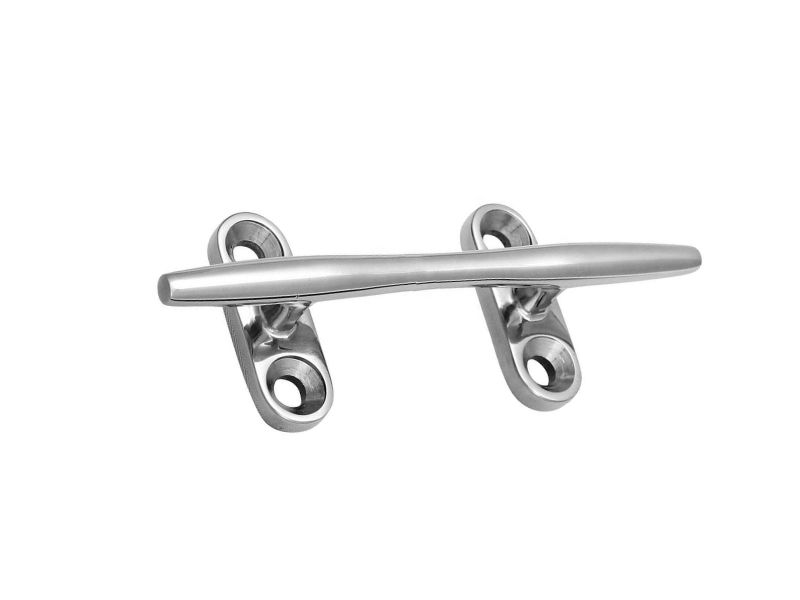
Recessed base reduces weight while maintaining structural integrity. Common on mid-size sailboats where deck load distribution matters.
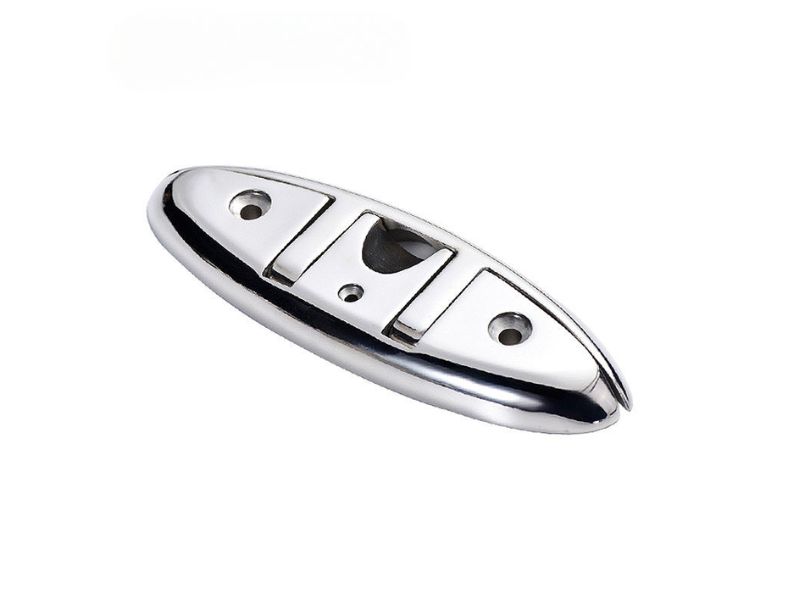
Arms fold flat when not in use, eliminating trip hazards on high-traffic decks. Used on motor yachts and charter vessels.
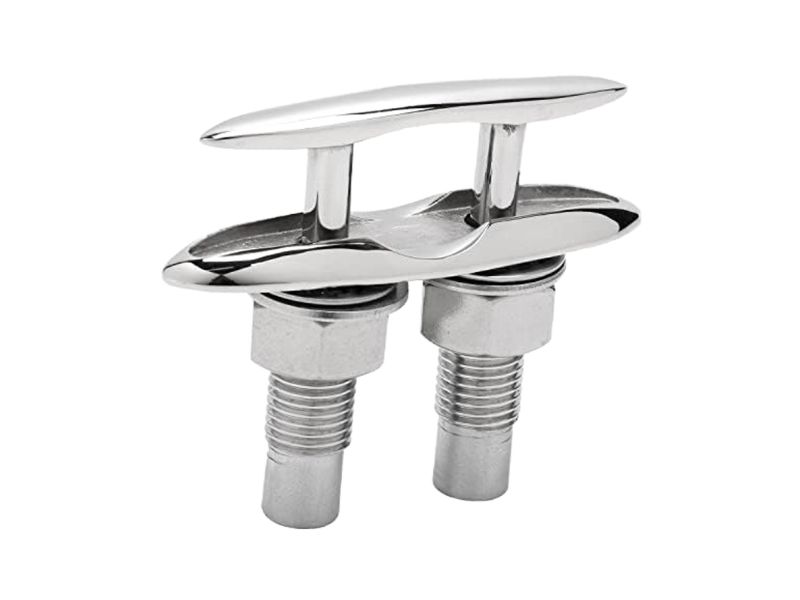
Spring-loaded mechanism keeps the deck surface clean when not in use. Preferred on sports boats and racing yachts where deck aesthetics are a priority.
Freshwater lakes, inland rivers, trailered boats stored dry between uses. Adequate for low-chloride environments. Not recommended for continuous saltwater exposure — expect pitting within two seasons in coastal conditions.
Freshwater Use Cost-EffectiveSaltwater mooring, coastal docks, yacht deck hardware. The molybdenum content resists chloride pitting. Standard for any fitting exposed to seawater or salt spray.
Saltwater Rated Marine-GradeSaltwater mooring, coastal docks, yacht deck hardware. The molybdenum content resists chloride pitting. Standard for any fitting exposed to seawater or salt spray.
Weldable Post-Weld Corrosion Resistant316 stainless steel mooring cleats perform reliably in saltwater, UV, and heavy load conditions that corrode lesser materials within a season. Below are the vessel and facility types that require them most.
Offshore sailing puts cleats under sustained lateral loads from mooring lines and dock lines in tidal surges. 316 grade resists crevice corrosion at the bolt interface, where lower grades fail first.
Bow and stern cleats on motorboats handle spring-line loads during berthing and fender attachment. Mirror-polished 316 cleats hold up to fuel, bilge water, and regular deck washing without surface degradation.
Stainless steel dock cleats sit outdoors year-round. Marina operators need hardware that won't rust and stain the dock surface. 316 stainless deck cleats require no protective coating and are easy to inspect and replace.
Fishing vessels and commercial workboats operate in continuous saltwater exposure with heavy line loads. Weld-free cast 316 cleats eliminate the failure points that fabricated or welded cleats develop under cyclical stress.
A cleat that is too short for your dock line will not hold a complete figure-eight hitch under load. The standard rule is 1 inch of cleat length per 1/16 inch of line diameter. An 8-inch cleat handles a half-inch dock line with enough horn length for the full hitch plus a locking turn. A 6-inch cleat on the same line forces an incomplete wrap that can shake loose under repeated wake or wind loading. Material choice follows a simple threshold: if the boat lives in saltwater, 316 stainless is not an upgrade — it is the minimum viable material. 304 stainless in coastal conditions develops pitting at the horn base, where rope abrasion continuously strips the passive oxide layer before it can reform.
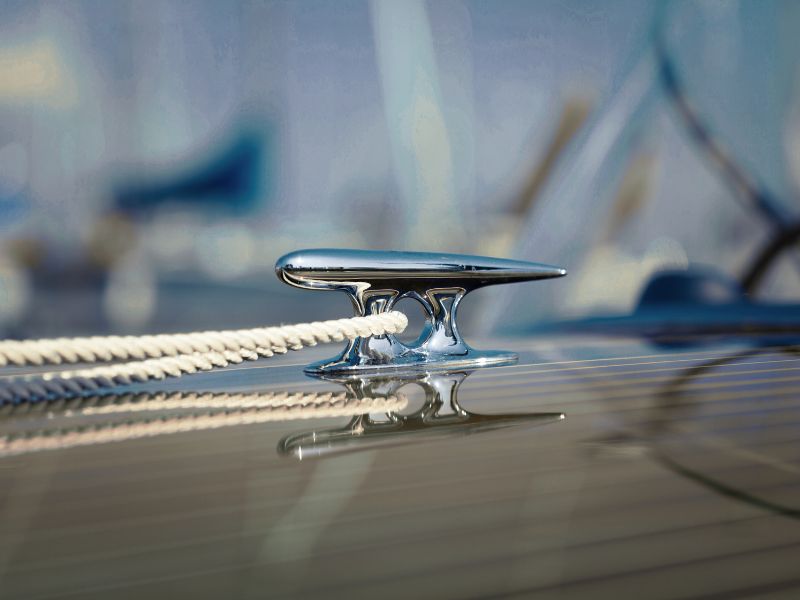
Each cast cleat undergoes dimensional inspection against the pattern drawing at three points: horn spread, base flatness, and fastener hole center distance. Horns are proof-loaded to 50% of the design breaking load with a calibrated hydraulic ram bearing against a nylon strap that simulates a dock line — this verifies both the casting integrity and the horn geometry under load. Surface finish is checked with a profilometer on the horn interior where rope contact is highest. A roughness average above 0.8 µm on the rope-bearing surface shortens dock line life through abrasive wear. Cleats that pass dimensional, load, and surface checks ship with a certificate listing the heat number, material grade, and test results. Cleats that fail any check are scrapped and recycled as foundry feedstock.

A boat cleat must fit the deck as well as the application. Profab can customize base dimensions, mounting hole patterns, stud positions, and overall geometry to match your installation requirements.
When you order the cleat, we'll ship it with the correct 316 stainless through-bolts, lock nuts, flat washers, and a backing plate cut to match the cleat footprint. No sourcing fasteners separately. No discovering on install day that the bolt diameter does not match the cleat hole. One part number, one shipment, matched components.
Send us your boat length, line diameter, and deck construction. Our engineers confirm the cleat size and recommend a mounting method before you place an order. If a stud-mount cleat would serve your layout better than open-base, we tell you. We do not sell you what we have in stock; we sell you what fits your boat.
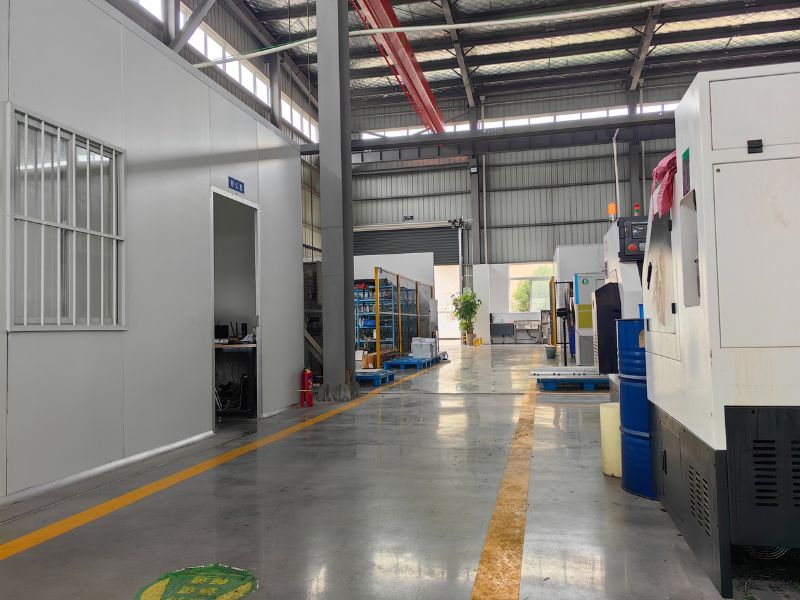
Profab supplies mounting hardware and companion deck fittings matched to your cleat order. Every component is 316 stainless. One supplier for the full installation — no chasing fastener specs across multiple vendors.
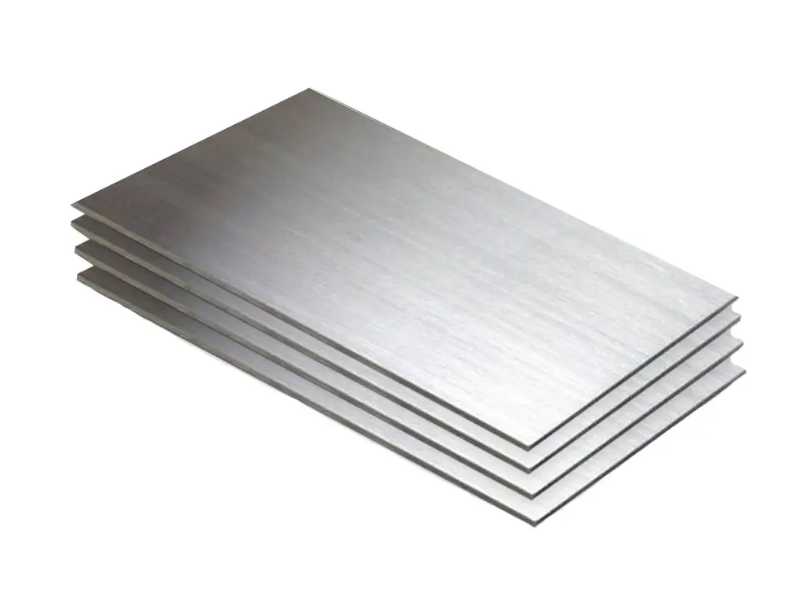
Laser-cut from 3 mm or 5 mm 316 stainless plate, sized to extend a minimum of 15 mm beyond the cleat base footprint in all directions.
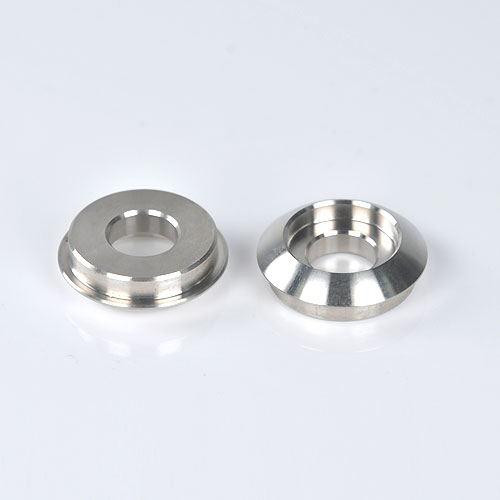
Through-bolts, flat washers, split lock washers, and nylon-insert lock nuts per cleat. All components 316 stainless. Bolt diameter and length selected for the cleat size and your deck thickness.
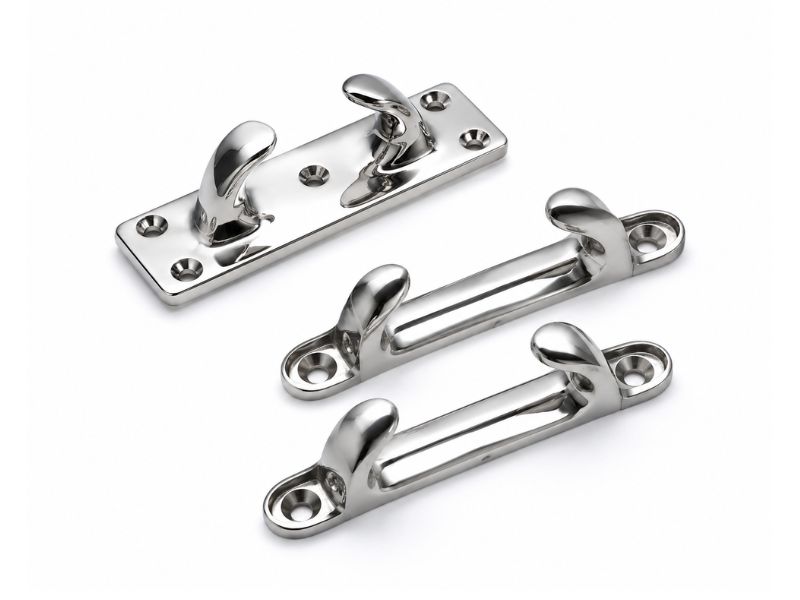
Open-base and roller-type fairleads in 316 stainless. Guide dock lines at the correct lead angle and prevent chafing where the line crosses the gunwale or toe rail.
| Vessel Length | Typical Line Diameter | Recommended Cleat Length | Suggested Style | Notes |
|---|---|---|---|---|
| Under 20 ft | 3/8" (10mm) | 4"–5" | Horn Cleat | Small boats, dinghies, tender docks |
| 20–30 ft | 7/16"–1/2" (11–12mm) | 6"–8" | Horn Cleat / Hollow Base | Day sailors, center consoles, small motorboats |
| 30–40 ft | 9/16"–5/8" (14–16mm) | 8"–10" | Horn Cleat / Folding Cleat | Mid-range yachts, sportfishing boats |
| 40–55 ft | 3/4"–7/8" (19–22mm) | 10"–12" | Horn Cleat / Pop-Up Cleat | Larger yachts, commercial charter vessels |
| 55 ft & above | 1"+ (25mm+) | 12"+ custom | Heavy-duty Horn / Custom | Commercial workboats, megayachts — contact Profab for custom spec |
| Parameter | What to Check | Selection Advice |
|---|---|---|
| Cleat Length | Match to line diameter: 1 in per 1/16 in line | An 8 in cleat works with 1/2 in dock line. If you run multiple lines on one cleat, size up. |
| Mounting Style | Deck access, load type, foot traffic | Open-base for primary mooring and easy inspection. Stud-mount for clean deck profile. Folding or pop-up for walkways and swim platforms. |
| Material Grade | Water type: salt vs fresh | 316 for saltwater and coastal mooring — no exceptions. 304 acceptable for freshwater and trailered boats stored dry. |
| Fastener Configuration | Deck thickness and construction | Through-bolt with backing plate for all primary mooring cleats. Screw-only mounting is acceptable only for light-duty tie-off points, never for bow or stern cleats. |
| Surface Finish | Rope contact zone roughness | Mirror polish with electropolished horn interior if the cleat sees frequent line handling. A rough horn interior abrades dock lines and accelerates wear at the hitch point. |
Not seeing your question? Email us at [email protected] and we typically reply same day.
Open-base cleats bolt through visible holes in the base flange. The fasteners are accessible from above. Stud-mount cleats have threaded studs welded to the underside — the fasteners install from below the deck and are invisible from above.
By default, cleats ship with the cleat only. Mounting hardware sets and backing plates are available as companion items under the same part number — specify your deck thickness when ordering so we supply the correct bolt length.
Standard finish is mirror polish with electropolishing on the horn interior and rope-bearing surfaces. Satin and brushed finishes are available on request for applications where reduced glare matters.
Series, thread size, grade, hand, safety catch, quantity. DXF or drawing for custom items.
We will work based on your request and send you a specific quote within 24 hours.
30 days standard. Samples before full production run on new custom parts.
Sea, air, or express courier. Material certs and inspection report are inside every box.
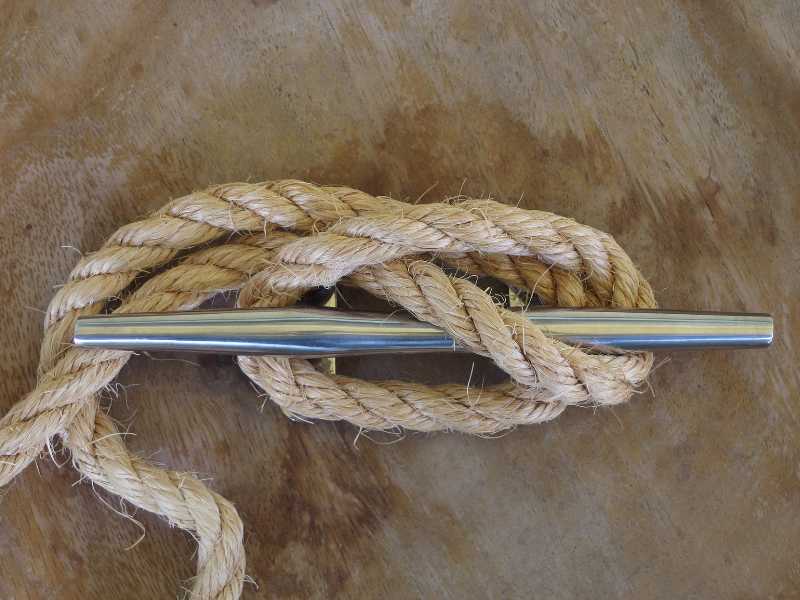
Boat cleat squeaking has three distinct causes, each needing a different fix. Identifying the right type prevents a minor noise from becoming a hardware failure.
Read More »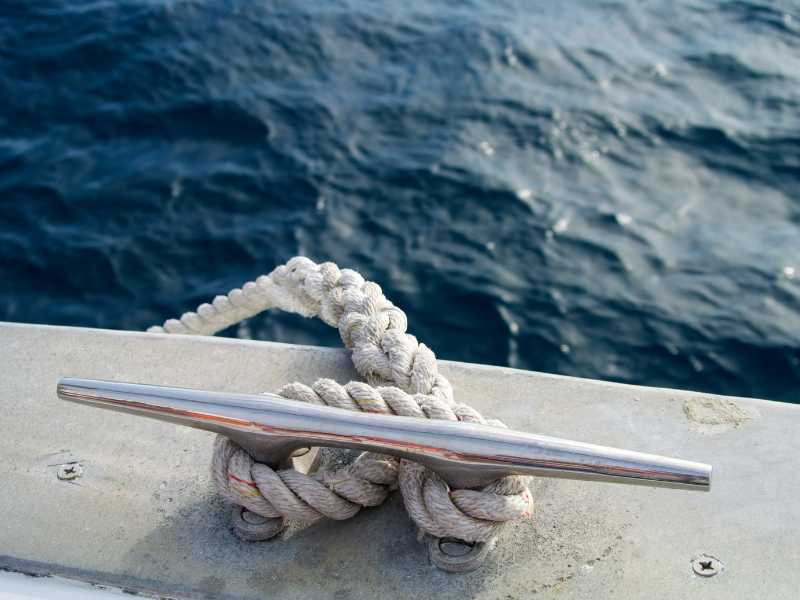
Correctly sizing boat cleats requires matching line diameter, boat length, and environmental load, plus specifying the right material grade and backing plate for a mount that holds.
Read More »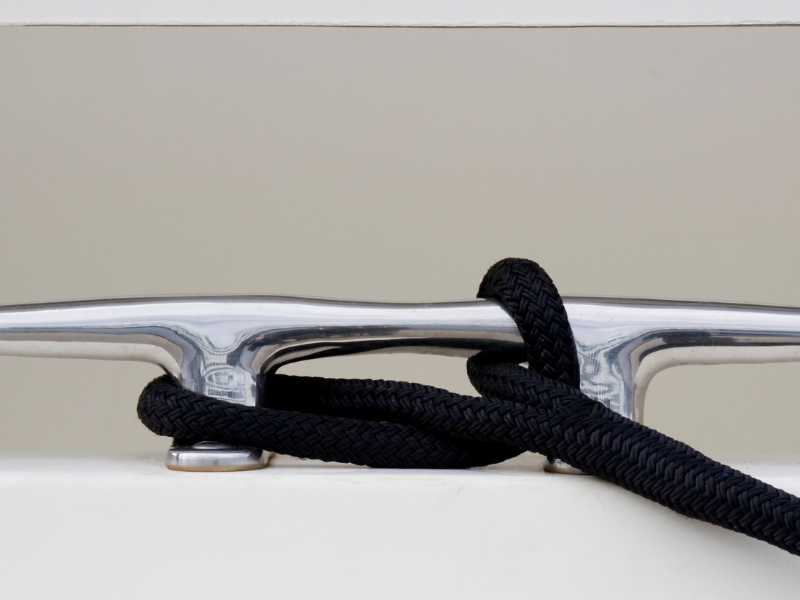
Backing plates determine whether a boat cleat holds under load or pulls through the deck. Here is how to choose the right material, size it correctly, and install it properly.
Read More »If you already have the drawings, please send email to [email protected] directly for an instant quote.
[email protected] ↗