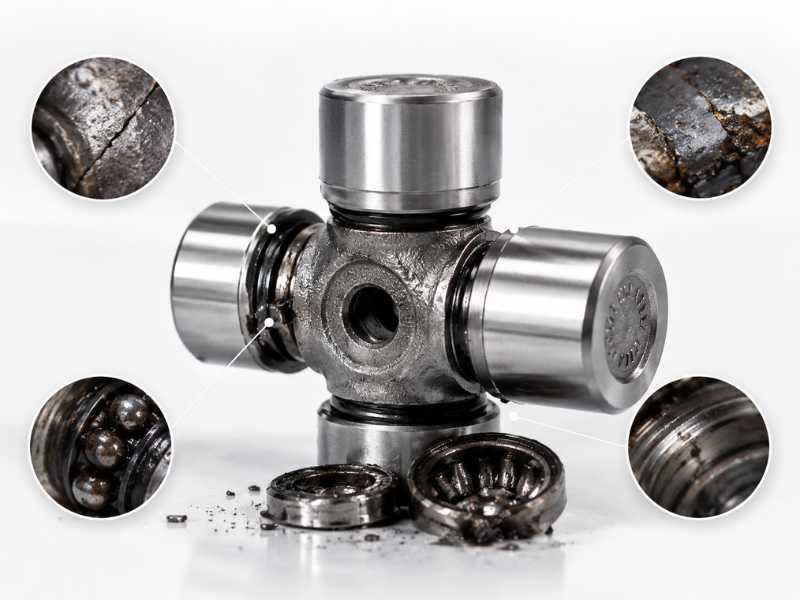
Universal joints don't fail without warning. They degrade in a sequence, and each stage produces a different set of symptoms. The problem is that early symptoms are easy to ignore or misattribute to something else, and by the time a bad universal joint becomes undeniable, it's usually causing damage to components beyond itself.
Here's how to read the signs in order, from the first hint something is wrong to the point where the driveshaft is dragging on the pavement.
Stage 1: Squeaking or Chirping at Low Speed
The first sign of a bad universal joint is almost always a rhythmic squeak or chirp at low speed, often most noticeable in parking lots or slow residential driving. The sound cycles with driveshaft rotation, not with wheel rotation, which means it doesn't match tire speed directly. Because the driveshaft spins roughly three to four times faster than the wheels, the squeak cycles faster than you'd expect from a wheel bearing or brake issue.
What's happening: the needle bearings inside the bearing caps have lost lubrication. Dry metal running against metal produces that chirp. At this stage the joint still has no measurable play. It's a lubrication failure, not yet a structural one.
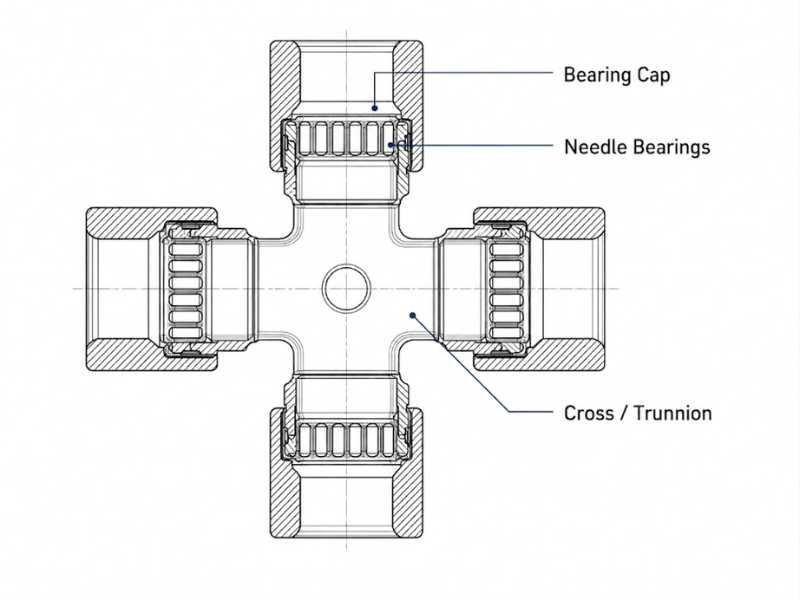
If your U-joints have grease fittings, this is the stage where a grease gun fixes the problem entirely. Many factory and aftermarket U-joints are sealed for life and not serviceable. In that case, the squeak means the bearing has started its terminal decline and replacement is coming.
The squeak sometimes disappears temporarily after the joint warms up, because heat causes slight expansion that can reduce metal-to-metal contact momentarily. If the squeak comes back every cold start and disappears after a few minutes of driving, don't let that fool you into thinking the problem resolved itself.
Stage 2: Clunking When Shifting or Under Load Changes
A clunk when shifting from Park into Drive, from Drive into Reverse, or at the moment of heavy acceleration or deceleration is the clearest bad universal joint sound there is. As VehicleRuns explains in their U-joint diagnosis guide, that sound happens because slack in the worn joint gets taken up suddenly as torque loads the driveshaft.
At this stage the bearing caps have worn enough that the joint has measurable play. When the driveshaft is unloaded, whether coasting, in Park, or at the transition between acceleration and deceleration, the worn joint allows the shaft to sit slightly off-center. When torque loads it again, the shaft snaps to its loaded position and you hear the clunk.
You can confirm this from under the vehicle with the engine off. Grab the driveshaft and try to rotate it back and forth by hand. Any rotational play you feel that isn't immediately transferred to the wheels is play in the U-joint. A small amount of play in a new joint is normal. Anything you can feel distinctly with your hands is too much.
The clunk at this stage is not just an annoyance. Motor Tech notes that this kind of slack only worsens over time. Every load cycle stresses the damaged bearing caps further. The window between a clunking u joint and a vibrating driveshaft shortens quickly with continued driving. This risk is even higher under heavy towing loads or off-road conditions.
Stage 3: Vibration That Increases with Speed
By the time vibration appears, the U-joint is significantly worn. The bearing caps are allowing the driveshaft to run out of its true rotational axis, creating an imbalance that transmits through the chassis as vibration. It's usually felt through the floor, the seat, or the center console rather than the steering wheel.
Key diagnostic details separate universal joint vibration from wheel imbalance. Wheel imbalance produces a lower-frequency vibration proportional only to vehicle speed. In contrast, a worn universal joint produces a higher-frequency vibration that changes directly with throttle load. The vibration worsens during hard acceleration or deceleration when torque loads the shaft. It often diminishes when you feather the throttle at a steady cruise.
U-joint vibration gets worse during acceleration and deceleration because those are the moments of highest torque loading on the driveshaft. Wheel imbalance vibration is steadier and more proportional to speed alone. If the vibration you're feeling spikes at the moment you press or lift the throttle and then settles slightly at a steady cruise, U-joints are the more likely cause.
Stage 4: Binding, Shudder, or Loss of Drive
A U-joint that has seized or broken can cause the vehicle to shudder violently under any throttle application, produce a grinding sensation through the drivetrain, or lose the ability to transfer power to the wheels entirely. At worst, a broken universal joint allows the driveshaft to drop. It can drag on the road surface and create a serious safety hazard at any speed.
If the vehicle is in gear and engine power isn't reaching the wheels, or if there's a grinding contact sound from underneath the vehicle, stop driving immediately. A broken universal joint can allow the driveshaft to strike the ground or the body of the vehicle and cause structural damage or loss of control.
How Driveshaft Angle Accelerates Wear
One factor the standard symptom guides miss: the operating angle of the U-joint directly affects how fast it wears. A U-joint running at a steeper angle generates more cyclic stress on the bearing caps per revolution than one running nearly straight. This is why lifted trucks and SUVs go through U-joints faster than stock-height vehicles, even with identical driving patterns.
As Suspension.com's U-joint guide notes, vehicle modifications that affect driveshaft angle or speed directly accelerate wear. If you've added lift, taller tires, or lowered the vehicle, the U-joints are operating at angles the factory didn't design them for. Accounting for this means either correcting the driveshaft angle with a transfer case drop, adjustable control arms, or a slip-yoke eliminator, or accepting shorter replacement intervals and inspecting the joints more frequently.
Vehicles with suspension modifications or off road use experience steep driveline angles. In these applications, stainless steel universal joints with proper corrosion resistance hold up much better in wet and muddy environments. Standard carbon steel joints rust at the bearing caps between service intervals. That rust accelerates the exact wear sequence described above.
The Hand Test Before You Drive
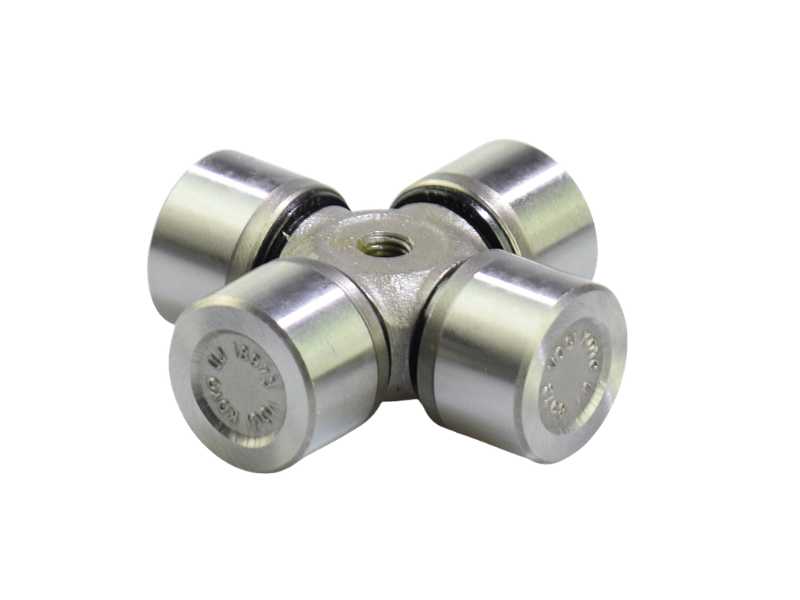
Before any long trip or after any period the vehicle sat unused in wet conditions, checking U-joints takes about two minutes. Park the vehicle on a flat surface. Get under the driveshaft and try to move it by hand. Check for both rotational and side-to-side movement. Rotational play beyond a small amount of slack indicates a worn bearing cap. Side-to-side movement signals a worn trunnion.
Visually check the grease seals on each bearing cap. A seal that's cracked, torn, or missing means the grease has escaped and the bearing is running dry. Check for rust at the bearing cap edges, which signals moisture intrusion. Either condition means the joint is closer to stage one symptoms than you'd want before a long drive.
Universal Joint Replacement Cost and Timing
Conclusion
A bad universal joint announces itself in order: squeak, clunk, vibration, then failure. Catching it at squeak or clunk means replacing one inexpensive part. Waiting for vibration or worse means paying for the U-joint plus whatever it damaged on the way down.
According to CarParts.com's U-joint replacement guide, most U-joint parts cost under 50, with professional replacement running 200 to $450 depending on vehicle type and labor rates. On most trucks and SUVs the job is straightforward: the driveshaft comes down, the old joints press out, and new ones press in. Some driveshafts use snap rings to retain the bearing caps; others use U-bolts at the yoke.
Changing universal joints at the squeak or early clunk stage costs the same as waiting until vibration appears. The only variable is how much collateral damage accumulates to the transmission seal, differential, and driveshaft itself while you delay. The part is inexpensive. The labor is fixed. The damage to adjacent components is what makes a late repair cost more than an early one.
Profab Machine manufactures stainless steel universal joints for applications where corrosion resistance matters alongside load capacity, including off-road vehicles, marine equipment, and industrial driveline components operating in wet or high-contamination environments.