Choose a stainless steel pulley in this order. Start with the type that matches what it carries, then the diameter that sets your speed ratio, then the groove or tooth profile that matches the belt or rope. Finish with the bore and mount, the grade, and the balance. Each step narrows the next, so work through them before you ask for a quote.
| Decision | What sets it | Stainless point |
|---|---|---|
| Type | Timing belt, V-belt, or rope and cable | Same types in 304 and 316L |
| Diameter | Speed ratio and belt speed | Diameter and belt speed use the same formulas as any pulley |
| Groove or teeth | Belt profile or rope diameter | Machined to the belt standard on your drawing |
| Bore and mount | Shaft size, fit, key and set screws | Stainless set screws can gall in a stainless bore |
| Grade | Chlorides and cleaning chemistry | 304 for general washdown, 316L near chlorides |
| Balance | Speed and diameter | Specify the balance level on the drawing |
Pick the Pulley Type From What It Carries
The belt or rope decides the pulley type, so choose the type before the size. A mismatched type wears quickly and can cause belt skip or rope fatigue.
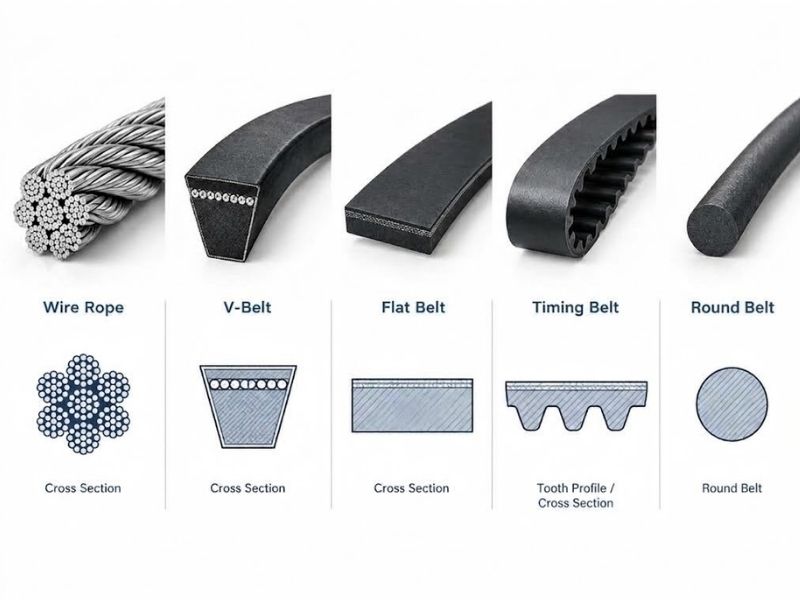
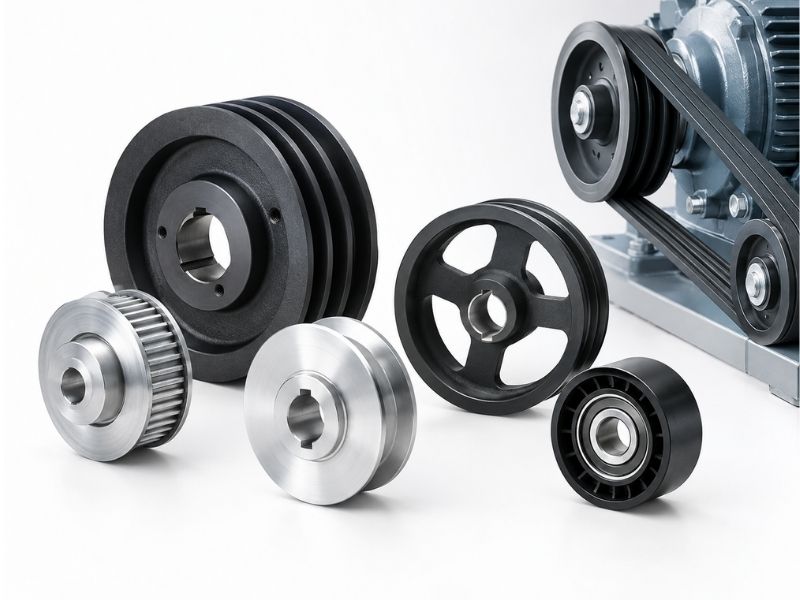
A timing pulley has teeth for a toothed belt and holds the shafts in step. A V-belt pulley has angled grooves, and the belt grips them by friction as tension rises. A sheave guides or redirects a rope or wire and carries the load it redirects.
Profab Machine makes all three in 304 and 316L, and the stainless steel pulley range covers timing, V-belt and sheave types with custom bores, keyways and finishes.
Size the Diameter From Speed and Belt Speed
The speed ratio between two pulleys equals the inverse ratio of their pitch diameters, so the diameter follows from the speeds you need. Belt slip makes the driven speed slightly lower, which a drive that must hold an exact speed has to allow for.
Belt speed in metres per second is v = π × d × n / 60,000, with the pitch diameter d in millimetres and the speed n in rpm. Check it against the maximum speed the belt maker gives for your belt, because a small pulley at high rpm can exceed it even when the ratio is right.
Worked Example
A motor runs at 1,450 rpm and drives a shaft that must turn at about 600 rpm. With a 100 mm pitch-diameter drive pulley, the driven pulley is 1,450 × 100 / 600 = about 242 mm, so choose the nearest standard size. The belt speed at the drive pulley is π × 100 × 1,450 / 60,000 = about 7.6 m/s.
The belt maker also sets a minimum pitch diameter for each belt section. Take that value from the maker's table for your belt and do not go below it, because a pulley that is too small bends the belt more sharply on every turn.
Match the Groove or Tooth Profile
The groove or tooth profile must match the belt or rope exactly, and each type has its own rule.
V-Belt Grooves
A V-belt pulley is made for a belt profile, and narrow-profile pulleys use one of two groove angles depending on diameter. The table is from one maker's catalogue for pulleys made to the ISO 4183 groove form.
| Profile | Groove angle |
|---|---|
| SPZ | 34° up to 80 mm pitch diameter, 38° above |
| SPA | 34° up to 118 mm, 38° above |
| SPB | 34° up to 190 mm, 38° above |
| SPC | 34° up to 315 mm, 38° above |
The same catalogue lists classical belts (Z, A, B and C) as fitting the matching narrow-profile pulley, for example Z and SPZ, so a datum-width pulley can serve both families. Confirm the belt and pulley pair against the belt maker's data.
Timing Pulleys
Belt pitch and tooth profile are two separate specifications. A pulley with a 5 mm pitch exists in both HTD and GT profiles, and the two are not interchangeable because the tooth geometry differs at the root radius and the flank angle. Give the number of teeth, the pitch and the profile when you order.
Rope and Cable Sheaves
The groove must fit the rope. Profab Machine machines a rope groove radius of about 0.53 times the rope diameter, which gives the rope a bearing surface without pinching. A groove with too much clearance does not support the rope, and one with too little wears the rope along two lines of contact, as one sheave maker notes.
Specify Bore, Keyway and Mount
Give the shaft size and the fit class, because a loose bore lets the pulley run out of true. Profab's standard bore tolerance is H7, which is 0 to +0.018 mm for a 10 to 18 mm bore, and H6 is available on request for a tighter fit.
Common mounts are a key with two set screws or a taper-lock bush, with the keyway cut to DIN 6885 or ISO 3912. Stainless set screws in a stainless hub can gall as they are tightened, so lubricate the thread, and read preventing thread galling for the mechanism.
Choose the Grade and Finish
Use 304 for general washdown and 316L where chlorides are present, such as salt spray or chlorinated sanitisers, because the molybdenum in 316L gives better resistance to chloride pitting. The full comparison, including when carbon steel is still acceptable, is in stainless versus carbon steel pulleys.
A machined stainless pulley is usually passivated after cutting to remove surface iron. See when to passivate stainless steel for when that step is worth it.
Balance and Run-Out at Speed
A pulley that is out of balance vibrates, and the effect grows with speed. One maker's catalogue states that pulleys over 125 mm diameter are statically balanced to grade q 6.3 at 1,500 rpm, with two-plane dynamic balancing available on request. For a fast drive, put the balance grade on the drawing instead of relying on a default.
Check run-out of the bore and the face against the drawing before the pulley is fitted, since a pulley that runs out wears the belt unevenly.
FAQ
How do I size a V-belt pulley?
Pick the belt profile first, then set the pitch diameter from the speed ratio: driven diameter equals drive diameter multiplied by the speed ratio. Check the belt speed and the belt maker's minimum diameter.
Are HTD and GT timing pulleys interchangeable?
No. A 5 mm pitch exists in both, but the tooth geometry differs at the root radius and the flank angle, so the belt and pulley must share the profile.
Should I choose 304 or 316L for a stainless pulley?
Choose 304 for general washdown and dry areas, and 316L where salt, seawater or chlorinated cleaners are present, because 316L resists chloride pitting better.
What to Send for a Pulley Quote
Send the drawing or these details and we confirm the profile, bore and grade before we quote:
- Belt or rope type, with the belt profile or rope diameter
- Pitch diameter, number of teeth or grooves, and face width
- Shaft size, fit class, key and set screw or taper-lock requirement
- Grade (304 or 316L), finish, and the balance level if the speed is high
- Quantity, and the washdown chemistry or environment
Conclusion
Choose the pulley type from the belt or rope, size the diameter from the speed ratio, match the groove or tooth profile, then fix the bore, grade and balance. If you are looking for a new supplier of stainless steel pulleys, send your drawing to Profab Machine and we will check each of these against it before we quote.