
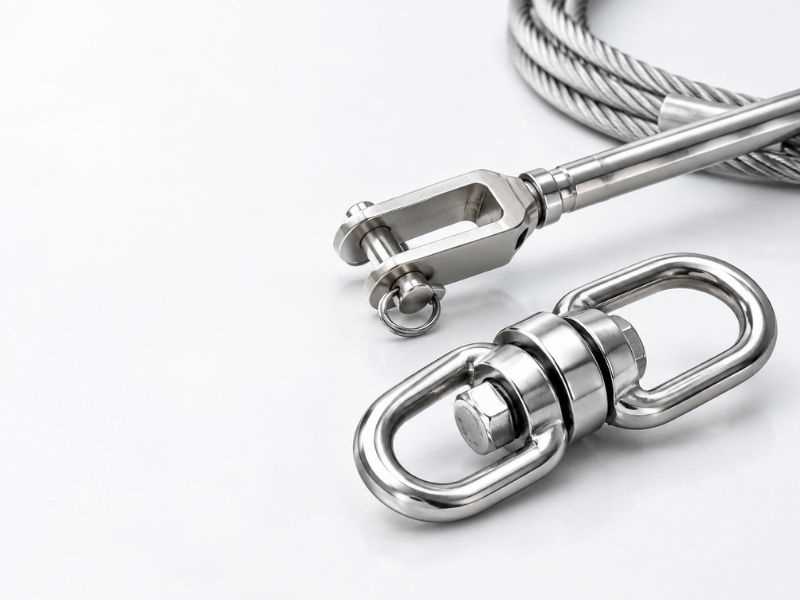
The anchor comes up twisted, or the chain kinks after a tide swing, and the swivel looks like the fix. It solves that specific problem. It also changes how the connection loads, and that change is where the failures show up.
What a Swivel Is Actually For
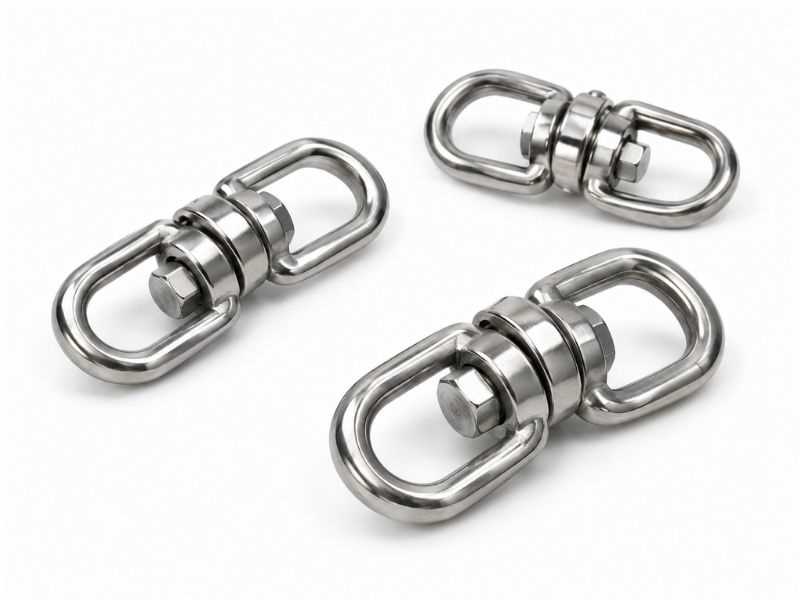
A swivel sits between the anchor and the chain and rotates freely, so the anchor can turn without twisting the chain above it. It's useful for exactly two things: relieving chain twist from a boat swinging on its rode, and occasionally helping an anchor that comes up rotated settle back into position. It is not a general-purpose connector, and it's not load-rated the same way a shackle or a length of chain is.
The Side-Loading Problem
A swivel attached directly between the anchor shank and the chain gets loaded straight along its axis in normal use. But anchors don't always load straight. Bottom conditions, current, and the anchor resetting under load can all introduce a side load on that connection, and a swivel is far weaker across a side load than along its rated axial pull. Several sailing publications have documented swivel failures under exactly this condition, side-loaded rather than straight-pulled, at loads well under what the swivel's straight-line rating would suggest it should handle.
The practical fix isn't to avoid swivels entirely. It's to not let the swivel take the side-loading directly. A bow shackle between the anchor and the swivel changes the geometry enough to keep the load closer to axial, and it lets you size the swivel to a load rating that comfortably exceeds the chain's own tensile strength rather than matching it.
When a Rigging Toggle Is the Better Call
A rigging toggle is a simpler part: a connector that allows angular movement at a pin joint, with no rotating swivel mechanism to fail under side load. Where the application doesn't actually need free rotation, a toggle gives you a strong, predictable connection without the extra failure mode a swivel introduces. Toggles are common at the anchor-to-chain connection specifically because that joint sees exactly the kind of angular loading a toggle is built for, without needing the anchor itself to spin freely.
Deciding Between Them
The decision comes down to what problem you're actually solving:
- Chain twist is a real, recurring problem on your boat: a swivel earns its place, but pair it with a shackle rather than connecting it directly to the anchor shank, and size it to exceed your chain's rating, not just match it.
- You haven't had a twist problem, or it's occasional: a toggle or a straight shackle connection is the simpler, more predictable choice, with one fewer moving part that can fail under an angle it wasn't rated for.
- Either way, the connection is only as strong as its weakest link rating, not its average. Check the swivel, shackle, and chain ratings together, not just the headline number on whichever part you bought most recently.
Profab Machine manufactures 316 stainless steel shackles and rigging hardware, including the shackles that belong between a swivel and an anchor shank to keep that connection loaded the way it's supposed to be.