
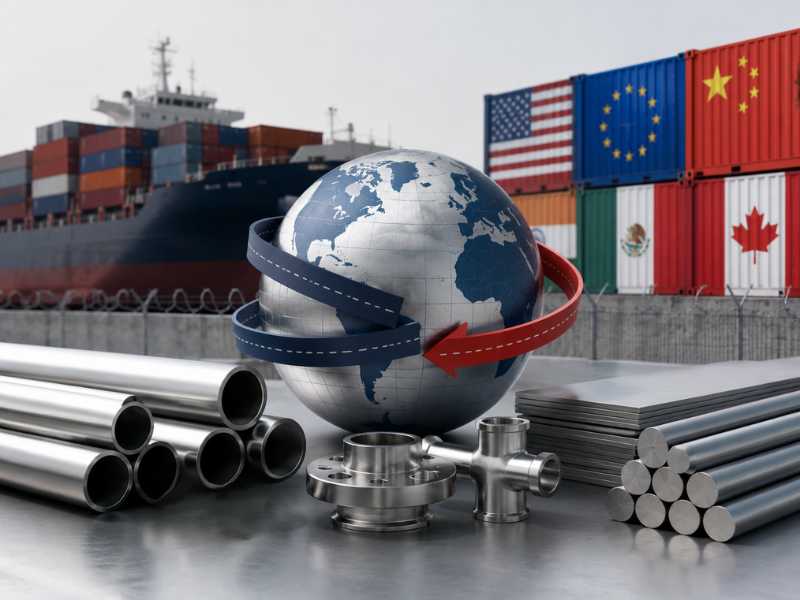
The stainless steel supply chain is moving into a different phase in Q3 2026. For the last two years, most buyers watched nickel first, then checked mill lead times after that. This week, the bigger issue is access. Tariff-rate quotas, forced-labor trade measures, carbon rules, and Indonesia’s nickel policy are all changing where material can move, how quickly it can move, and what documentation buyers need before placing an order.
That does not mean stainless steel is unavailable. Standard 304 and 316 material still exists in most major supply regions. The risk is narrower and more practical. A buyer may be able to find material, but not under the same landed-cost assumption, with the same origin, in the same bar size, or inside the same delivery window.
For companies buying precision stainless steel components, that distinction matters. A project does not only need stainless steel by weight. It needs the right grade, the right form, the right tolerance, and the right certification. When trade rules change faster than project schedules, procurement has to move earlier in the engineering cycle.
Trade Measures Are Now Part of the Stainless Steel Supply Chain
Two policy moves from late July show why the stainless steel supply chain can no longer be treated as a simple material-price problem.
The UK government updated its steel trade measure on July 22, 2026, after the new system took effect on July 1. The measure reduces tariff-free steel import quota volumes by 51% compared with the previous steel safeguard system, and out-of-quota imports face a 50% tariff. The UK notice also sets quarterly quota windows and transitional rules for contracted goods, which means timing and paperwork now affect the real cost of imported steel as much as the quoted metal price. Buyers can review the official UK details in the government’s steel trade measure notice.
The U.S. added another layer on July 23, 2026. The Office of the United States Trade Representative announced final Section 301 action against 60 economies over forced-labor import rules. The action applies 10% or 12.5% duties to most covered imports, with exemptions for goods already subject to Section 232 tariffs and other listed categories. For stainless buyers, the direct tariff rate is only one part of the issue. The larger change is that origin, supplier declarations, and import classification are becoming harder to separate from ordinary purchasing work. USTR’s official explanation is available in its Section 301 forced labor action.
The lesson is not that every stainless steel component will suddenly cost more. The lesson is that the old habit of comparing three supplier quotes without checking trade exposure is weaker now. A quote that excludes duty risk, quota timing, origin documentation, or certification review may not survive the first customs question.
Supply Security Is Beating the Lowest Bid
Market behavior is already shifting in that direction. The July 2026 BIR World Mirror on Stainless Steel & Special Alloys reported that buyers are focusing more on securing material availability than chasing the lowest purchase price. It also pointed to traceability, sustainability, and carbon footprint as active factors in stainless and special alloy sourcing.
That matches what buyers of machined stainless parts tend to experience first. Commodity coil can be substituted more easily than a precision bar size, a hardened bearing component, or a 316L part with a defined surface finish. If a supplier loses access to the correct bar stock or cannot support the required mill certificate, the problem does not stay in purchasing. It moves into production planning, assembly, and customer delivery.
This is why the lowest bid has become less useful as a standalone signal. It may still be the right bid, but only after the buyer verifies the material path behind it. Where was the bar or forging sourced? Does the supplier hold material in the required grade, or are they waiting for distributor allocation? Can they provide material certificates before machining starts? Will the same source be available for repeat orders after the sample batch?
Those questions used to feel like quality-department details. In Q3 2026, they are commercial questions.
⚠️ Procurement note: A stainless steel component quote should be checked for grade, form, origin, certification, and tariff exposure before price is compared. If those items are unclear, the quote is not yet comparable.
Nickel Policy Still Matters, But It Is Not the Whole Price Story
Nickel remains important because it sits inside the cost structure of 300-series stainless steel. The pressure point this month is Indonesia, where the Energy and Mineral Resources Ministry said in July that it would not grant broad additions to national nickel production quotas, except for limited cases where domestic smelters face raw material deficits.
That policy does not automatically create a nickel shortage. It does, however, show that the largest nickel-linked supply base is being managed with price stability in mind. When a government limits broad quota expansion, buyers should not assume that weak downstream demand will always pull stainless prices lower.
For component buyers, the connection between nickel and finished-part cost is also indirect. A 316L rod end or machined clevis is not priced like raw nickel. The finished component includes bar availability, machining time, tooling, inspection, passivation, scrap risk, and packaging. A small move in nickel may matter less than a missing bar size or a late material certificate.
This is especially true for 316L, 17-4PH, duplex 2205, and other grades used when corrosion resistance, strength, or lifecycle cost matters. Standard 304 may remain easy to source, while 316L precision bar or 17-4PH heat-treated stock can still run on a different lead-time clock.
Why Precision Components Feel the Risk Earlier
Most stainless steel market headlines describe melt shop production, coil pricing, scrap flow, or import volumes. Those categories matter, but they do not map cleanly onto precision component sourcing.
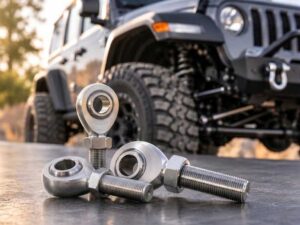
If you buy stainless steel rod ends, or custom CNC parts, you are buying a chain of constraints. Material grade is one constraint. Bar diameter is another. Thread form, bore size, angular misalignment, surface treatment, inspection method, and assembly clearance all add more.
A mill can report strong output while the exact material needed for your part is still hard to schedule. A distributor can carry 304 round bar while lacking 316L in the diameter that fits your drawing. A supplier can quote a part quickly while planning to buy material after the purchase order, which turns a material problem into your delivery problem.
The risk also rises when the component sits in a corrosion-sensitive assembly. Marine linkages, food-processing machinery, washdown conveyors, outdoor automation systems, and water-treatment equipment leave less room for grade substitution. 304 may work in mild industrial conditions. 316L is the better baseline when chloride exposure, washdown chemicals, or salt spray are part of the service environment. 17-4PH can help when strength is the governing requirement, but it should not be treated as a direct corrosion upgrade over 316L in stagnant chloride service.
In a stable market, engineering teams can sometimes finalize the drawing first and solve sourcing later. This quarter, that sequence carries more risk. Material availability and trade exposure should be checked while the drawing is still open enough for practical decisions.
What Buyers Should Change This Quarter
The first change is timing. If your project requires 316L, 17-4PH, duplex, non-standard threads, or a controlled surface finish, treat material confirmation as an early engineering task. Waiting until the purchase order stage leaves too much room for tariff timing, quota exhaustion, or stock substitution to affect delivery.
The second change is documentation. Ask for material certification requirements before production starts, not after shipment. For regulated or infrastructure-related projects, origin and certification can decide whether a part is accepted even when the physical part is correct.
The third change is quote comparison. Do not compare a quote from held stock with a quote based on future material purchase as if they are the same risk. They are different offers. Held stock can reduce schedule risk, but may carry an older cost basis. Future purchase can look cheaper until alloy surcharge, duty, or quota exposure moves.
The fourth change is repeat-order planning. A 100-piece sample run proves manufacturing capability, but it does not prove supply stability for 2,000 pieces across several shipments. If the part will repeat, ask whether the supplier can reserve material or lock the sourcing path before the first batch is machined.
Final Takeaway
This week’s stainless steel news is not only about tariffs, nickel, or regional demand. It is about how those forces are now landing inside everyday procurement work. The stainless steel supply chain is still functioning, but the buyer’s job has become more technical.
Price still matters. It just cannot stand alone. For precision stainless steel components, the better question is whether the supplier can control grade, form, documentation, machining, surface treatment, and delivery under the trade conditions that actually apply this quarter.
If your project involves corrosion-resistant linkages, spherical bearing assemblies, custom CNC stainless parts, or repeat production in 304, 316L, 17-4PH, or duplex grades, material sourcing can be reviewed with Profab Machine before the drawing is released for production.
References
UK Government, “UK’s steel trade measure from 1 July 2026,” updated July 22, 2026.
Office of the United States Trade Representative, “USTR Takes Action in Forced Labor Section 301 Investigations,” July 23, 2026.
BIR, “World Mirror on Stainless Steel & Special Alloys, Quarterly Report July 2026,” July 8, 2026.
ANTARA News, “Indonesia limits nickel quota expansion to support global prices,” July 11, 2026.
Worldsteel, “Short Range Outlook April 2026,” April 14, 2026.