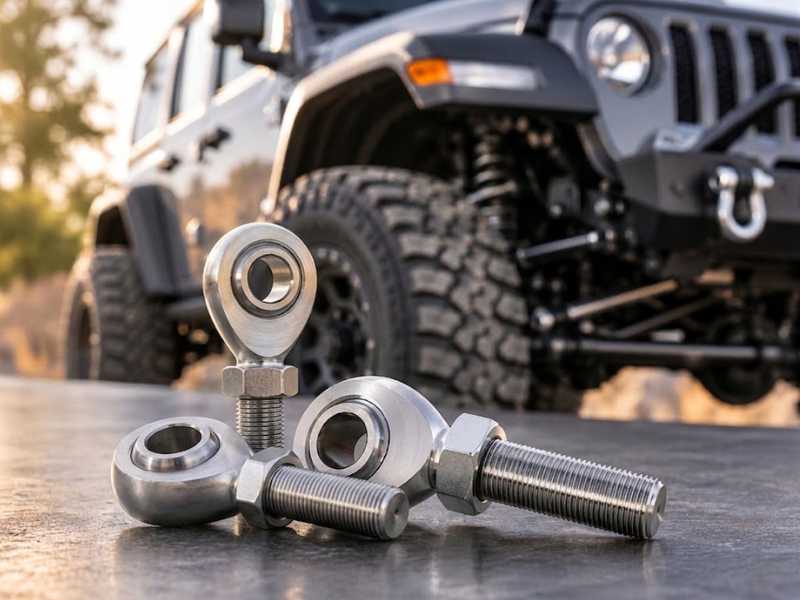
The standard forum answer is no. Heim joints are for trail rigs, not daily drivers. Metal-on-metal contact transmits vibration, they wear faster on pavement, and you can't just replace them at any parts store.
That answer treats all heim joints as identical and ignores the specifics of where they're installed. The experience of running heims in your steering tie rod is completely different from running them in a track bar or a control arm upper mount. Getting lumped together is why the forum debates never settle.
Where You Install Heim Joints Changes Everything
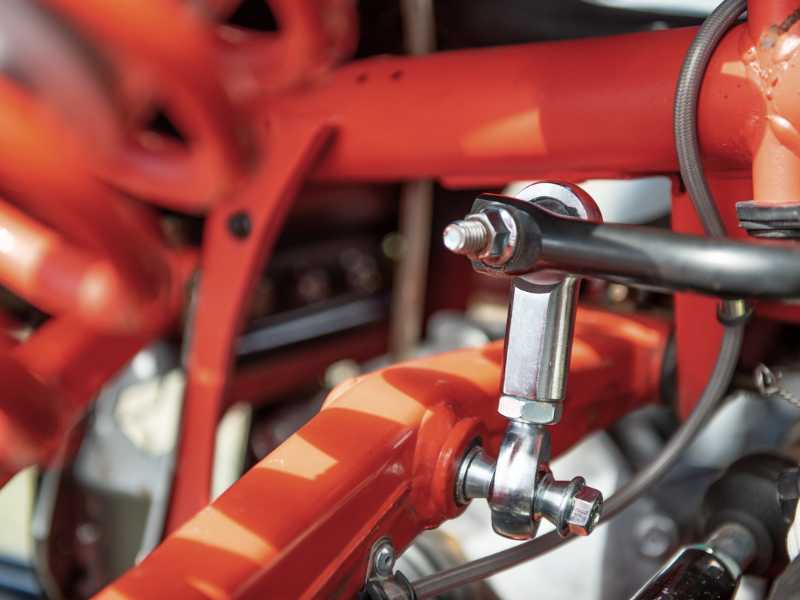
On solid-axle Jeeps, heim joints are most commonly found in the steering linkage, track bar, and adjustable control arms. Each location experiences different loads, articulation angles, and NVH characteristics, so the trade-offs are not the same across every application.
For example, a heim joint used in a steering tie rod affects steering feel much more directly than one installed in a track bar or control arm. That's why opinions about heims on daily-driven Jeeps often vary depending on where they're actually installed.
Tie rod and drag link heims are the most debated for daily driving, and with good reason. Steering inputs are continuous. Every lane change, every parking maneuver, every road imperfection feeds directly through the drag link and tie rod into your hands. A worn heim in steering develops play that you feel immediately as vagueness, and the metal-on-metal contact means road vibration reaches the wheel without the rubber buffer that a stock tie rod end would absorb. This is where the "heims are terrible for daily driving" reputation mostly comes from, and it's not wrong.
Track bar heims are different. The track bar controls lateral movement of the axle. It cycles under load on bumps but isn't in constant motion the way steering linkage is. A heim here transmits less NVH into the chassis because the bar isn't connected directly to your hands. Users who swap heims in purely for track bar applications frequently report no noticeable change in daily comfort, which matches the geometry of what that joint is actually doing.
Control arm frame mount heims are different again. At the frame mount, the heim replaces a rubber bushing that absorbs fore-aft forces during suspension articulation. Losing that bushing compliance adds some harshness, but in most Jeep builds with lift the factory bushing was already deflecting under load enough to change the geometry the suspension was supposed to hold. A heim here keeps the geometry honest at the cost of more noise transmitted into the frame.
Why Daily Driving Is Harder on Heims Than Trail Use
It's easy to assume that off-road abuse is always harder on heim joints than daily commuting because of the larger suspension loads. In reality, service life depends on much more than peak load alone.
A daily-driven Jeep subjects its rod ends to thousands of small steering corrections, suspension movements, potholes, and vibration cycles every week. More importantly, it is continuously exposed to rain, road salt, dirt, and airborne contaminants. These environmental factors can gradually accelerate wear and corrosion, especially on unsealed metal-on-metal rod ends.
Trail rigs experience much higher impact loads, but they are also more likely to be inspected, cleaned, and serviced after each trip. Many weekend wheeling vehicles actually spend relatively little time accumulating mileage compared with a commuter that sees hundreds of road miles every week.
For many daily-driven Jeeps, contamination and corrosion often have as much influence on rod-end lifespan as mechanical loading itself. That's why maintenance habits, environmental exposure, and rod-end quality usually matter more than simply whether the vehicle spends more time on pavement or trails.
Carbon steel rod ends are particularly vulnerable to corrosion in wet or salted environments. As corrosion develops, friction increases and wear accelerates, eventually creating excessive internal clearance that appears as steering or suspension play. In severe cases where maintenance is neglected, corrosion can eventually cause the joint to seize.
The Maintenance Question Nobody Answers Honestly
How often you actually maintain the heims determines whether they're worth it more than any other single factor. Heim joints need to be inspected for play and lubricated on a schedule. On a trail rig that comes back from every run for a wash and inspection, that schedule gets kept. On a daily driver that goes to work and back, it rarely does.
NAXJA's XJ forum has at least one documented case of heims running 140,000 miles on a street-driven vehicle without failure, kept up with white lithium grease at every oil change. That's a real data point. It's also an outlier driven by unusual maintenance discipline.
Stainless Heims Joints Change the Calculus for Daily Use
The material question matters more for daily driving than for trail use. A carbon steel heim on a weekend trail rig gets cleaned after every run and replaced at the first sign of wear. A carbon steel heim on a daily driver that commutes through road salt is fighting corrosion constantly between service intervals.
Stainless steel heim joints resist the surface oxidation that starts the degradation cycle on carbon steel. The ball contact surface stays cleaner between maintenance intervals, meaning the joint maintains its rated clearance longer in wet and salty conditions. For a Jeep that sees significant winter driving, the upgrade from carbon steel to stainless isn't about strength. It's about not having to replace the heims every season.
The trade-off is that many stainless alloys are not as hard as high-strength chromoly materials used in premium racing rod ends. However, for properly sized rod ends on most recreational and daily-driven Jeeps, stainless steel still provides more than adequate strength while offering significantly better corrosion resistance. For pure load capacity in a racing or hardcore rock crawling application, chromoly wins. For daily driving where corrosion resistance and longevity between services matters more than peak strength, stainless is the better choice.
So Are They Worth It?
It depends on why you're installing them.
If the Jeep is lifted and you're dealing with geometry that stock tie rod ends can't accommodate properly, heims may be the only option that positions the joints correctly. That's not really a preference question. You need the adjustability.
If you're replacing worn stock components and the geometry works fine, upgraded heavy-duty tie rod ends with forged joints are probably the better daily-driver call. Better sealing, easier to source, less NVH.
If heims are going into the track bar or control arm mounts specifically, the daily drivability impact is much smaller than the forums suggest. Most of that bad reputation comes from steering linkage installations, where you actually feel every joint imperfection in your hands.
The blanket "heims are bad for daily driving" verdict is a reasonable shortcut for someone who won't maintain them. For someone who will, and who's using them where the geometry actually calls for them, they're a legitimate choice on a Jeep that sees both road and trail.
Conclusion
Heim joints aren't universally right or wrong for a daily-driven Jeep. Location, material, and maintenance discipline determine the outcome more than whether the vehicle spends its week on pavement or trail.
Profab Machine supplies stainless steel heim joints in UNF and metric thread sizes, in 304 and 316L, for Jeep steering and suspension builds. For daily-driven applications where corrosion resistance matters alongside load capacity, material and size specifications can be confirmed against your setup.