

Global stainless steel melt shop output climbed in the first quarter of 2026. WorldStainless reported total melt shop output at 15.8 million metric tons, up 2.5% year-on-year from 15.4 million metric tons in Q1 2025. On the surface, that reads as a supply-positive signal: more material in the system, easier sourcing, steadier pricing.
The demand side doesn’t support that reading. The World Steel Association’s April 2026 Short Range Outlook forecasts broad global steel demand growth for 2026 at just 0.3%. Producers are running capacity ahead of confirmed orders. For buyers of stainless steel components, the gap between rising supply and flat demand creates a specific set of conditions worth understanding before you plan procurement for the rest of the year.
What the Latest Numbers Show
The regional breakdown matters as much as the headline figure. Asia drove essentially all of the growth, producing 13.4 million metric tons in Q1 2026, up 3.3% year-on-year. China alone accounted for 9.84 million metric tons, a 4.3% increase, and now represents nearly 62.4% of global stainless output. That’s not a temporary concentration. It reflects structural differences in energy costs, raw material access, and domestic demand from construction and manufacturing.
Europe moved in the opposite direction. EU production fell 4.6% to 1.5 million metric tons. The US posted modest growth of 2.3%, reaching 0.6 million metric tons.
The demand picture from worldsteel is clear-eyed: 2026 is a bottoming year, not a recovery year. Chinese steel demand is still contracting, expected to decline 1.5% before flattening out in 2027. The headline melt shop output numbers look healthier than the underlying demand picture actually is. Nickel, one of the main cost drivers for 300-series stainless, traded in the $17,000–$18,800 per metric ton range during Q1. That’s elevated relative to the lows of 2023–2024, which means raw material cost support is still present under stainless prices, limiting how far spot prices can fall even in a soft demand environment.
Why This Matters for Buyers
The instinct when output rises is to expect looser supply and lower prices. That logic works cleanly in a commodity market with uniform grades and standardized demand. Stainless steel components don’t behave that way.
Higher melt shop output doesn’t translate uniformly across all product forms. Sheet and coil move with broader output figures. Bar, rod, and precision-machined components follow their own supply chains, with separate mill schedules, finishing lead times, and distributor inventory positions. A 2.5% increase in global melt output doesn’t produce a 2.5% improvement in the availability of 316L rod at the dimensions and tolerances you’re actually buying.
Alloy surcharges move independently of production volumes. Nickel pricing stayed volatile through Q1 2026, and surcharges on 300-series stainless continued to shift monthly. Buyers who price on an average-cost basis in a month-to-month surcharge environment can find that landed cost differs meaningfully from the quoted base price depending on when the material ships.
Non-standard specifications remain constrained regardless of headline production levels. Standard sheet and coil grades are where production increases show up most visibly. Non-standard bore tolerances, custom alloy combinations, and tight-tolerance machined components still face long lead times from mills and processors. Urgency doesn’t compress that timeline. Planning does.
What It Means for Stainless Steel Components
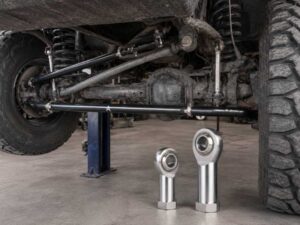
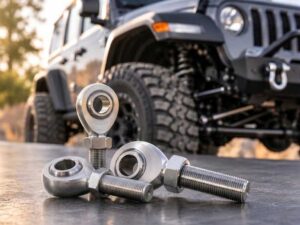
For buyers of precision stainless components, specifically stainless steel spherical bearings, rod ends, and custom CNC machined parts, the macro production increase matters less than the specifics of your grade, geometry, and delivery window.
Grade selection affects availability differently in the current market. 316L and 304 in standard bar form are generally accessible across Asia-based suppliers with reasonable lead times. 17-4PH, Duplex 2205, and Super Duplex 2507 sit in a different tier. These grades have narrower production windows at most mills, and availability fluctuates more with overall demand patterns. If your application requires one of these grades, the current environment rewards locking in supply earlier rather than relying on spot availability.
Custom tolerances and non-standard configurations are where the long lead-time reality bites hardest. A standard-bore spherical bearing in 316L from a well-stocked supplier is a different procurement exercise from a custom-bore version in 17-4PH with a specific thread combination. The latter requires machining against a confirmed order. Higher headline production doesn’t create buffer stock in custom configurations.
For buyers running marine equipment, food processing lines, or industrial automation systems that depend on 316L components for corrosion resistance, the current supply environment is workable for standard configurations. The complication appears when a project hits a specification outside the standard tier with a short procurement cycle.
What Buyers Should Check Now
If you’re sourcing stainless steel components in the second half of 2026, a few specific checks are worth doing before you finalize specs or commit to a project timeline.
Confirm your grade requirement against your actual operating environment. 304 covers dry or mildly corrosive conditions. 316L is the baseline for salt water, CIP cleaning cycles, and food-contact applications with acid or saline content. If the application is borderline, defaulting to 316L avoids a respecification later that costs more than the grade premium.
Confirm whether your geometry is standard or custom. Standard bore sizes and thread combinations in common grades are where supply responds most directly to the market conditions described above. Non-standard combinations require dedicated machining lead time that doesn’t compress easily.
Check your actual lead time requirement against realistic supplier timelines before you commit to a delivery date downstream. If your project needs components in eight weeks and you’re sourcing a custom configuration, that tension needs to be resolved at the RFQ stage.
Assess whether you have tolerance for alloy surcharge variation. If you’re pricing a project with a fixed stainless component cost and the order ships three months later, surcharge movement over that period can affect your margin. Fixed-price or surcharge-capped agreements are worth requesting in the current environment.
Final Takeaway
More stainless coming out of melt shops in Q1 2026 is real. It reflects production capacity running ahead of demand in a transitional year. For buyers, it means standard grades in standard configurations are reasonably available, and the supplier leverage that came with tight supply in 2022–2023 has eased. It doesn’t mean pricing is soft, lead times have collapsed, or that non-standard requirements have become easier to fill.
What determines whether your project runs on schedule and on budget is grade selection, dimensional precision, and whether your supplier has machining capacity against your timeline. Global output headlines don’t change any of that.
Profab Machine manufactures stainless steel CNC components in 304, 316L, 17-4PH, and duplex grades. If your sourcing timeline or specification falls outside standard stock parameters, lead time and material availability can be confirmed against your specific requirements.
References
- WorldStainless: Stainless steel melt shop production increases by 2.5% in Q1 2026 — worldstainless.org
- World Steel Association Short Range Outlook April 2026 — worldsteel.org
- Investing News Network: Nickel Price Update Q1 2026 — investingnews.com
- Continental Steel & Tube / Mead Metals: 2026 State of the Metal Industry