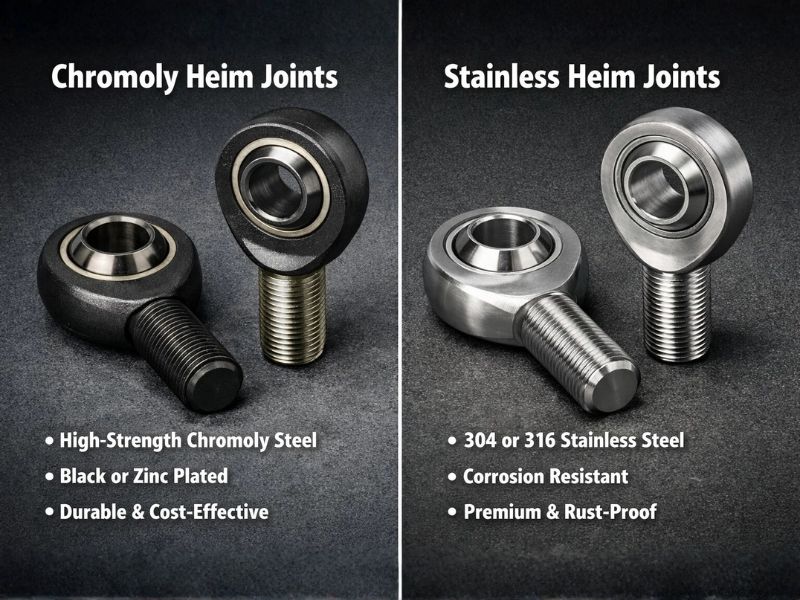
Chromoly and stainless heim joints solve different problems, and picking between them comes down to which threat matters more for your build: mechanical overload or corrosion. Here's how the two actually compare across strength, environment, cost, and maintenance.
Strength and Durability
Chromoly heim joints get their strength from 4130 chromoly steel, heat-treated to handle higher stress without bending or breaking. That's why racers and off-road builders default to chromoly: it holds up under repeated hard impacts and heavy cyclic loads better than any stainless alternative. Hard chrome finishes and bearing-grade races add wear resistance on top of the base material's strength.
Stainless steel heim joints are tougher than they get credit for, but they're genuinely softer than heat-treated chromoly and won't match it under the heaviest loads. For normal use and moderate loads, that gap doesn't matter. Where it does matter is corrosion: stainless holds up in wet or salty environments that would eventually attack chromoly, which makes it the better default for marine and outdoor builds regardless of load.
Environmental Performance
Chromoly's steel base needs a coating or plating to resist rust, and that protection wears off over time. In wet or muddy service without diligent upkeep, rust spots eventually show up on the coating's weak points.
Stainless doesn't have that vulnerability. It holds up in rain, snow, and salt air without a coating to maintain, keeps its finish and strength far longer in those conditions, and needs less attention overall. For anything that lives outdoors or near water, that's a real maintenance advantage, not just a marketing point.
Price Comparison
Chromoly heim joints are generally the cheaper option, both in raw material and how they're manufactured. For projects needing a lot of joints, that adds up.
| Type | Typical Price (each) |
|---|---|
| Chromoly Heim Joint | $20 - $40 |
| Stainless Heim Joint | $35 - $60 |
Stainless costs more because of the material itself and the added corrosion resistance. On a tight budget with a low-corrosion application, chromoly is the more practical choice.
Long-Term Value
Price up front isn't the whole picture. Chromoly is built for cyclic fatigue resistance, flexing and absorbing repeated impacts without cracking, which is exactly what off-road and racing use demands. In humid or snowy climates, that strength comes with an ongoing cost: rust inhibitors and dust boots to keep the housing from pitting over time.
Stainless trades some of that fatigue margin for corrosion resistance that doesn't need upkeep. In wet or salty service, the lower maintenance cost and the avoided replacement cycle from rust damage can make stainless the better value despite the higher purchase price. The right call depends on which failure mode you're actually protecting against: mechanical fatigue or corrosion.
Maintenance and Lifespan
Upkeep Needs
Chromoly heim joints need regular inspection, especially in tough service. Most manufacturers recommend keeping them clean and dry rather than greased, since lubricant attracts dirt and grit that accelerates wear.
Stainless needs less attention. Rust isn't a concern, so maintenance is largely limited to checking for dirt and physical damage.
Expected Service Life
Heim joints are wear items, not permanent hardware, and how long one lasts depends heavily on use and environment. A well-maintained chromoly joint in moderate service can run for a long time; the same joint in heavy off-road use with poor upkeep can fail far sooner. Stainless joints in outdoor or marine service typically hold up for years without the rust-driven degradation that limits chromoly in the same environment.
Treat heim joints as scheduled-replacement items rather than waiting for failure. Regular inspection catches wear before it becomes a safety issue, and a routine check-and-replace schedule matters more for daily-driven vehicles than for occasional-use builds.
Application Guide: Choosing the Right Heim Joint
Off-Road and Racing
Chromoly is the default here: it gives the best support under repeated hard impacts and heavy cyclic loads. PTFE-lined joints add smoother operation, better heat management, and resistance to dirt intrusion. On rocky trails or in racing use, expect to inspect and clean joints regularly, since dirt and mud wear down protective coatings faster than in street use.
Marine and Outdoor
Water, salt, and mud are the defining conditions here, and stainless is the clear choice. No coating to maintain, no rust to watch for, and joints that keep moving smoothly trip after trip on boats, trailers, and outdoor equipment.
Street and Daily Use
Correct sizing and mounting angle matter more than material choice for daily-driven vehicles. The most common failure causes are:
- Undersized heim joints, which break down quickly under normal load
- Improper mounting angle, which causes binding
- Skipped lubrication (on joints designed for it), which accelerates wear
- Missing misalignment spacers, which restrict the joint's full range of motion
- Mixed hardware grades, where weak fasteners fail before the joint does
Either chromoly or stainless works for daily driving. Chromoly gives more strength margin; stainless gives better corrosion resistance and lower maintenance. Regular inspection and lubrication matter more than which material you pick.
Conclusion
The choice comes down to which threat your application actually faces. Extreme mechanical stress, high-speed impacts, or heavy towing favor chromoly. Moisture, salt, or long-term outdoor exposure favor stainless. Profab Machine can match the material to your specific environment and performance needs for a safer, more cost-effective result over the long haul.
FAQ
What is the main difference between chromoly and stainless heim joints?
Chromoly gives more raw strength for heavy mechanical loads. Stainless resists rust and corrosion far better. Choose based on which failure mode your application faces.
Can you use chromoly heim joints in wet or salty environments?
Yes, but they need a protective coating and regular cleaning. Skipping maintenance lets rust form once the coating wears through.
Are stainless heim joints strong enough for racing?
Stainless works for light racing and daily driving. For heavy racing or off-road use with repeated hard impacts, chromoly's extra strength margin is the safer choice.
How often should you check or replace heim joints?
Inspect every few months as a baseline, and replace at the first sign of wear, rust, or loose movement. Regular checks keep the vehicle safe.