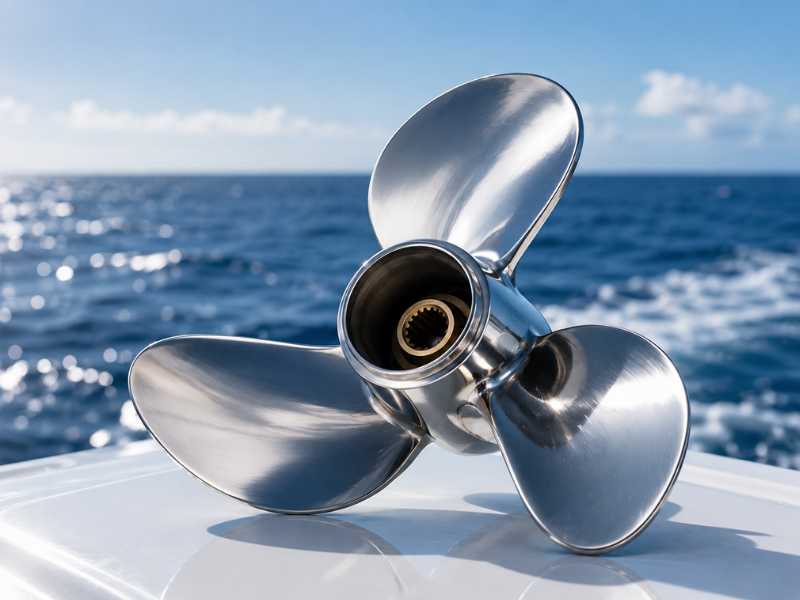
The question comes up on every boating forum. You just bought a stainless steel prop for the performance gains, and now a friend tells you that you are risking your lower unit. The logic sounds reasonable. Stainless steel does not bend as easily as aluminum. If you hit something, the impact energy has to go somewhere. So it must go into your gears, your bearings, and your prop shaft. But real-world testing and hub design data tell a more complicated story.
What Happens to Impact Energy in a Propeller Strike
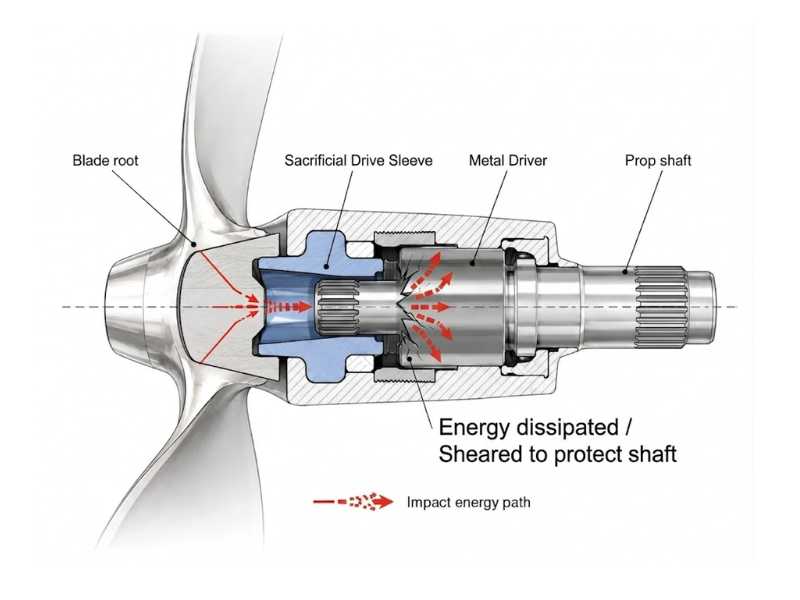
When your prop strikes a submerged object, the kinetic energy of the rotating blade has to be absorbed somewhere. In an aluminum prop, the blade itself deforms. That deformation absorbs a portion of the energy before the rest transmits through the hub to the shaft and gears. In a stainless steel prop, the blade is three to four times stiffer. It does not deform as much. So a higher percentage of the impact energy travels through the blade root into the hub.
The critical component in this energy path is the hub. Not the gearcase, not the bearings, not the shift shaft. The hub is the designed failure point in every modern propeller system.
If your stainless steel prop hits a submerged log or rock at planing speed, the hub should shear before your gears do. If it does not, you either have a seized hub or the wrong hub type for your engine.
Hub Slip Technology Is What Protects Your Lower Unit
Every outboard propeller, whether aluminum or stainless steel, attaches to the shaft through a hub that includes a sacrificial element. In aluminum props, this is often a pressed-in rubber bushing that can slip under sudden torque spikes. In stainless steel props, manufacturers use replaceable hub systems like Mercury Flo-Torq, Yamaha SDS, or Volvo SX hubs.
These hub systems are engineered to shear at a torque value below the failure threshold of the gearcase components. The Flo-Torq SSR hub, for example, uses a hard plastic drive sleeve with a precisely controlled shear strength. When the blade strikes an object, the sudden deceleration creates a torque spike at the hub. If the torque exceeds the shear rating of the drive sleeve, the hub slips or shears, isolating the gearcase from the rest of the impact energy.
The takeaway is that the hub is doing the work, not the gearcase. A stainless steel prop with a properly matched hub is not going to send more damaging torque to your gears than an aluminum prop with the same hub type, because the hub limits the peak torque regardless of blade material.
The One Scenario Where Stainless Steel Does Increase Risk
There is a specific condition where a stainless steel prop can damage your lower unit more than aluminum. That condition is a slow-speed, high-mass impact with a hub that is already seized or has failed to slip.
Imagine you are idling through a shallow channel and your prop hits a rock. At idle RPM, the torque is low. The hub may not shear because the spike is below its threshold. But the blade is stiff enough to lever against the object. In this scenario, the prop shaft can bend, or the gearcase housing can crack, before the hub releases. An aluminum prop in the same situation would likely bend the blade first, absorbing the energy through blade deformation and sparing the shaft.
This is the origin of the belief that stainless steel damages lower units. It is not wrong. But it applies to a narrow set of circumstances. At planing speeds, the torque spike is high enough to shear most modern hub designs before damage propagates into the gearcase.
Lower Unit Construction Matters More Than Prop Material
Your lower unit gearcase housing is made from cast aluminum, designed to balance hydrodynamics, strength, and weight. While the outer housing is aluminum across all major brands, the internal components, such as the gears, prop shafts, and bearings. This is where material strength varies significantly. Higher horsepower outboards, like Yamaha V6 and V8 models, utilize heavier-duty, high-tensile steel internal gearsets to handle immense power.
If you install a stainless steel prop, you are combining the stiffest blade material with the engine's internal drivetrain. While a high-horsepower gearcase has more internal mass to resist sudden shocks, the hub is still the primary protection. As long as the hub is in good condition and rated for your horsepower, the external gearcase housing material remains safe from sudden impact damage.
Pitch and Diameter Selection Changes the Load Path
The mechanical load that a prop places on your lower unit is not just about impact. It is also about steady-state torsional load. A stainless steel prop with excessive pitch or diameter can overload your gears and bearings during normal operation, not just during an impact.
The gearset in your lower unit is designed for a specific torque range. If you run a stainless steel prop that is two or three pitches above the factory recommendation, you force the engine to work harder at lower RPMs, increasing the steady-state torque on the pinion and ring gear. Over time, this can cause gear tooth fatigue, bearing brinelling, and seal failure. This failure mode is slow, not sudden. It shows up as gear noise or metal particles in the gear oil, not as a cracked housing from a single strike.
This is the engineering point that the forum debates often miss. The real risk of a stainless steel prop is not just that it transmits more impact energy on a single hit. It is that the wrong prop creates a higher sustained load that wears out the gearcase components over hundreds of hours.
What the Testing Data Actually Shows
Independent testing by propeller manufacturers and marine engineering firms has measured the torque transmitted to the prop shaft during impact events. The results consistently show that the peak torque is determined primarily by the hub shear rating, not by the blade material. A Flo-Torq III hub on a stainless steel Mercury prop shears at approximately the same torque as the same hub on an aluminum Mercury prop. The blade material affects how much of the impact energy is absorbed before the hub engages, but once the hub shears, the torque path is interrupted.
ABYC maintains a propeller guard test procedure covering strike safety, but neither ABYC nor the US Coast Guard publishes guidance treating aluminum and stainless steel differently for lower-unit protection specifically; their hardware-selection focus is on hub matching and inspection, the same points covered above. Their focus is on proper hub selection, prop-to-engine matching, and regular inspection of the hub condition.
Recommended Hub Types for Stainless Steel Props
If you are running a stainless steel prop, use a hub system that is designed for your engine brand and horsepower range. For Mercury outboards, the Flo-Torq SSR or Flo-Torq III are the standard choices. For Yamaha, the SDS hub is designed specifically for stainless steel props and includes a cushioning ring that dampens low-speed impact events. For Suzuki and Honda, aftermarket hub options from Solas and Turning Point provide equivalent shear protection.
Inspect your hub condition at the start of every season. A hub that has already partially sheared from a prior impact will not protect your gearcase on the next strike. If you see rubber extrusion, missing drive sleeve segments, or play between the prop and the hub, replace the hub before running the engine.
What a Working Hub-Slip Event Typically Looks Like
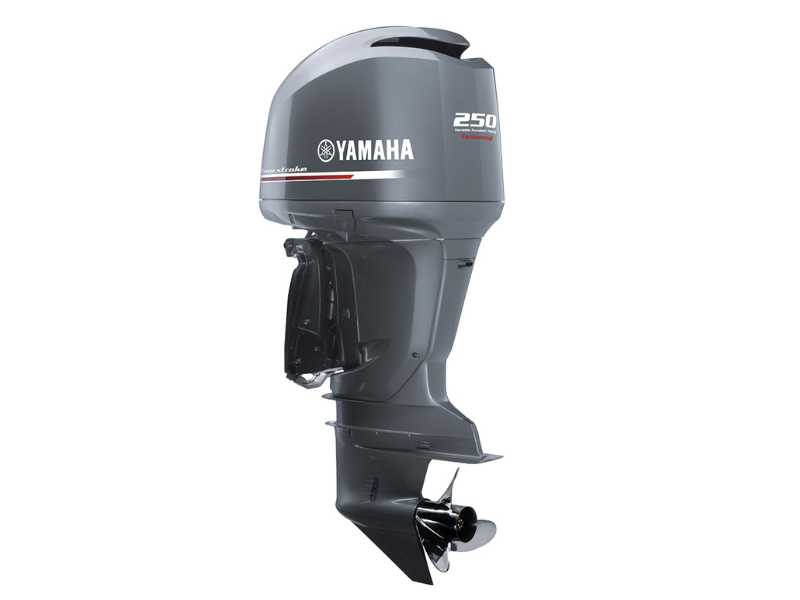
A typical scenario on a mid-size outboard, say a 24-foot center console running a Yamaha F250 with a stainless steel SDS prop, illustrates how this is supposed to play out: the boat strikes a floating log at cruising speed, the blade takes a moderate bend as it absorbs part of the impact, and the SDS hub's cushioning ring shows rubber extrusion, meaning it did its job. The prop shaft stays straight, the gearcase oil stays clean, and the repair is limited to the prop and the hub insert, a fraction of what a gearcase rebuild would cost. That is the outcome the hub system is designed to produce when it slips as intended.
When You Should Run Aluminum Instead
You should consider aluminum over stainless steel if your engine is below 115 horsepower and you operate exclusively in shallow or debris-heavy water. At lower horsepower, the performance gain from stainless steel is marginal. The risk of a slow-speed levering impact is proportionally higher because the hub shear threshold is closer to your operating torque. An aluminum prop in this range will bend a blade, which you can repair or replace cheaply, while a stainless prop may bend your shaft.
For engines above 150 horsepower, stainless steel is the standard recommendation from Mercury, Yamaha, and Suzuki. The hub systems on these engines are matched to the higher torque output, and the performance benefit in hole shot, top speed, and fuel efficiency justifies the cost.
Inspection Points After Any Propeller Strike
After you hit a submerged object with a stainless steel prop, inspect these four components before running the engine again. First, remove the prop and check the hub for signs of shear or extrusion. Second, check the prop shaft for runout using a dial indicator. Maximum acceptable runout is 0.003 inches for most outboards. Third, drain a sample of the gearcase oil and check for metal particles. Shiny silver particles indicate gear or bearing damage. Fourth, spin the prop shaft by hand and listen for grinding or roughness from the bearings.
If all four checks pass, you can install a new or repaired prop and continue running. If you find shaft runout or metal in the oil, the lower unit needs to be opened for inspection before further use.
Summary
A stainless steel prop does transmit more impact energy to the hub during a strike than an aluminum prop. But the hub, not the gearcase, is the designed energy absorption point. If you use the correct hub system for your engine, keep the hub in good condition, and select the appropriate pitch and diameter, the risk of lower unit damage from a stainless steel prop is low. The more common and often overlooked risk is steady-state torsional overload from an incorrectly pitched prop, which causes gradual gear fatigue rather than sudden failure.