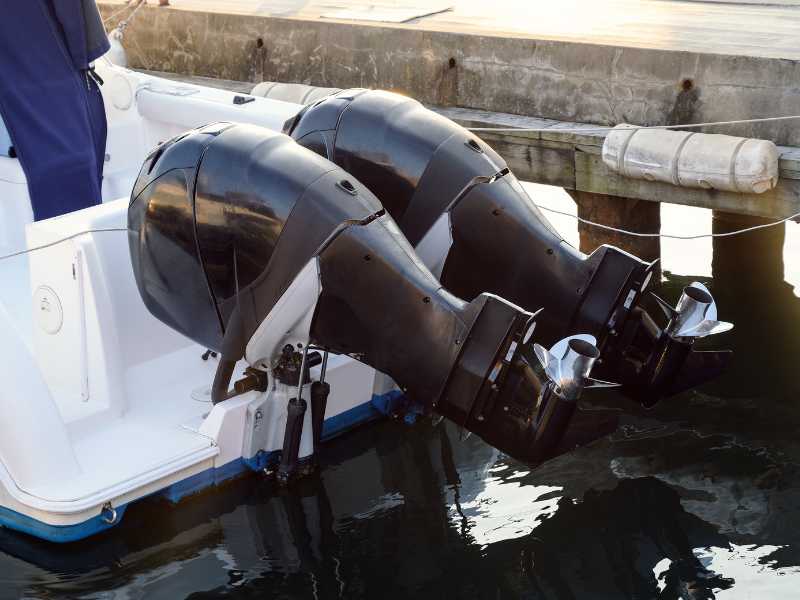
You are standing at the boat ramp on a Saturday morning looking at the back of your boat. The aluminum prop on your Mercury 50 has nicks along the leading edges from last season. Your buddy just dropped 600 dollars on a stainless steel three blade for his 90HP center console and he is telling you that you should do the same. The marine forum threads you read last night are split. Half the posters say stainless is always better. Half say it is a waste of money on a small outboard. You want a real answer before you spend the equivalent of a long weekend's gas budget on a piece of metal. This article is that answer, and it is going to disagree with most of what you have read.
Why the 75HP Rule Exists in the First Place
The marine industry generally treats 75HP as the threshold above which a stainless steel propeller starts paying for itself. There is real engineering behind that number, not just marketing. At higher horsepower, blade deflection forces grow quickly. Aluminum blades flex under load at wide open throttle. That flex bleeds RPM, scrubs top end, and reduces fuel efficiency. Stainless steel has roughly three times the tensile strength of the cast aluminum alloys used in production props. A thinner SS blade with more cup holds its pitch under load where aluminum gives. On a 200HP offshore engine the difference is measurable and worth the money. On your 50HP it is much smaller because the forces involved are much smaller. The Mercury 50 two stroke runs WOT in the 5000 to 5500 RPM range with a 1.83 to 1 gear ratio. A properly pitched aluminum prop in good condition keeps that engine inside its powerband without trouble in most conditions. The 75HP rule is not arbitrary. It reflects the point where blade flex starts to become the dominant performance loss rather than a minor one.
What You Actually Gain at 50HP
Real world reports from 50HP owners who switched to stainless are genuinely mixed, and that should tell you something. Some report a 1 to 2 mph gain at the top end. Some report a noticeably crisper hole shot when the boat is loaded heavy or carrying passengers. Others report no measurable difference at all once they put a GPS on the water. The variance comes down to four things: hull weight, load, the condition of the old prop, and whether the original aluminum prop was even the right pitch to begin with. A worn aluminum prop with rounded leading edges absolutely costs you speed and bite. Replacing it with a new aluminum prop of the correct pitch will recover most of that loss. Replacing it with stainless will recover all of it plus a small margin. The key word is small. Expect 1 to 2 mph at the top end on a typical 50HP rig if your current aluminum prop is tired and you upgrade to a properly sized SS three or four blade. If your current aluminum prop is healthy and correctly pitched, the difference is closer to nothing.
The Cost Math You Should Actually Run
A quality aluminum prop for a 50HP outboard runs roughly 100 to 180 dollars. A comparable stainless steel three or four-blade runs 350 to 600 dollars, sometimes more depending on brand. Stainless lasts 2 to 3 times longer in normal use because it resists chips, dings, and edge erosion that slowly degrade aluminum performance. On paper, SS wins on lifecycle cost over a long enough time horizon. In practice, the math changes once you factor in how 50HP boats are actually used, and that is where most prop upgrade articles fall apart.
The Prop Strike Asymmetry Nobody Talks About
Aluminum is not just a cheaper material. It is a sacrificial component in your driveline. When you hit a submerged log, drift onto an oyster bar, or sand a shallow flat at speed, the aluminum blade deforms, breaks, or strips off. That deformation absorbs impact energy. The energy that bends or breaks an aluminum blade does not travel up the prop shaft into your gearcase. A stainless steel prop is significantly stiffer. It does not absorb the impact the same way. On a hard strike, the SS blade transmits more of that force into the prop shaft, gearcase, and lower unit. A bent prop shaft, cracked gear housing, or sheared driveshaft on a 50HP outboard runs 800 to 2000 dollars or more in parts and labor. A replacement aluminum prop runs under 200 dollars. That is the asymmetry. You are trading a cheap, replaceable failure point for an expensive one. On a 200HP offshore boat running clean blue water, the trade often makes sense because strikes are rare. On a 50HP fishing or utility boat working stumps, lily pads, oyster bars, or unfamiliar lakes, the math flips. The very places small outboards work hardest are the places aluminum's failure mode protects you the most.
The Spare Aluminum Strategy
Here is the cost argument most prop upgrade articles skip entirely. If a stainless prop runs 400 to 600 dollars and a quality aluminum runs 150, you can buy two aluminum props for the price of one stainless and still have money left over for a prop wrench and a bag of cotter pins. Keep the spare in your bow locker with the right socket. Hit a submerged stump at the unfamiliar ramp on Saturday morning, swap the prop in 10 minutes on the trailer, finish the trip. No tow bill. No ruined weekend. No 1500 dollar gearcase repair invoice arriving Tuesday. For a 50HP recreational rig, this is a more resilient strategy than running stainless in most use cases. It has a side benefit too. You can carry a spare aluminum in a slightly different pitch as a tuning option. A spare one inch lower in pitch gives you more bow lift for heavy loads, pulling a tube, or carrying extra passengers. Try doing that with a single 500 dollar SS prop.
When Stainless Steel IS Worth It on a 50HP
Stainless does make sense in specific cases, and it is worth being honest about them. The first is deep, clean water. If you run a 50HP in open lakes or coastal water where strikes are genuinely rare, the asymmetry argument weakens, and the durability advantage of SS becomes real. The second is performance-focused use. If your hull is light, your trim is dialed, and you are chasing every last mph, an SS four-blade with proper cup can give you better bite at the top end and cleaner planing. The third is heavy, consistent loading. If you run a 50HP pontoon, a loaded jon boat near its rated capacity, or you regularly haul three adults plus gear, blade flex on aluminum costs you more under that load and SS rigidity earns its keep. The fourth is visible cavitation at WOT. If your current prop is correctly pitched but the engine tach jumps under load or you hear the blade slipping when you punch the throttle, switching to a thinner SS blade with more cup often cleans that up. Cavitation has multiple causes, but blade flex is one of them. West Marine's propeller selection guide walks through how cavitation, ventilation, and pitch interact, and it is worth reading before you order anything.
When Aluminum Is the Smarter Choice on a 50HP
Stick with aluminum if you fish or cruise shallow water regularly, especially in unfamiliar areas. Stick with aluminum if you trailer to public ramps where you do not know the bottom. Stick with aluminum if your boat is a budget fishing rig where 400 dollars is better spent on a depth finder, a second battery, or a season of fuel. Stick with aluminum if your home dock sits in a high traffic area where light grounding is a regular event. In all of these cases the failure mode of aluminum is working in your favor, not against you. The prop is engineered to be the cheapest replaceable part in the driveline, and that is exactly what you want when something goes wrong.
A Word on Pitch and Diameter Before You Buy Anything
Whatever material you choose, pitch matters more than material at 50HP. The Mercury 50 two-stroke needs to reach 5000 to 5500 RPM at WOT under a normal load. If your engine overrevs past 5500, you need more pitch. If it falls short of 5000, you need less. Get this right with aluminum first. If your engine is dialed in on aluminum and you still want more, then consider stainless. Switching to stainless will typically drop WOT RPM by 100 to 200 at the same nominal pitch, because the SS blade does not flex and slip the way aluminum does. If you were sitting at 5400 on aluminum, you may land at 5200 on the equivalent SS, which is fine. If you were at 5100 on aluminum, the same SS pitch could drop you below 5000 and pull you out of the powerband. West Marine's guide to propeller pitch and diameter covers the underlying geometry if you want to understand pitch and slip in more depth.
Final Verdict for the 50HP Owner
Stainless steel props are excellent components. They are not automatically the right choice for a 50HP outboard. The rigidity advantage that justifies the price on a 200HP offshore rig is genuinely smaller at 50HP. The prop strike asymmetry on a small recreational boat is genuinely larger. The cost-effective answer for most 50HP owners is a properly pitched aluminum prop plus a spare aluminum in the bow locker. The performance-effective answer, for owners who run clean deep water and want the last mph, is stainless. Run the question through your actual use case, your actual water, and your actual loading rather than industry rules of thumb meant for bigger engines.
Profab Machine manufactures stainless steel propellers and marine-grade drivetrain linkages. Contact Profab Machine to work through the right pitch, blade count, and material for your engine and use case.