A bushing that fits wrong rarely fails on day one. The shaft spins a little rough, the bore wears oval over a few months, or the bushing itself starts turning inside its housing instead of staying put. By the time someone notices, the real cause is usually set at the drawing stage: the wrong fit class on the bore, the wrong fit class on the outside diameter, or a stainless steel bushing specified for a job that actually needed a lined or bronze alternative.
This guide covers how to specify a stainless steel bushing correctly: which fit goes where, how to match material to load and environment, and where stainless stops being the right answer.
What a Stainless Steel Bushing Actually Does
A bushing is a plain sliding bearing. A shaft rotates or slides directly against the bushing's bore surface, and the bushing absorbs that friction so the housing bore does not wear instead. That is a different mechanism from a rolling-element bearing or a spherical plain bearing, which carry load through balls, rollers, or a ball-and-socket joint rather than direct sliding contact. A bushing cannot be swapped in for either without re-checking the load path and the expected motion.
Because the shaft and the bushing bore are in direct contact, the fit between them controls almost everything about service life: how much play develops before it matters, how much heat the friction generates, and how long the surface lasts before it needs replacement.
Two Fits, Not One: Housing Bore and Shaft Bore
A bushing sits between two separate fits, and conflating them is the most common bore-tolerance mistake. The outside diameter of the bushing fits into the housing bore. The inside diameter of the bushing fits around the shaft. Each one needs a different kind of fit to do its job.
The housing-to-bushing fit is almost always an interference fit, something like H7/p6 or H7/s6 under ISO 286's tolerance system. The bushing has to stay fixed in the housing under load and under the torque generated by the shaft turning against it. A loose outside diameter lets the whole bushing spin in its bore, which wears the housing instead of the intended wear part and usually costs more to fix.
The shaft-to-bushing fit is the opposite: a clearance fit, typically H7/g6 for a sliding or rotating shaft that needs to move freely but stay located without wobble. Too tight and the shaft binds or galls on startup. Too loose and the joint develops play almost immediately, which shows up as noise or vibration well before the bushing is actually worn out.
Pressing a bushing into its housing also closes up its bore slightly, since the interference fit compresses the bushing wall. Finished bushings are sized to account for this, but a bushing reamed or reworked after installation needs that compression accounted for again, not re-cut to the catalog dimension.
Matching Material to Load, Speed, and Environment
A solid stainless steel bushing (304, 316/316L, or 17-4PH) runs metal-to-metal against the shaft. That gives good dimensional stability and corrosion resistance, but it needs lubrication, and stainless against stainless is prone to galling without it. Pair a stainless bushing with a shaft of a different hardness or alloy, and keep grease in the joint, rather than running two stainless surfaces dry against each other.
A PTFE-lined stainless bushing replaces that metal-to-metal contact with a low-friction liner bonded to the bore. PTFE-lined construction runs without added grease and resists moisture and chemical exposure at the liner surface, which is why it shows up in food-processing and washdown equipment where grease contamination is a real problem. The tradeoff is a lower combined load-and-speed ceiling than a lubricated metal bushing: push a PTFE liner past its rated pressure-velocity limit and it wears out faster than the data sheet implies, so check the manufacturer's PV rating against the actual duty cycle, not just the peak load.
Bronze and bronze-filled PTFE bushings tolerate higher combined load and speed than a plain PTFE liner, but bronze corrodes in marine and washdown service, which is usually why a stainless bushing was being considered in the first place. If a specific application genuinely needs bronze's load capacity more than it needs stainless corrosion resistance, that is a material tradeoff to make deliberately, not a default.
Choosing a Stainless Grade
304 covers dry or mildly humid indoor equipment where chloride exposure is not a concern. 316 or 316L is the standard choice once washdown, marine spray, or any chloride-bearing cleaning chemical is in the picture, since it resists pitting and crevice corrosion better than 304 in that service. 17-4PH trades some of that corrosion margin for higher hardness and wear resistance, which matters more on a bushing carrying higher cyclic load than on one running light, continuous rotation.
Specifying a Bushing for Your Application
Getting a quote moving faster usually comes down to five pieces of information. The physical fit comes from three numbers: the shaft diameter and its tolerance, the housing bore diameter, and the expected radial and axial load. The application side adds two more: whether the motion is continuous rotation, oscillation, or occasional sliding, and whether grease is acceptable in service or the application needs a dry, self-lubricating liner. Axial load often needs a separate thrust washer or spacer rather than asking the bushing itself to carry it, since a plain bushing bore is sized for radial fit, not end-load.
Conclusion
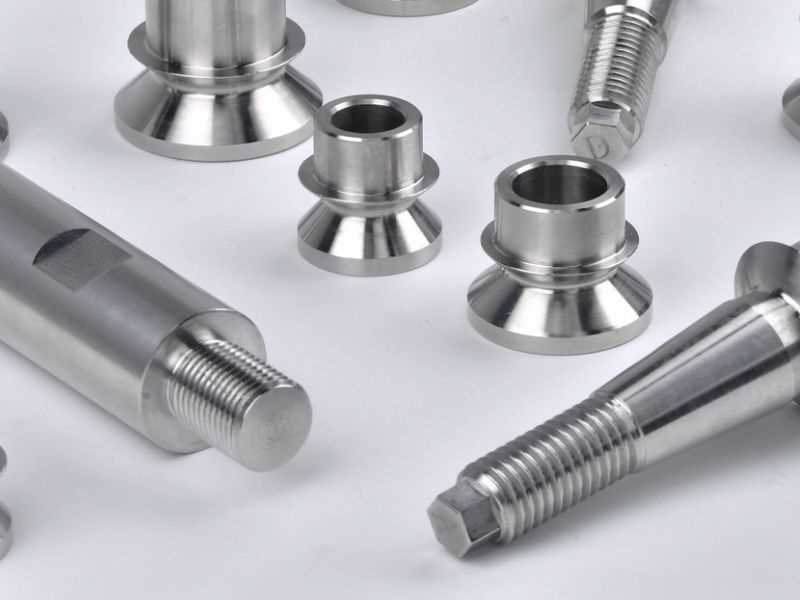
Most bushing failures trace back to one of two decisions made before the part was ever installed: the wrong fit class on the bore or housing side, or a material chosen for availability instead of the actual load, speed, and environment. Getting both right the first time is cheaper than diagnosing a worn housing bore later. Profab Machine machines stainless steel bushings to the bore tolerance, OD fit, and grade your shaft and housing actually call for, working directly from a drawing or sample rather than a generic catalog size.