COM Series
- DesignMetal-to-Metal, Lubrication Groove & Hole
- Material304, 316, or 17-4PH
- Best ForGeneral-purpose radial load, greasable
Profab Machine manufactures stainless steel spherical plain bearings in COM, COM-T, GEC, SLB, WPB, and YPB series. Metal-to-metal, PTFE-lined, and injection-molded sliding systems in 304, 316L, and 17-4PH, matched to your load direction, misalignment, and environment.

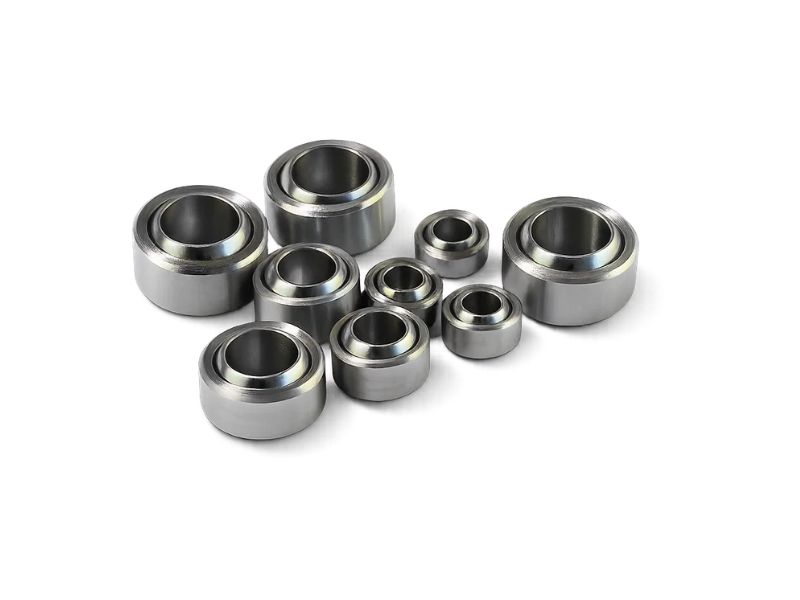
A stainless steel spherical bearing — more precisely, a spherical plain bearing — is a separate inner-ring/outer-ring bearing with a spherical sliding interface. It mounts into your own housing, cup, clevis eye, or machined bore, and accommodates angular misalignment between the inner and outer rings while carrying radial (and in some designs, axial) load.
This is a separate bearing element, not a threaded rod end and not a ball-and-socket linkage. See the comparison below if you're not sure which one your assembly needs.
Whether you are an equipment manufacturer, system integrator, or industrial buyer, Profab can provide standard and custom spherical bearing configurations based on your drawings, specifications, tolerances, and material requirements.


A spherical plain bearing is a separate inner/outer ring bearing that presses or mounts into a housing, cup, or clevis eye you supply. A rod end integrates that same type of bearing into a male or female threaded body, which is easier to adjust and replace but puts the shank and threaded body into the load path. Choose a separate bearing when the structure itself needs a compact bearing eye or a high-load path; choose a rod end when adjustment and quick replacement matter more.
A ball joint linkage uses a ball stud seated into a socket with snap-ring or staked retention — a different interface and load path than a ring-and-race spherical bearing. A spherical roller bearing is a rolling-element bearing built for a different speed, load, and maintenance category entirely, and should not be confused with a spherical plain bearing just because both share the word "spherical." Tell us your load path and mounting method and we'll confirm which category actually fits.
Start with load direction and maintenance access, not bore size alone.
| Requirement | Recommended Series |
|---|---|
| Higher radial load: cylinder eyes, heavy linkage pivots, articulated joints | GEC (Radial) |
| Oscillating motion, moderate travel, limited greasing access | COM-T |
| Maintenance-free, food/packaging, outdoor, or hard-to-access pivots | WPB (PTFE-Lined) |
| Compact, low-friction, lighter-duty radial support | SLB (Injection-Molded) |
| Large angular movement: steering, suspension, lift mechanisms | YPB (High-Misalignment) |
| General-purpose metal-to-metal, greasable, cost-sensitive | COM |
Not sure which series fits? Send your load direction, bore/OD envelope, misalignment angle, and environment in the quote form and we'll recommend a series.
General-purpose grade. Good resistance to humidity, mild chemicals, and food-safe cleaning agents. Use this for indoor machinery, agricultural equipment, and dry-run automation.
Food Automation IndoorMolybdenum addition gives 316L roughly 3× better chloride resistance than 304. Preferred for marine applications, salt-spray environments, offshore, and food-grade lines with CIP chemical cleaning.
Marine Chemical PumpsPrecipitation-hardened grade. After H900 heat treatment, tensile strength reaches ~1,310 MPa — significantly stronger than 316. Used where load rating, not cost, is the primary constraint, such as high-cycle fatigue applications.
High-Load High-CycleProfab Machine adapts stainless spherical bearing designs to your equipment, load direction, environment, and assembly space.
Install maintenance-free stainless spherical bearings in filling heads, transfer arms, guide linkages, and guarding pivots. Sealed or lined structures help the joint survive cleaning cycles and reduce grease-related maintenance.
Use stainless steel spherical plain bearings in steering actuators, hatch arms, access panel pivots, and deck hardware, for better corrosion resistance than plain carbon steel when salt spray or outdoor moisture reaches the joint.
Fit radial spherical plain bearings into cylinder eyes, clevis mounts, and loader linkages. The bearing compensates for angular misalignment so the rod end does not carry side load from imperfect mounting geometry.
Use sealed radial spherical bearings in lift arms, control rods, steering links, and oscillating joints exposed to dust, water, and vibration.
The spherical sliding interface allows angular movement between the inner and outer rings, accommodating shaft-to-housing misalignment and reducing unwanted edge loading. Bearing load capacity depends on size, material combination, sliding system, and operating conditions. Precision-machined from 304/316 stainless steel, it resists salt spray, chemical corrosion, and abrasion for longer service life. Optional self-lubricating PTFE lining or a lubrication programme with a greasing device meets different maintenance-cycle requirements.

Machining centres use CNC turning and milling to produce stainless steel spherical bearing housings and inner rings to precision tolerances. Heat treatment and passivation are available through our outsourced service network for grades and specifications that require them. Self-lubricating PTFE linings or grease lubrication systems with dust-proof seals are fitted to different models. Profab spherical plain bearings are calibrated to specific torque values as part of assembly.

Reduce administrative overhead and thread/fit mismatches. Partner with a manufacturer that supplies fully compatible stainless spherical plain bearings, standoff spacers, rod ends, and locknuts as a complete assembly.
Before issuing a quote, we evaluate your drawing's fit tolerances, liner specifications, and operational load cases to ensure the chosen bearing configuration handles your motion path and environment.
We CNC-machine all race components, housings, and custom sleeves to tight tolerance bands, and confirm fit against your drawing before production.

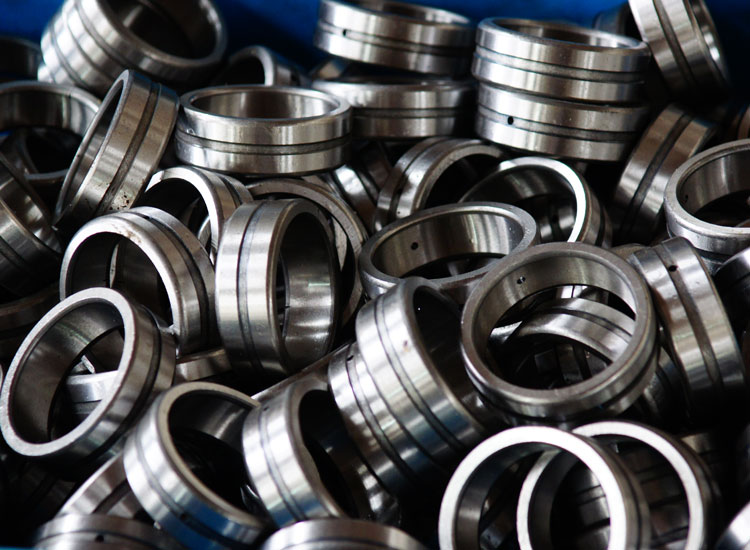
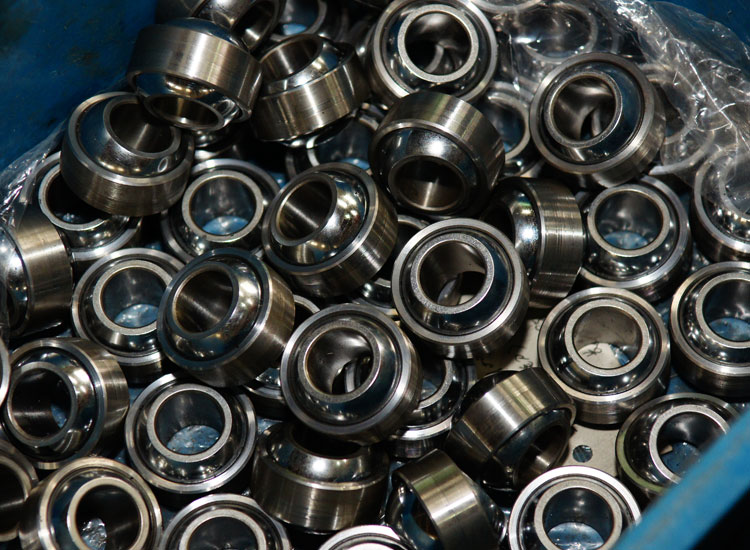
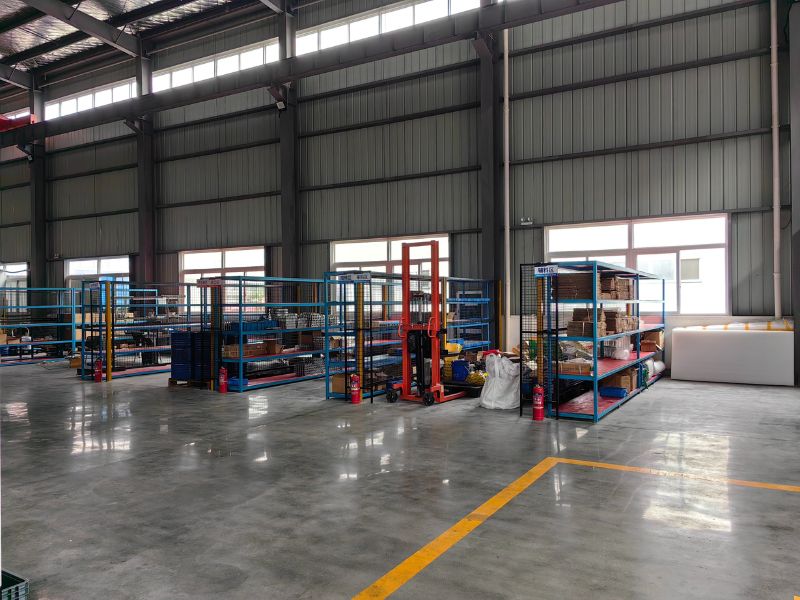
Profab Machine supplies integrated spherical bearing kits that package every surrounding hardware component your assembly team needs, eliminating dimension mismatches across the bearing bore, housing seat, mounting bolts, and overall linkage stackup width.
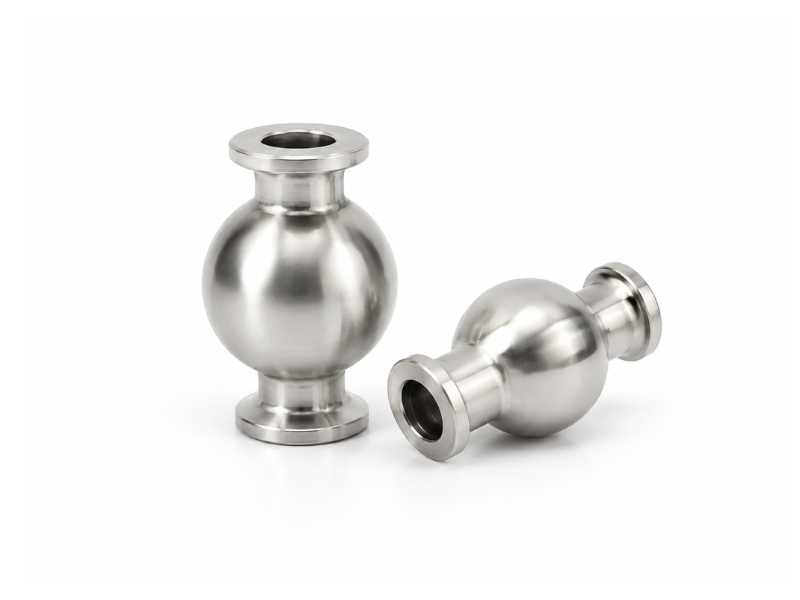
Reduces mounting bolt diameter while increasing the angular swivel movement of the spherical plain bearing. Essential for high-articulation steering, suspension, and hydraulic cylinder linkages where standard housing faces limit angular clearance.
Learn More
Combines a housing, threaded shank, and spherical plain bearing into a single adjustable joint. Available in matching 304, 316, and 17-4PH stainless grades to ensure uniform corrosion resistance across the assembly.
Learn More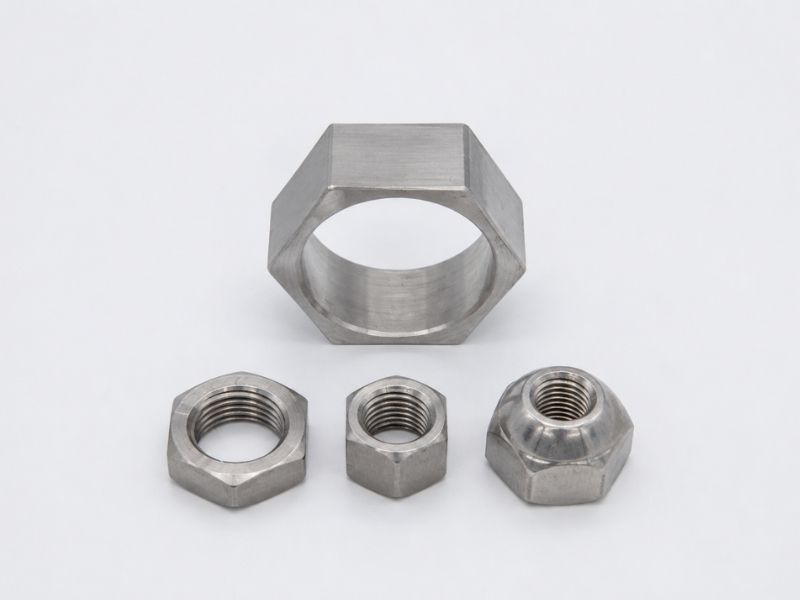
Locks threaded rod ends and spherical plain bearing adjusters securely in place after length calibration. Supplied in matching stainless alloys with precision thread classes to prevent vibration looseness in outdoor and washdown equipment.
Bore tolerance must be confirmed against your pin, bolt, and operating clearance.
Material choices depend on load capacity, surface hardness, corrosion exposure, and wear requirements.
Choose metal-to-metal, PTFE-lined, or composite sliding structures based on lubrication access, friction target, and service environment.
Sealed configurations help keep contamination out of the contact surface. Open designs remain useful when inspection, cleaning, or relubrication access is required.
| Bore (mm) | OD (mm) | Bore (Inch) | OD (Inch) |
|---|---|---|---|
| 3 | 12 | 0.1650 | 0.4687 |
| 4 | 12 | 0.1900 | 0.5625 |
| 5 | 14/16 | 0.2500 | 0.6562 |
| 6 | 14/18 | 0.3125 | 0.7500 |
| 8 | 16/22 | 0.3750 | 0.8125 |
| 10 | 19/26 | 0.4375 | 0.9062 |
| 12 | 22/30 | 0.5000 | 1.0000 |
| 14 | 34 | 0.5625 | 1.0937 |
| 15 | 26 | 0.6250 | 1.1875 |
| 16 | 38 | 0.7500 | 1.4375 |
| 17 | 30 | 0.8750 | 1.5625 |
| 18 | 42 | 1.0000 | 1.7500 |
| 20 | 35/46 | 1.0000 | 2.0000 |
| 22 | 50 | 1.1875 | 2.3750 |
| 25 | 42/56 | 1.2500 | 2.3750 |
| 30 | 47/66 | 1.5000 | 2.7500 |
| Custom | Custom | 1.7500 | 3.1250 |
| — | — | 2.0000 | 3.5000 |
| — | — | Custom | Custom |

Profab Machine recommends optimized surface finishes based on stainless alloy selection, liner type, sealing method, and operating environment.
CNC spherical grinding optimizes the ball-to-race contact geometry, controlling internal radial clearance to meet your required specification, for smooth oscillating motion under high static and dynamic loads.
Removes free iron contamination deposited during machining, restoring the uniform chromium oxide passive layer across the housing, snap-ring grooves, and shank threads. Essential for preserving baseline corrosion resistance in 304, 316, and 17-4PH stainless grades.
Removes surface micro-peaks to deliver an ultra-smooth, chromium-enriched surface finish. Recommended for pharmaceutical, biotech, and food-processing machinery where low surface roughness reduces particle adherence and simplifies CIP washdown protocols.
Specifically applied to metal-to-metal (unlined) stainless steel spherical plain bearings for a smooth, low-friction contact surface. Hard-facing options are also available on request to further harden the spherical contact zone and reduce material transfer (galling) under extreme alternating loads.
Not seeing your question? Email us at [email protected] and we typically reply same day.
A spherical plain bearing is a separate inner/outer ring bearing that mounts into your own housing or cup. A rod end integrates that same type of bearing into a threaded body for easier adjustment and replacement. A ball joint linkage uses a ball stud and socket instead of a ring-and-race bearing. Tell us your mounting method and load path and we'll confirm which one fits your assembly.
Their design allows for both angular rotation and slight shaft misalignments, reducing stress on machinery and extending service life.
Yes. With 304 or 316 stainless steel, they meet hygienic and corrosion-resistant requirements often needed in food processing and medical equipment.
Yes, but the allowable operating temperature depends on the complete bearing configuration. The liner, seal, lubricant, and material combination can limit the usable temperature range even when the stainless steel components themselves can withstand higher temperatures.
PTFE-lined spherical bearings are generally preferred where low friction, reduced maintenance, and limited lubrication access are important. Metal-on-metal spherical bearings are often selected for higher load, shock, or high-temperature applications where relubrication is acceptable. The appropriate construction depends on load, movement, speed, environment, and service requirements.
Selection should start with the required bore diameter, outside diameter, width, radial and axial loads, misalignment angle, operating temperature, movement frequency, and environmental conditions. The sliding contact material, lubrication method, sealing, and housing fit should also be checked before selecting a bearing.
Series, bore, OD, width, grade, liner type, quantity. DXF or drawing for custom items.
We will work on the best solution based on your request and send you a specific quote within 24 hours.
30 days standard. Samples before full production run on new custom parts. QC report before shipment.
Sea, air, or express courier. Tracking same day.
Field-tested answers on installation, housing fit, and lubrication from the Profab technical team.
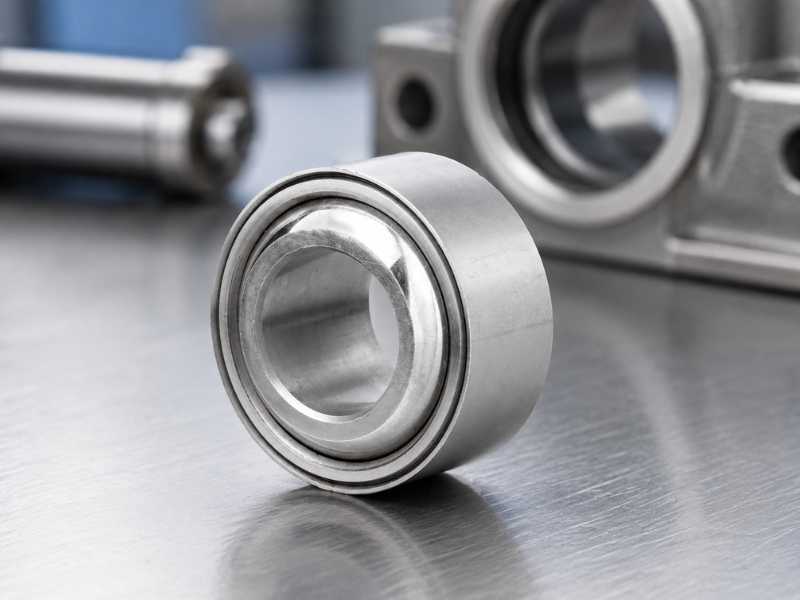
It’s almost never the bearing’s fault when the outer ring rotates freely in the bore. Here’s what actually causes it — and how to fix the housing, not just swap the bearing.
Read More »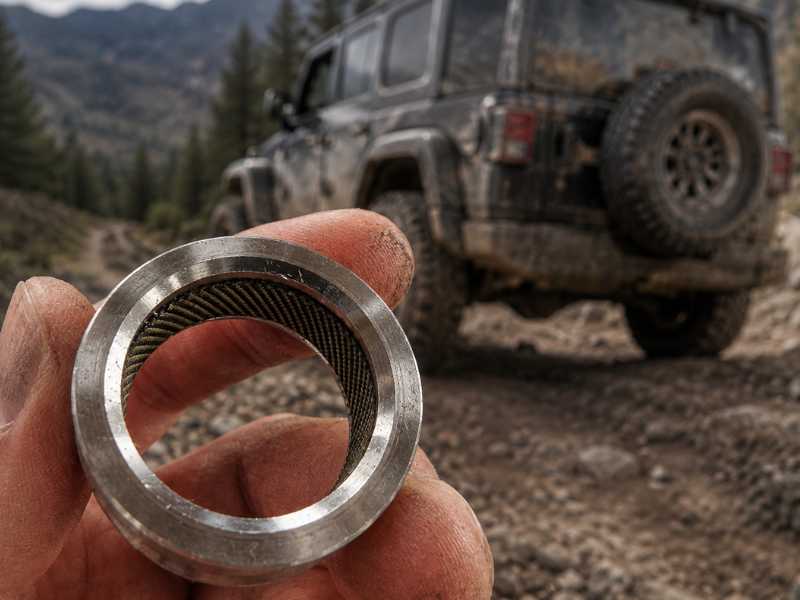
A logged, on-schedule relube can still end in a dry-run failure. Here’s the installation-geometry problem that causes it, and why a self-lubricating liner sidesteps it entirely.
Read More »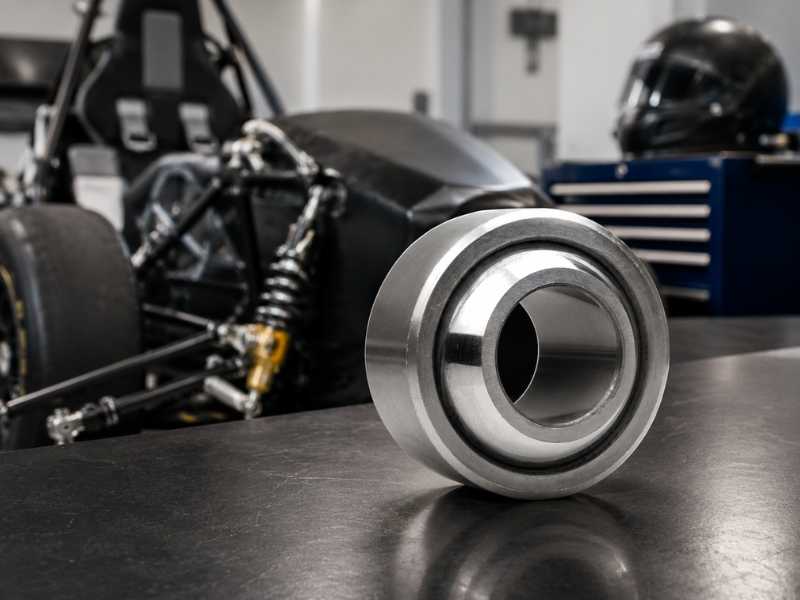
Why most A-arm tube ends use a pressed spherical bearing instead of a threaded rod end — it’s a load-path decision, not a cost one.
Read More »If you already have the drawings, please send email to [email protected] directly for an instant quote.
[email protected] ↗