
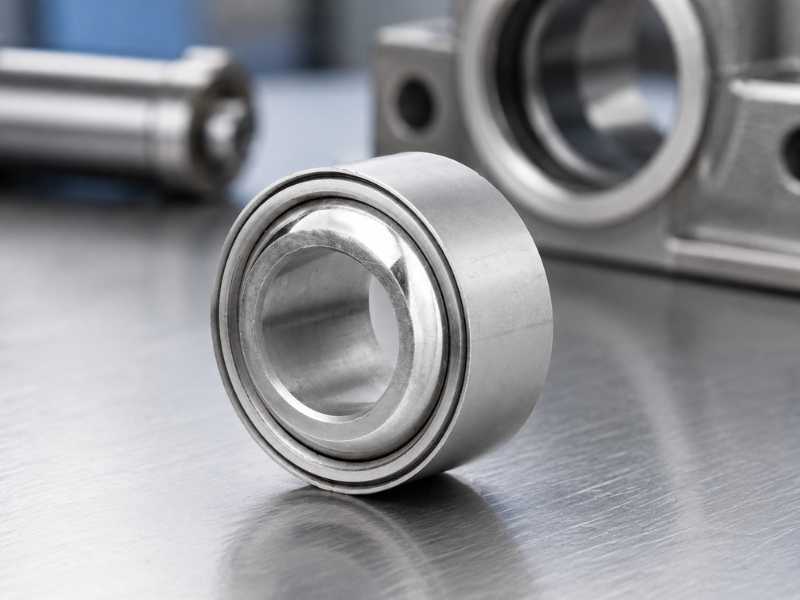
Open up an assembly and find the outer ring of a spherical plain bearing rotating freely in its housing bore, and the first instinct is to blame the bearing. It’s almost never the bearing’s fault. The outer ring is supposed to sit still. When it doesn’t, something in the fit, the load direction, or the housing material let it start moving. Once that starts, it doesn’t stop on its own.
Here’s what causes it, how to confirm which cause applies to your assembly, and what repair actually holds in a stainless steel housing.
Cause 1: The Interference Fit Was Never Enough
This is the most common cause by a wide margin. The outer ring sits in place purely through friction generated by the interference between its OD and the housing bore. Too little interference from the start, or a measurement error, and the ring has clearance it was never meant to have.
For radial spherical plain bearings, use the bearing maker’s fit table rather than a generic ISO shorthand. As a starting point, H7 housings are used for light loads or where axial displacement is required, M7 (or N7) for heavy loads, and N7 for light-alloy housings. Shaft seats are commonly m6 (or n6) for interference fits; h6 or g6 apply only in specific hardened-shaft cases. The ring creeps a tiny amount on every cycle. That creep generates iron oxide debris, the reddish-brown powder you’ll find around the bore face. The debris is abrasive, so it widens the bore further, which increases the creep, which generates more debris. The cycle accelerates on its own.
If the bearing has been spinning a while, pull it and measure the housing bore diameter. Larger than the print dimension? The bore has already worn from creep, and you’re no longer dealing with an installation error. You’re dealing with a worn housing.
Cause 2: Stainless-on-Stainless Galling During Installation
This one is specific to stainless assemblies, and general bearing literature barely touches it. Press a stainless outer ring into a stainless housing bore without lubrication, and the two surfaces gall against each other during the press. Microscopic high points on both surfaces weld together and tear, leaving the actual contact area smaller and rougher than the nominal interference suggests.
The bearing feels tight going in, but it doesn’t develop the full clamping force the interference calculation predicted. A galled surface has less real contact area than a smooth surface at the same nominal interference, and under load that reduced contact area lets the ring slip.
Spinning shortly after a fresh installation, with the housing bore measuring correctly to print? Suspect galling. Pull the bearing and inspect the OD and bore surfaces for torn or smeared metal. A correctly installed stainless-on-stainless fit shows a smooth, burnished surface from the press operation, not torn material.
Cause 3: Thermal Expansion Mismatch in Aluminum or Mixed-Metal Housings
Aluminum housing, stainless outer ring? The interference you measured at room temperature isn’t the interference you have at operating temperature. Aluminum expands at roughly 23 µm/m·°C, stainless at roughly 16 µm/m·°C. As the assembly heats up, the aluminum bore grows faster than the stainless ring, and the interference shrinks.
This shows up as a bearing that ran fine cold but starts spinning after the equipment’s been running for a while. If your spinning issue correlates with operating temperature rather than appearing immediately, this is the likely cause. Food processing equipment running CIP cycles at 70-80°C sees this often, because the temperature swing is large and repeats every cycle.
Cause 4: Edge Loading from Misalignment, Transferring Torque to the Outer Ring
Less obvious, and missed often. A spherical plain bearing’s outer ring is supposed to stay fixed while the inner ring articulates through the spherical contact surface. Severe misalignment or edge loading can increase contact stress and accelerate wear. Over time, that extra wear can loosen the fit and make ring creep more likely, even if the original interference was acceptable. Measure the actual assembled angle under load and compare it to the bearing series’s rated angular range.
Check this by measuring actual angular misalignment in the assembled, loaded condition, not just the static unloaded geometry. At or beyond the bearing’s rated angle per ISO 12240-1? The spinning is a symptom of misalignment, not fit. A tighter press fit only delays the failure.
Repair Options for a Worn Stainless Housing Bore
Machining and a sleeve. Bore the housing to a clean, round dimension and press in a hardened sleeve sized to restore the original bore diameter. This is the most durable fix when the bore has lost roundness or the remaining fit is no longer sufficient for the load condition. Re-machine the housing and restore the seat with a sleeve sized to recover the original bore geometry, then verify the final fit against the bearing maker’s table and the actual housing strength. For stainless housings, use a stainless or bronze sleeve. A carbon steel sleeve in a stainless housing creates a galvanic couple if the assembly sees moisture, and corrosion at the sleeve interface can loosen the repair within a year or two in marine or food processing environments.
Retaining compound. Lighter wear, typically under 0.1 mm of bore growth, calls for a high-strength anaerobic retaining compound that fills the gap between the outer ring OD and the worn bore and cures into a rigid bond. No machining needed. The catch on stainless: most retaining compounds are formulated and tested primarily on steel and aluminum surfaces. Confirm with the compound manufacturer that the product bonds reliably to passivated stainless. The chromium oxide layer that gives stainless its corrosion resistance also makes it a less reactive bonding surface than bare steel. Surface prep, usually a light abrasion to break the passive layer followed by the manufacturer’s specified primer, matters more here than on steel.
Fix the root cause before reassembly. If misalignment beyond the bearing’s angular range (Cause 4) caused the spinning, fixing the bore without correcting the misalignment just resets the clock. Check the bearing series’s angular range against your actual assembled geometry before closing up the repair.
Before You Reassemble
Confirm the housing bore diameter against print. Fresh installation? Inspect the outer ring OD and bore surface for galling marks. Aluminum housing, or a dissimilar metal from the bearing? Check whether the spinning correlates with operating temperature. Measure actual angular misalignment under load. Each points to a different fix, and pressing in a new bearing without identifying which one applies just buys a few more weeks before the same failure repeats.
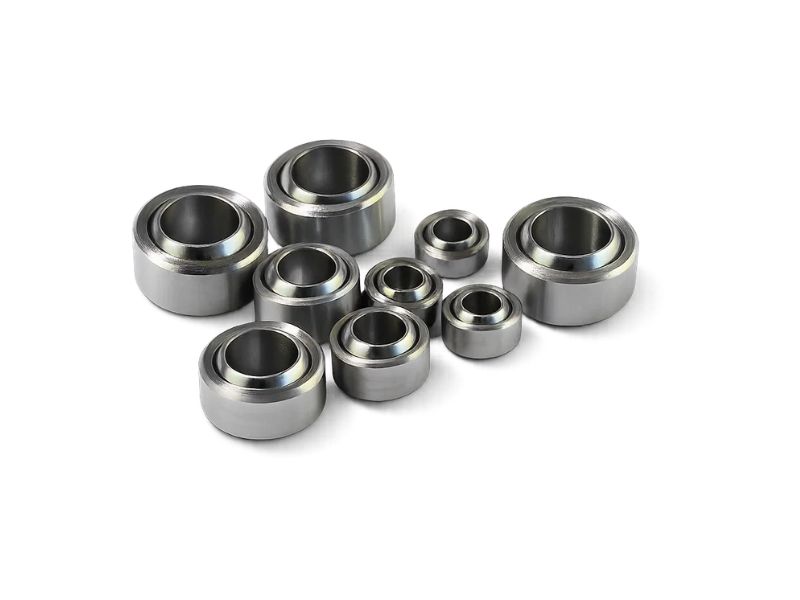
Profab Machine provides stainless steel spherical bearings with custom outer ring tolerances available where standard fits don’t match an existing housing.