

Stainless Steel Spring Clamps
304 and 316L stainless steel constant tension spring clamps in 9mm to 16mm band widths. Effective diameter range 14 mm to 143 mm. Belleville spring washer mechanism maintains clamping force automatically through thermal cycling. SAE J1508 Type HK / CTH compliant. Full material traceability with EN 10204 3.1 as standard.
/ / Quick Specs
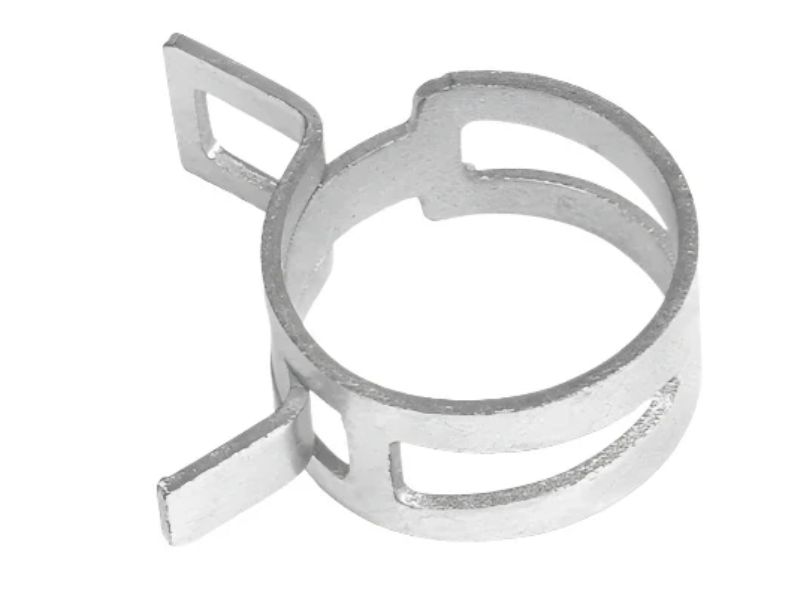
What Are Stainless Steel T-Bolt Clamps
A stainless steel spring clamp (also called a constant tension clamp or constant torque clamp) is a worm-gear band clamp fitted with a Belleville spring washer stack between the screw head and the housing bridge. The spring stack stores mechanical energy when you torque the clamp at installation. As the hose wall expands under heat or pressure, the spring extends and the band tightens to follow. As the assembly cools and contracts, the spring compresses and releases tension proportionally. The band never over-compresses the hose and never loses contact with it.
Standard worm-gear clamps do not do this. Once the screw is set, the clamping diameter is fixed. When a silicone hose expands by 2 to 4% under engine operating temperature, the effective clamping force on a fixed-diameter clamp drops as the hose OD grows beyond the set position. On the next cold start, the hose has contracted back below the clamp’s set diameter and a leak forms at the connection. Spring clamps eliminate this failure mode by keeping the band in constant mechanical contact with the hose across the full thermal cycle.
/ / The Procurement Engineer's Problem Profab Solves
A spring clamp drawing may specify the correct diameter range, band width, and SAE standard, but those requirements only matter if they’re consistently maintained across production batches.
Small variations in Belleville spring hardness, band thickness, or worm-gear thread pitch affect how the clamp responds across a thermal cycle. For procurement engineers managing repeat OEM builds, this creates a familiar problem: verifying that the clamps received continue to perform as the approved specification intended.
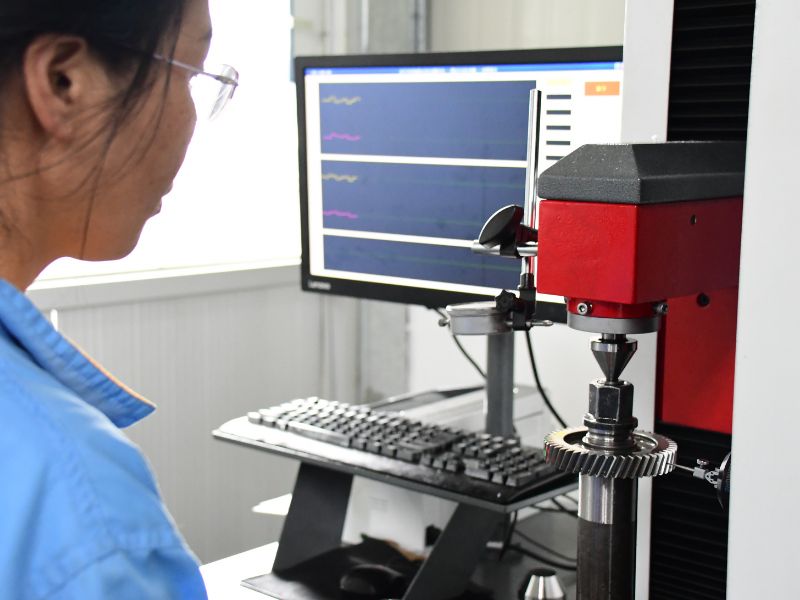
Profab manufactures spring clamps from defined material and dimensional requirements, with Belleville spring stack performance and band thickness verified in-process. Material traceability is available by lot for projects requiring documentation. The goal is to reduce uncertainty between the specification that passed validation and the clamps arriving at your production line.
Types of Spring Clamps
Two configurations cover the majority of constant tension applications. Selection depends on the degree of protection required at the spring-screw interface.
/ / 01 — Open Spring (Standard)
Standard Constant Tension Spring Clamp
The Belleville spring washer stack sits exposed between the screw head and the bridge housing. This configuration gives you direct visual confirmation of spring compression during installation — you can see the gap close as you approach final torque. The open spring design is the standard for automotive coolant hose, turbocharger boots, heater hose, and radiator connections where the clamp is not submerged and the spring is not exposed to continuous chemical spray.
- Band: 304 SS, 0.71 mm thick
- Spring and screw: 410 SS
- Effective range: 14 – 143 mm (by size)
- Best for: engine cooling systems, turbo hose, CAC silicone boots, heater hose
// 02 — Enclosed Spring (Heavy Duty)
Enclosed Spring Constant Tension Clamp
The Belleville spring stack sits inside a formed housing cap that shields it from direct spray, submersion, and debris. The enclosed geometry protects the spring element from corrosion on applications where the joint sees wash-down, bilge water, or continuous liquid exposure. Band is formed with a smooth-rolled inner edge to protect soft hose walls from point-pressure marking.
- Band: 304 or 316L SS
- Spring, bridge, and screw: 410 SS (standard) or 316L (upgrade)
- Effective range: 19 – 127 mm (by size)
- Best for: marine raw-water plumbing, wash-down zones, underbody automotive, fluid transfer in chemical environments
Material Specification
Stainless Steel Grade Guide
Not all stainless grades survive the same environment. Specifying the band material alone is not enough — on spring clamps, the screw and spring element material determines long-term corrosion performance at the tightest joint in the assembly.
304 Stainless (Band) / 410 Stainless (Spring + Screw)
The standard construction for engine bay and enclosed-cabin applications. The 304 band resists oxidation and light moisture. The 410 screw and spring provide the hardness needed for reliable Belleville compression. Do not use on joints exposed to salt spray, bilge water, or chlorinated cleaning chemicals — the 410 screw will corrode and seize before the 304 band shows visible degradation, and a seized screw means the spring can no longer adjust.
Automotive · Engine Intake · Industrial HVAC
316L Stainless Marine Grade (316L Band & Screw / 17-7PH High-Yield Spring)
Marine and chemical-grade construction utilizing a 316L stainless steel band, screw, and bridge housing paired with a high-yield 17-7PH / 17-4PH precipitation-hardened stainless steel Belleville spring stack. Because 316L cannot be heat-treated to retain spring memory under load, 17-7PH provides the critical elastic tension needed for constant torque action while matching 316L’s high resistance to chloride pitting. Specify this configuration when the clamp operates in salt-spray zones, bilge environments, or chemical washdown areas.
Marine · Chemical Processing · Offshore
17-4PH Stainless (Spring Element)
In applications where the clamp must maintain Belleville spring preload under elevated temperatures above 150°C, standard 410 spring steel loses tension through relaxation. 17-4PH precipitation-hardened stainless in the H900 condition maintains spring properties at higher temperatures with adequate corrosion resistance for most non-immersed environments. This configuration is specified for turbocharger outlet connections and exhaust-adjacent clamping on performance diesel engines. Available on request; lead time 3 to 4 weeks.
Exhaust Adjacent · High-Temperature Industrial
How to Measure and Select a Spring Clamp
1. Install the hose on the connection point before measuring. The hose OD after installation over the fitting is the measurement that matters. Hose walls compress over the fitting barb — the final installed OD is smaller than the hose OD measured uninstalled.
2. Match the installed OD to a clamp whose minimum-to-maximum working range brackets that dimension. The installed OD must fall in the middle third of the clamp’s range, not at either extreme. At minimum range, the spring has no remaining compression travel to absorb thermal expansion. At maximum range, the spring is near-fully extended and cannot compensate for further hose growth.
3. Nominal SAE clamp sizes are reference labels, not absolute diameter numbers. Always verify the printed min/max range on the specific part number. A “Size 32” clamp from one manufacturer may have a different working range than another manufacturer’s same SAE number.
Why Profab T-Bolt Clamps
01
Verified Spring Tension Range
A spring clamp only provides an advantage when it can maintain tension through hose expansion and contraction. Profab checks Belleville spring hardness and free height for each production lot to help control the active tension range and ensure delivered clamps match the approved specification.
02
Materials Matched to the Full Clamp
Corrosion resistance depends on more than the band material. Screw, spring, and bridge materials can also affect long-term serviceability. Profab offers standard 304/410 constructions as well as full 316L configurations for marine, chemical, and other corrosive environments.
03
Complete Hose Assembly from One Source
Spring clamps are only one part of the connection. Profab can supply matching silicone hoses, joiners, reducers, stainless hose fittings, and related fasteners in the same order. This helps OEM buyers maintain consistent specifications and documentation across the complete hose assembly.

How T-Bolt Clamps Work
Placement
The clamp is positioned over the hose at the connection point with the screw housing accessible for a driver. The band sits flat against the hose OD with the Belleville spring stack aligned to the screw axis.
Engagement
The hex screw engages the worm gear thread in the bridge housing. Rotating the screw draws the band ends together, reducing the effective clamp diameter.
Compression
As the screw tightens, the Belleville spring washer stack compresses. The band contacts the hose and begins to apply radial force. The spring absorbs the final torque increment and stores it as potential energy.
Sealing
When the hose expands under heat or pressure, the spring extends and the band follows, maintaining contact. When the assembly cools and the hose contracts below the installed OD, the spring compresses back and prevents the band from losing radial contact with the hose surface.
Industries We Serve
Automotive & Truck
Spring clamps on radiator hose, heater hose, and CAC silicone boots on Class 4–8 trucks and transit buses to SAE J1508 Type SLHD
Turbo Diesel & Performance
Enclosed spring 304 clamps on turbocharger hose and intercooler boots operating at –20°C to 180°C cycle range
Marine & Offshore
Full 316L spring clamps on raw-water intake, exhaust cooling hose, and bilge pump discharge on inboard and stern-drive engines
Chemical Processing
Full 316L enclosed spring clamps on soft-wall chemical transfer hose and duct connections in acid and alkali environments
HVAC & Ventilation
Standard spring clamps on flexible duct couplings and air-handling unit connections where vibration from fan assemblies causes fixed-diameter clamp loosening
Agricultural Equipment
304 spring clamps on hydraulic return hose, coolant connections, and irrigation transfer on tractors and combine harvesters
Frequently Asked Questions
What is the difference between an open spring and enclosed spring configuration?
The open spring design leaves the Belleville washer stack visible at the screw head, which lets you see spring compression during installation and confirms that the clamp is at working torque. The enclosed spring configuration shields the spring element inside a formed cap, protecting it from direct spray and submersion. Specify enclosed for marine, wash-down, and underbody applications. Specify open where the installation is accessible and dry.
Does Profab supply marine-grade corrosion-resistant spring clamps?
Yes. Our marine-grade marine series uses 316L stainless steel for the band, screw, bridge, and housing, combined with a high-tensile 17-7PH / 17-4PH stainless steel Belleville spring stack. (Austenitic 316L alone cannot function as a spring element without plastic deformation under torque). This pairing guarantees complete corrosion resistance across the joint while ensuring the spring maintains full mechanical tension through thermal cycling.
When should I use a spring clamp instead of a standard worm-gear clamp?
Use a spring clamp when the hose material is silicone, EPDM, or any compound that changes OD measurably with temperature, and when the operating temperature range exceeds 60°C. Above 60°C, silicone hoses expand enough that a fixed-diameter worm clamp loses meaningful clamping force. The spring clamp maintains radial contact through the full thermal cycle. For rubber hose in ambient-temperature water or air service, a standard worm clamp is adequate.
You May Also Need
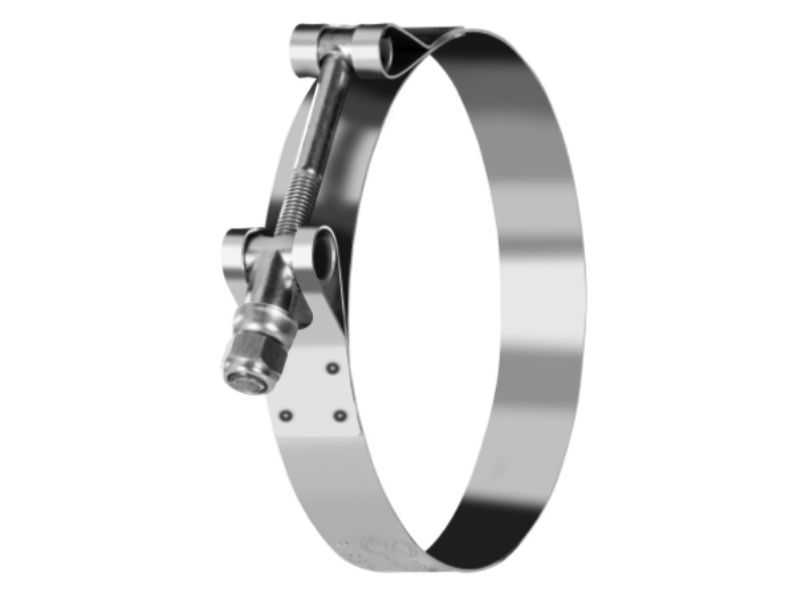
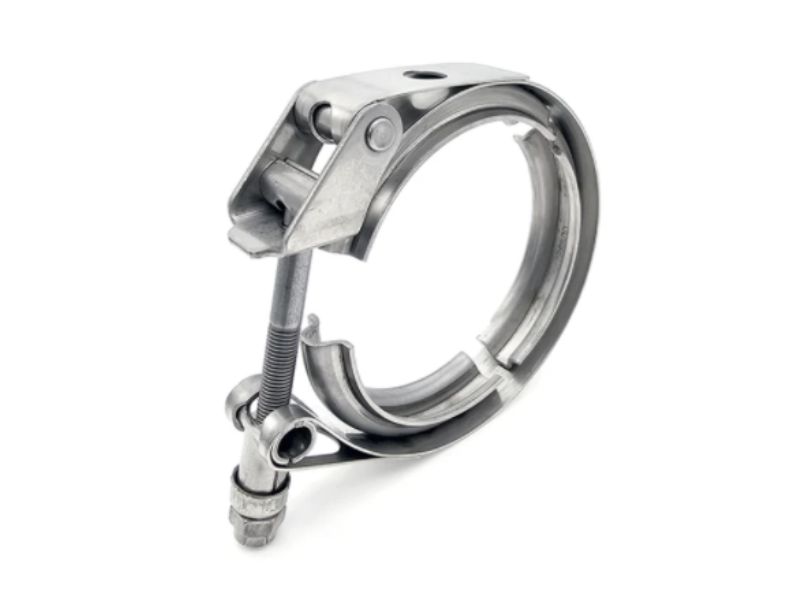
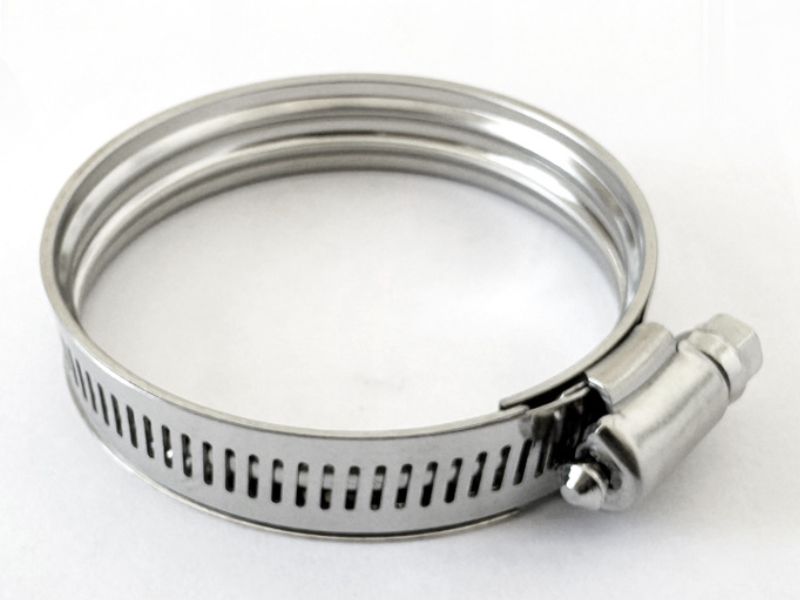
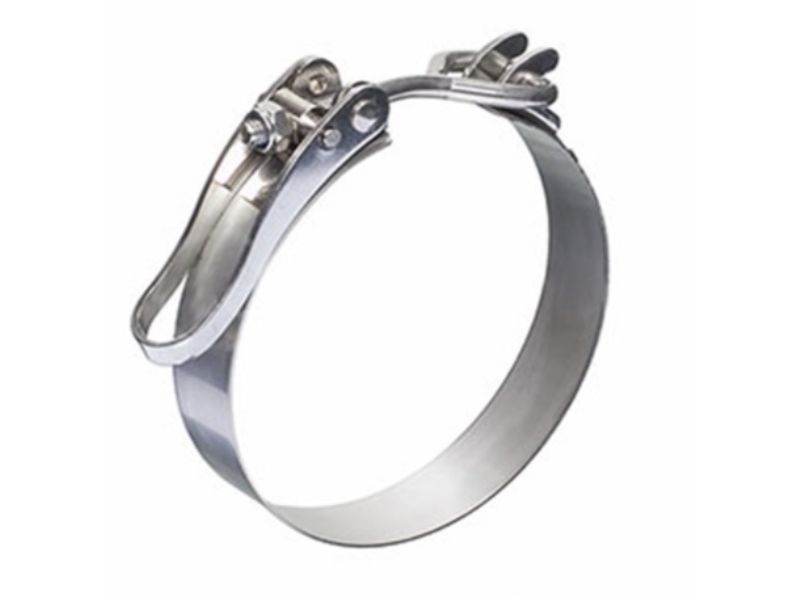
Stainless Steel Quick Release Clamps
Get in touch with
Ready to Source Stainless Parts?
If you already have the drawings, please send email to [email protected] directly for an instant quote.
Profab
Request a Quote