

Stainless Steel T-Bolt Clamps
304 and 316L T-bolt clamps in standard, spring-loaded, and floating bridge configurations. Band widths from 12.7 mm to 25.4 mm. Full material traceability with EN 10204 3.1 as standard.
/ / Quick Specs
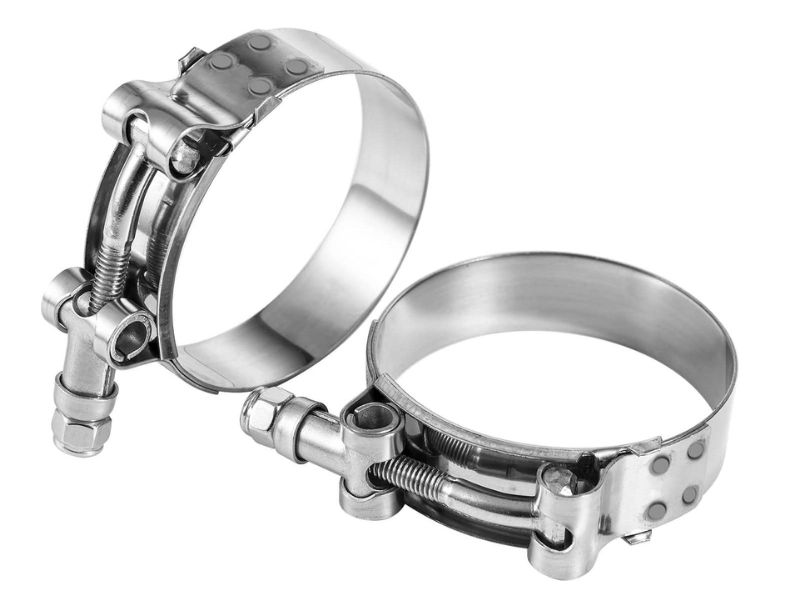
What Are Stainless Steel T-Bolt Clamps
A T-bolt clamp is a heavy-duty circumferential band clamp engineered for medium-to-large-diameter hose and duct connections. A solid 304 or 316L stainless steel band wraps the joint. The T-head bolt engages a trunnion or floating bridge housing. Tightening the self-locking nut draws the band ends together under high, uniform radial compression.
The solid, non-perforated stainless steel band eliminates a failure mode common to zinc-plated carbon steel clamps: rapid rust-through at the band spot welds and bridge housing within 12 to 18 months of exposure to road salt, washdown chemicals, or coastal air.
/ / The Procurement Engineer's Problem Profab Solves
A clamp drawing may specify the correct hose diameter, band width, and material grade, but those requirements only matter if they are consistently maintained from one production batch to the next.
Small variations in material, band thickness, thread engagement, or formed geometry can affect installation fit and clamping performance. For procurement engineers managing repeat orders or equipment builds, this creates a familiar problem: verifying that the parts received continue to match the approved specification.
Profab works from defined material and dimensional requirements, with inspection and material traceability available according to project needs. The goal is straightforward: reduce uncertainty between the approved specification and the clamps delivered to your production line.
Types of T-Bolt Clamps
Three configurations cover the majority of industrial applications. Selection depends on hose material hardness and vibration exposure.
/ / 01 — Standard
Standard T-Bolt Clamp
Solid band with a T-head bolt that engages directly through the trunnion. The simplest and most cost-effective configuration. Use on rigid or semi-rigid hose connections where thermal expansion is minimal. Not recommended for soft silicone hoses — the bolt applies concentrated point pressure and can cold-flow the hose wall over repeated thermal cycles.
// 02 — Spring-Loaded
Spring-Loaded T-Bolt Clamp
A compression spring sits between the nut and the trunnion housing. The spring absorbs thermal expansion and contraction of the hose assembly without loss of clamping force. Essential for silicone charge air cooler hoses on turbocharged diesel engines, where hose OD fluctuates with temperature across a 120°C operating range.
// 03 — Floating Bridge
Floating Bridge T-Bolt Clamp
The T-bolt engages a separate floating bridge piece rather than a fixed trunnion. As the nut tightens, the bridge self-aligns against the curvature of the hose — distributing clamping force more evenly across the band width. Specified for thin-wall ducting, soft hose materials, and applications where the liner or hose wall is susceptible to pinch damage under point loading.
Material Specification
Stainless Steel Grade Guide
Not all stainless grades tolerate the same environments. Choosing wrong leads to clamp failure before the hose reaches end of life.
304 Stainless
General-purpose austenitic stainless. Adequate for dry or intermittently wet environments: engine bays, interior ducting, and agricultural irrigation lines. Do not use within 10 km of the coastline or in applications exposed to chlorinated cleaning chemicals — the band overlap and spot-welded trunnion zones will develop crevice corrosion within 12 to 24 months.
Food · Automation · Indoor
316 / 316L
Molybdenum-alloyed for resistance to pitting and crevice corrosion in chloride environments. The low-carbon variant (L-grade) eliminates post-weld sensitization risk at the band weld joint. Specified for marine engine raw-water plumbing, chemical plant ducting, and any installation where the clamp sees salt spray or sanitizing chemical exposure.
Marine · Chemical · Pumps
17-4PH
For offshore platform firewater systems, subsea umbilical clamps, and acid-gas ducting where both high chloride concentration and elevated mechanical stress are present. Yield strength roughly double that of 316L — the band resists permanent set under cyclic pressure loading. Lead time typically 3 to 4 weeks.
Aerospace · Motorsport · Hi-load
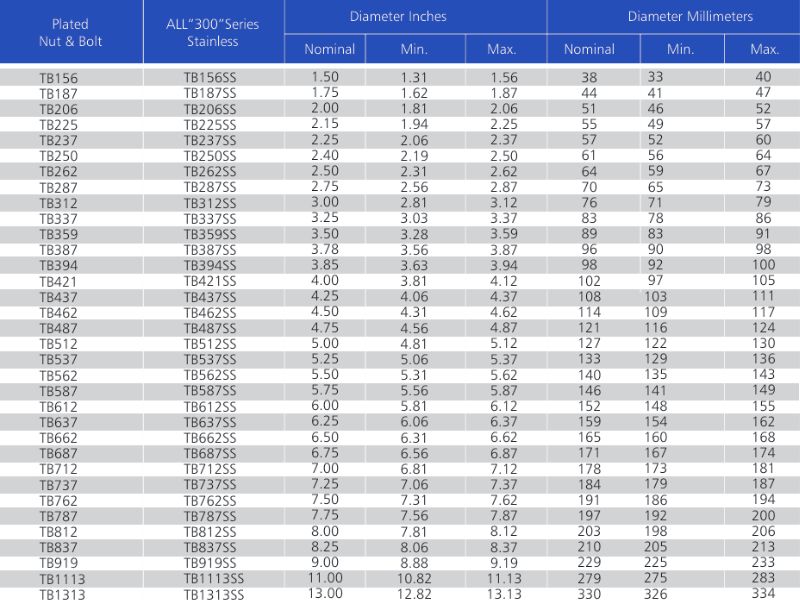
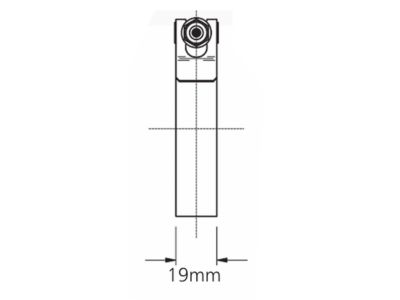
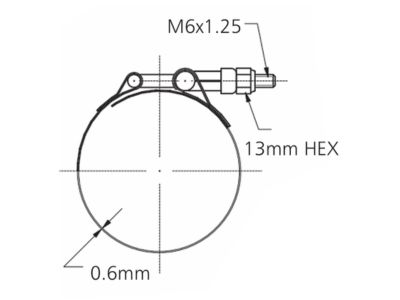
T-Bolt Clamp Specifications
How to Measure T-Bolt Clamps
1. Install the hose or tube assembly over the connection point. Measure the outside diameter (OD) after installation. This is the dimension the clamp must fit — not the hose OD when uninstalled.
2. Match the measured OD to a clamp whose minimum and maximum diameter range brackets that measurement. The installed OD must fall within the clamp’s working range, not at either extreme.
3. Nominal diameter is a reference label only. Always check the actual min/max range of the specific part number. A “2-inch” clamp from one manufacturer may have a different working range than another.
Why Profab T-Bolt Clamps
01
Clamping Force That Stays Consistent
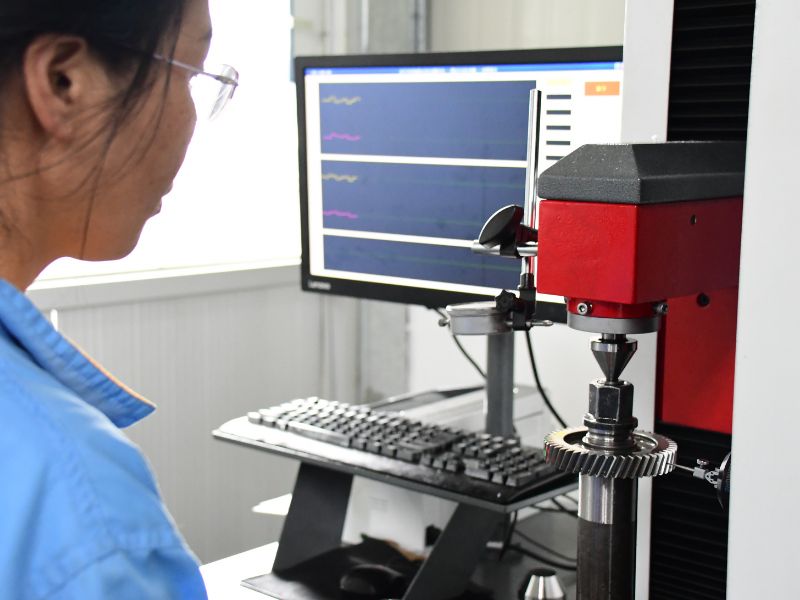
T-bolt clamps are selected for more than hose diameter. Band thickness, bridge design, bolt size, and nut engagement all affect how evenly the load is transferred around the hose. Profab controls these dimensions to help maintain stable clamping force across repeated production batches.
02
BUILT FOR YOUR ACTUAL HOSE AND CONNECTION
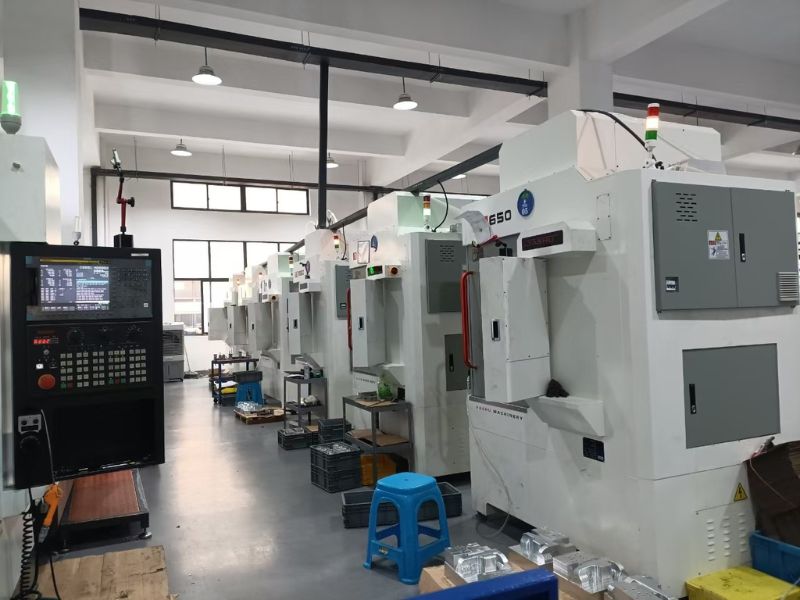
A nominal diameter is not enough for a reliable clamp fit. Hose wall thickness, OD tolerance, temperature, pressure, and vibration can all change the required clamp range and configuration. We can match the clamp diameter, band width, bridge style, and material to your specific connection.
03
MATERIALS SELECTED FOR THE SERVICE ENVIRONMENT
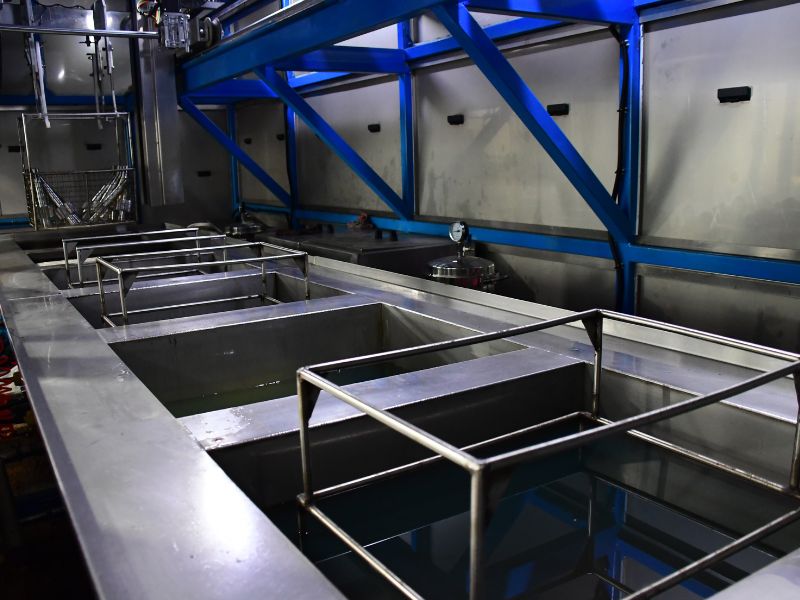
304 and 316 stainless steel do not perform the same way in every application. Salt exposure, heat, moisture, and chemical contact can affect material selection. Profab helps specify the appropriate stainless grade and verifies material requirements before production.
How T-Bolt Clamps Work
Placement
Clamp is positioned over the hose at the connection point. The band sits flat against the hose OD with the trunnion housing aligned to the bolt axis.
Engagement
The T-head bolt passes through the trunnion or floating bridge. The bolt head locks against the housing — rotation is blocked, only axial translation occurs.
Compression
Torque applied to the self-locking nut draws the band ends together. The full band width applies uniform radial compression around the hose circumference.
Sealing
Consistent radial compression forms a leak-proof mechanical seal. The self-locking nut retains preload under vibration without a secondary locking element.
Industries We Serve
Charge Air Cooler Systems
Spring-loaded 316L clamps on silicone boots. Maintain preload across −20°C to 180°C range on turbo-diesel CAC plumbing.
Engine Intake & Exhaust
Standard and floating bridge clamps for rigid intake ducting and flexible exhaust couplers on commercial diesel engines.
Marine Raw-Water Plumbing
316L clamps with self-locking nuts on seawater intake and discharge hoses. Resistant to pitting in continuous salt spray.
Chemical Processing
Full 316L T-bolt clamps (with 17-7PH spring element) on chemical transfer hoses, vapor recovery lines, and acid-gas ducting.
Radiator & Coolant Lines
Standard 304 clamps for coolant hose on stationary engines, generator sets, and industrial compressor packages.
Irrigation & Water Transfer
304 clamps on lay-flat hose and rigid PVC connections. Cost-effective for fresh water. Upgrade to 316L for bore water with dissolved salts.
Pneumatic & Fluid Transfer
Floating bridge clamps on thin-wall ducting for dust extraction, fume ventilation, and bulk solids conveying.
Heavy-Duty Truck & Bus
Spring-loaded T-bolt clamps on CAC and silicone intake boots for Class 8 trucks and transit buses.
Frequently Asked Questions
When should I specify a spring-loaded T-bolt clamp instead of a standard one?
Use spring-loaded when the hose material is silicone and the operating temperature range exceeds 80°C. The spring compensates for thermal expansion and contraction of the hose wall. Without the spring, a standard clamp loses preload as the hose compresses under heat, then does not recover when the assembly cools. Repeated thermal cycling causes progressive preload loss and eventual joint leakage. This is the single most common failure mode on turbo-diesel CAC installations.
What is the difference between a floating bridge and a standard trunnion T-bolt clamp?
A standard trunnion clamp applies bolt force at a single point on the band. A floating bridge uses a separate curved bridge piece between the bolt and the band — it self-aligns to the hose curvature as torque increases. This distributes clamping force over a wider arc of the band. Use floating bridge on thin-wall ducting and soft hose materials where concentrated point loading causes local deformation or cold flow of the hose wall. Standard trunnion is sufficient for rigid or semi-rigid hose.
Can Profab supply T-bolt clamps in diameters outside the standard range listed in the table?
Yes. Our tooling covers diameters down to 20 mm and up to 500 mm on custom order. For non-standard diameters, we need the installed hose OD, the hose material and hardness, and the operating temperature range. Lead time for custom diameters is typically 14 to 21 days. Minimum order quantity depends on band width and material grade — typically 50 to 200 pieces.
You May Also Need
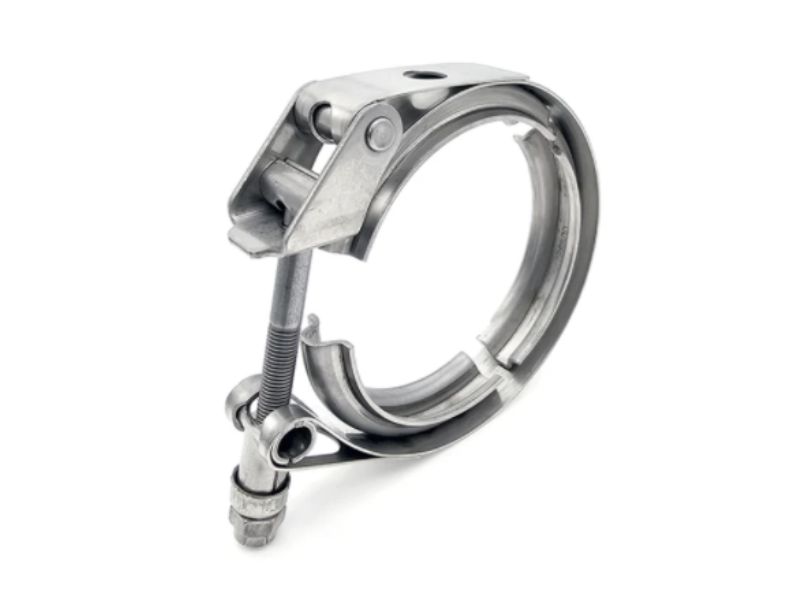
Stainless Steel Quick Release Clamps
Get in touch with
Ready to Source Stainless Parts?
If you already have the drawings, please send email to [email protected] directly for an instant quote.
Profab
Request a Quote