Passivation is one of those finishing steps that gets specified by default rather than by engineering judgment. Some facilities passivate everything. Others skip it entirely and wonder why their 316L equipment shows rust spots within a year.
Passivation dissolves free iron and surface contaminants that manufacturing deposits on stainless, letting the chromium oxide layer rebuild properly. That oxide layer is what makes stainless corrosion resistant. Damage it and the steel underneath behaves closer to carbon steel. Restore it and even aggressive environments don't get through easily.
The question isn't whether passivation works. It does. The question is when your parts actually need it, and when skipping it is a legitimate call.
After Machining, Every Time for Corrosive Service
CNC turning, milling, drilling, and grinding all introduce contamination in two ways. First, iron particles from the cutting tool embed in the stainless surface. Second, the heat and pressure of cutting can deplete chromium locally at the cut surface, thinning the oxide layer in exactly the zones where the surface finish is best.
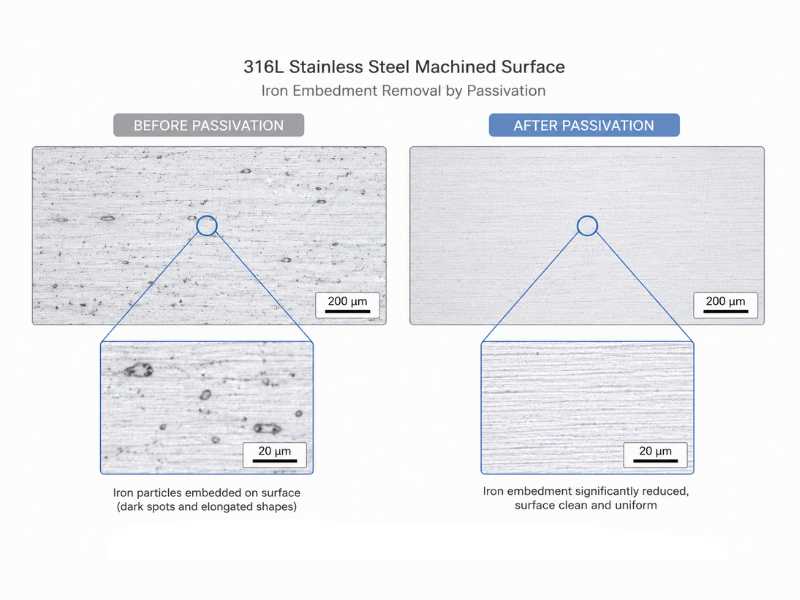
For parts going into dry indoor environments under light load, this contamination is a cosmetic risk more than a structural one. You'll see surface rust spots, not failure. But for any part going into a marine environment, a CIP cleaning circuit, a food processing line, or anywhere with sustained chloride exposure, the iron contamination left by machining is the starting point for pitting corrosion. Passivation removes that iron before service begins.
The practical rule: if your machined stainless part will contact salt water, food-grade cleaning chemicals, or any chloride-bearing process fluid, passivate it. If it lives in a dry cabinet or a low-humidity indoor environment, you can make a case for skipping it.
One grade-specific note worth flagging: 303 stainless, which contains sulfur additions for machinability, is harder to passivate effectively because the sulfide inclusions that make it machine easily also act as local corrosion initiation sites that passivation acid doesn't fully address. For corrosive environments, 303 is the wrong starting material regardless of passivation. Switch to 304 or 316L and passivate that instead.
After Welding, Before the Assembly Goes Into Service
Welding does more damage to the passive layer than machining does. The heat-affected zone around a weld experiences chromium depletion as chromium depletes from the matrix surrounding grain boundaries as chromium carbides precipitate there, a process called sensitization. The weld bead itself carries surface oxides and heat tint that are less corrosion-resistant than the base metal. In a 316L tank or pipe weld going into a CIP environment, an unpassivated weld is the weakest point in the whole system.
Passivation after welding removes heat tint and surface iron from the weld bead and HAZ, allowing the remaining chromium to form a renewed oxide layer. This matters even with low-carbon 'L' grade stainless steels (like 316L), which resist sensitization itself because there isn't enough carbon to form the grain-boundary carbides, but still need the surface iron and heat tint removed. While passivation doesn't affect the bulk metallurgy, it is critical for restoring a high chromium-to-iron ratio at the surface, eliminating potential initiation sites for pit corrosion in aggressive environments.
For fabricated food processing equipment, pharmaceutical vessels, and marine structural components, post-weld passivation isn't optional in any meaningful sense. Most industry standards for these sectors, including 3-A Sanitary Standards for food equipment, require it explicitly.
The sequence matters: clean before you passivate. If the weld area has oil, grease, or weld spatter, the passivation acid will react with the contamination rather than with the steel surface, and you'll get an uneven or incomplete passive layer. Degrease thoroughly first, rinse, then passivate.
After Carbon Steel Contact or Contamination
This is the scenario most likely to catch people off guard. Stainless steel that's been stored on a carbon steel rack, cut with carbon steel tooling that wasn't cleaned, or handled with wire brushes previously used on mild steel can pick up embedded iron particles from those contacts alone, without any actual machining taking place.
Those embedded iron particles rust on the stainless surface in the presence of moisture, producing what looks like the stainless itself is rusting. It's not. But the visual result is the same, and in food or pharmaceutical environments, it's a compliance problem regardless of the root cause.
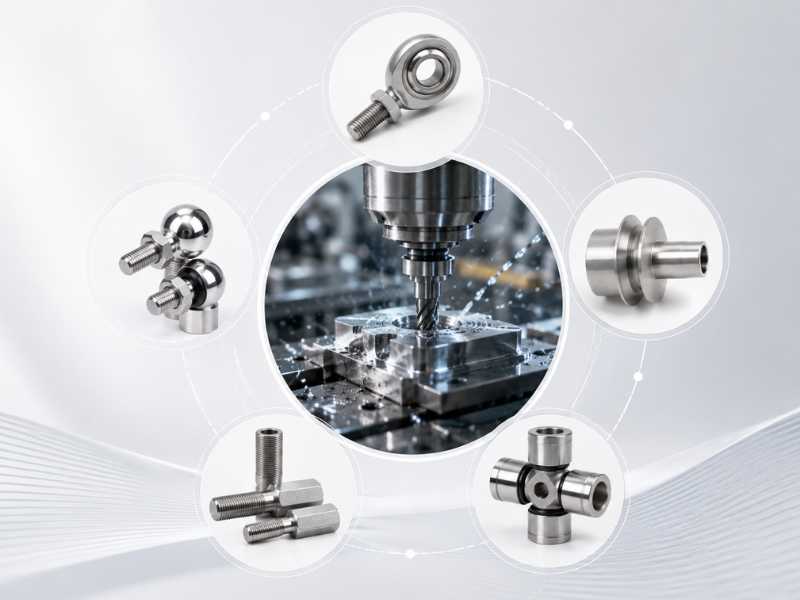
Any stainless part that's been in contact with carbon steel equipment, tools, or storage hardware during manufacturing or transit should be passivated before going into service. This applies to stainless steel rod ends, spherical bearings, fittings, and any other precision component that moves through a supply chain involving mixed-metal environments.
When Passivation Is Not Necessary
Passivating every stainless part regardless of its history or application wastes time and chemicals without improving corrosion performance in any meaningful way.
Parts that have been electropolished don't need passivation. Electropolishing removes more material than passivation, produces a superior surface finish, and leaves a chromium-enriched layer with better corrosion resistance than chemical passivation achieves. Running a passivation step after electropolishing doesn't hurt anything, but it adds process steps for no performance gain.
Parts used in non-corrosive indoor environments under mechanical load don't need passivation for corrosion reasons. A stainless steel spherical bearing running in a dry enclosed industrial machine in a climate-controlled facility will outlast its mechanical wear life without ever being passivated. The chromium oxide layer that forms naturally on a well-machined surface in clean-room conditions is adequate.
Parts that will immediately undergo a further surface treatment, such as PVD coating or electroless nickel plating, don't need standalone passivation as an intermediate step. The subsequent treatment replaces whatever passive layer would form anyway.
The Sequence Problem Nobody Talks About
Getting the passivation step right in sequence matters as much as doing it at all.
The first mistake is passivating before degreasing. Passivation acid doesn't strip oils. It reacts with the metal surface. When oil or machining fluid is present, the acid creates a barrier that leaves the steel beneath the contamination unpassivated while the rest of the surface forms a normal passive layer. You end up with a patchy passive layer that fails preferentially at the contaminated zones. Clean, degrease, and rinse first. Always.
The second mistake is passivating before the first CIP cycle on new equipment. The logic seems right: passivate, then clean. But if the equipment has weld spatter, flux residue, or construction contamination, you're sealing some of it under the passive layer rather than removing it. Run a thorough first cleaning cycle to clear construction residue, inspect, and then passivate.
For stainless components in food or pharmaceutical service, ASTM A967 covers both citric acid and nitric acid passivation procedures. Citric acid is increasingly the default in food-grade facilities because it generates no NOx and fits cleanly into sanitary process requirements.
Conclusion
Passivation earns its place after machining or welding introduces iron contamination, and after any mixed-metal contact, not as a blanket default. Get the sequence right (clean before passivate, passivate before first service, not before the first CIP cycle) and skip it only where electropolishing or a dry, non-corrosive environment already makes it redundant.
Profab Machine manufactures stainless steel precision components in 304, 316L, and 17-4PH with passivation available as a specified finishing step. For components going into marine, food processing, or pharmaceutical service, passivation specification can be confirmed at the order stage.