Spacers and Standoffs
Typical features
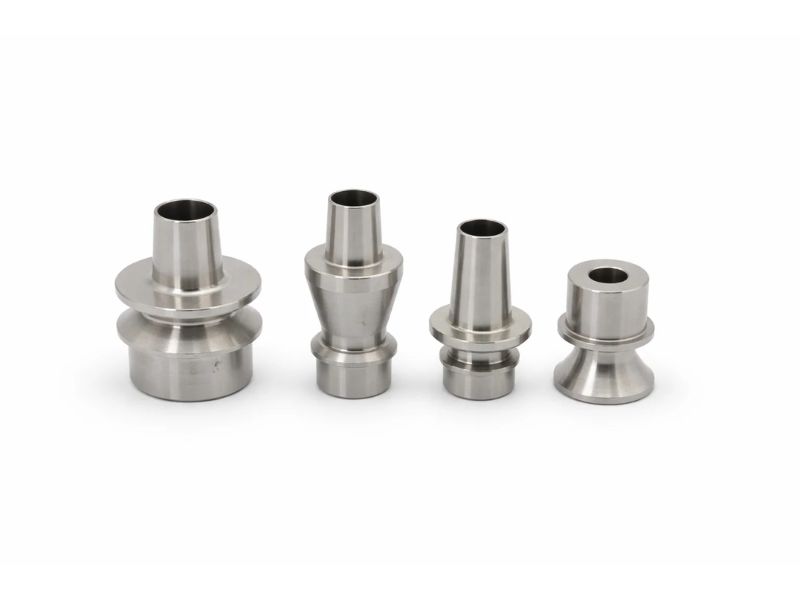
A round or hex body with a through bore or a threaded bore at each end.
Drawing should show
The length, the bore size, and any thread in the bore.

Profab turns stainless steel spacers, bushings, pins, shafts, studs, and fittings to your drawing at our CNC shop in Fenghua, Ningbo. Round, threaded, and shafted parts are the core of this work. A sample or a worn part can also be the starting point for a stainless copy.
Send STEP, IGES, DXF, DWG, or PDF drawings, or a physical sample.
A turned part spins in the lathe while the tool cuts its diameters, bores, grooves, and threads. Each card lists the usual features of a part type and what your drawing should show.
A round or hex body with a through bore or a threaded bore at each end.
The length, the bore size, and any thread in the bore.
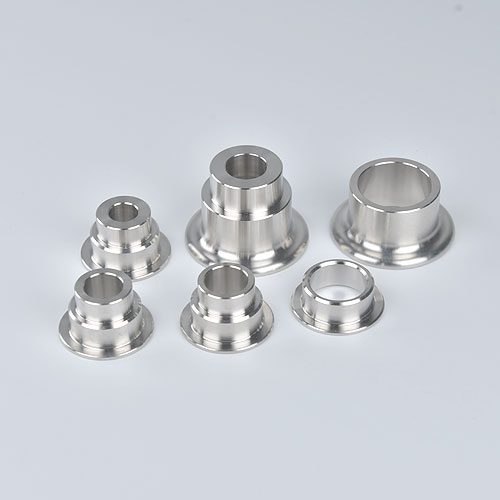
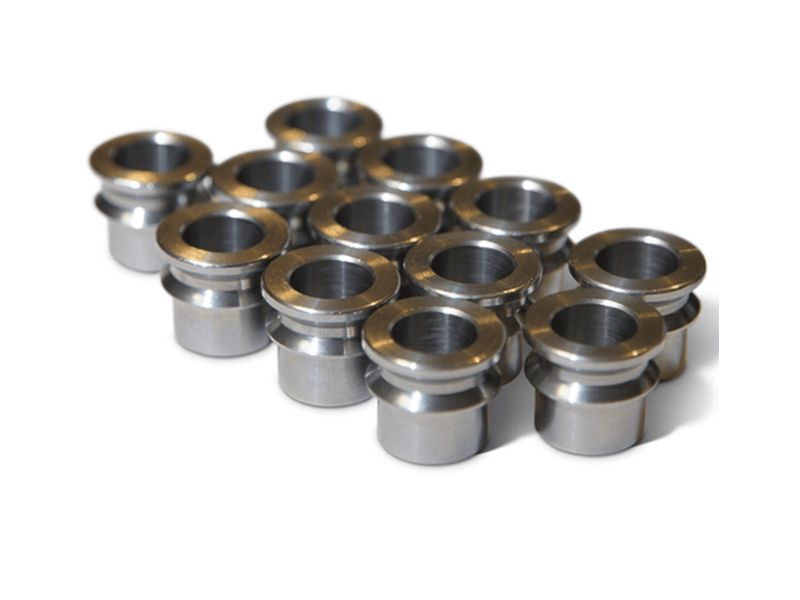
A bored inside diameter, a finished outside diameter, and an optional flange.
Both diameters with their fits, and the press fit into the housing.

Shoulders, tapers, retaining-ring grooves, and chamfered ends.
Each diameter, the shoulder lengths, and the runout datum.

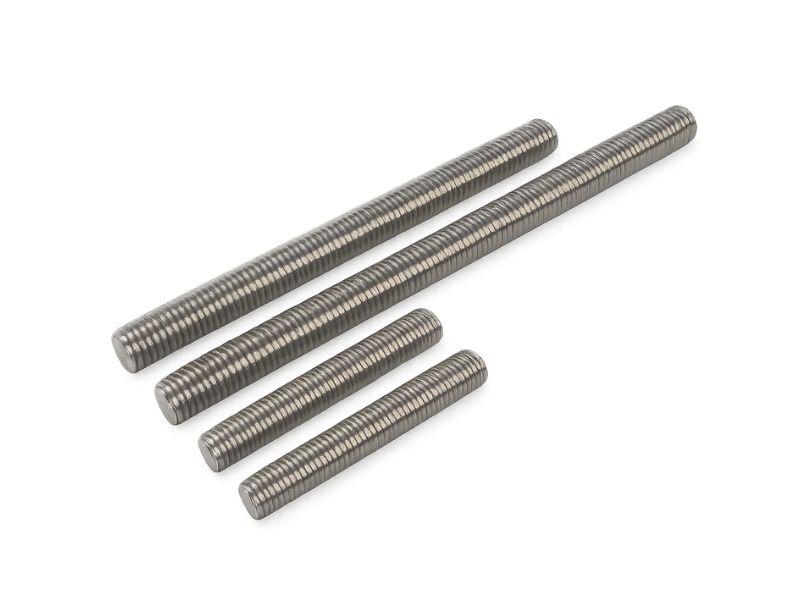
External threads on one or both ends, with a plain shank between them.
The thread size, pitch, class, and thread length.

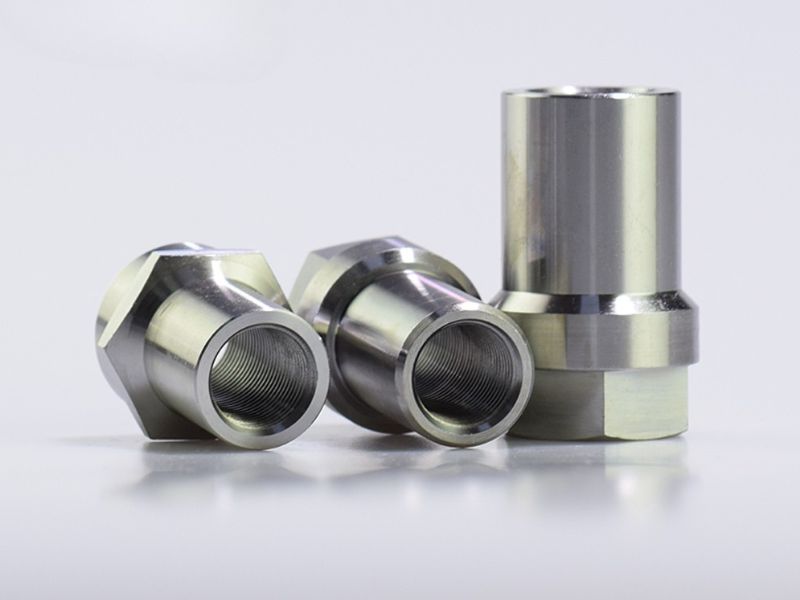
Internal and external threads on one body, with a bore through it.
Both thread callouts and the sealing face.

Short round parts with a bore, faced sides, and holes drilled through the face.
The bore size, the hole pattern, and any face that must stay flat.
Flats, cross holes, and slots on a turned part are milled after turning, on the same order.
Blocks, plates, and housings with several faces are covered on our custom CNC parts page. Stamped and bent parts have their own sheet metal parts page.
Most turned parts carry a thread. Use the example column as a pattern for the callout on your drawing.
| Thread | What we cut | Example callout | Put on the drawing |
|---|---|---|---|
| Metric, coarse and fine | External and internal threads | M10 x 1.5-6g, M10 x 1.5-6H | Size, pitch, class, and thread length |
| Unified inch (UNC, UNF) | External and internal threads | 3/8-16 UNC-2A, 3/8-24 UNF-2B | Series, class, and thread length |
| Small tapped holes | Internal threads tapped after drilling | M5 x 0.8, 10 deep | Thread depth and drill depth for a blind hole |
| Left-hand threads (on request) | Cut as drawn when the part needs one | M12 x 1.75-LH | LH beside the thread, marked on each end of a two-ended part |
| NPT and BSP pipe threads (on request) | Tapered or parallel pipe threads | 1/4 NPT, G 1/4 | The fitting it mates with, and whether it seals on the thread |
| Thread relief | A groove at the end of the thread | Relief groove at the shoulder | Groove width and diameter, or where a partial thread is acceptable |
Swipe to see all columns
A coating or plating after turning thickens the thread. Give the class that applies after the finish.
Thread forms not listed here are quoted from the drawing.

Mark the diameters and fits that matter. We plan the turning around them.
What a diameter can hold depends on its size, its length, and the grade.
A short clip from the Profab YouTube channel. It loads when you press play.
 Rod Ends →
These product families start on the lathe. Each tile opens the product page with its sizes and grades.
Choose the grade by where the part works. The third column says how each one behaves on the lathe.
| Grade | Corrosion resistance | How it turns | Typical turned part |
|---|---|---|---|
| 304 | Good for indoor and fresh-water service | Cuts well with sharp tools and a steady feed. | Spacers, bushings, and shafts |
| 316L | Better than 304 against chlorides | Gummier than 304, so threads need sharp tools. | Wet and coastal pins, studs, and fittings |
| 17-4PH | Lower than 316L | Usually turned before aging. Heat treatment to a condition such as H1025 is available on request. | Pins, shafts, and wear parts |
| 303, 440C, duplex 2205 and 2507 (on request) | Depends on grade | 303 turns freely for dry threaded parts. 440C suits hardened wear faces. | Dry studs, wear pins, and chloride service |
Swipe to see all columns
Ratings are general guidance for comparing grades, not test results.
Other metals are available on request.
Each step carries a tag for where it happens. Steps marked on request or we offer are added only when your part needs them.
Round or hex bar is sawn to length with a facing allowance.
Diameters, shoulders, tapers, and bores are turned to your drawing.
Threads and grooves are cut next. Flats and cross holes are milled after turning.
17-4PH and other hardenable grades can be heat treated after turning.
We offer passivation and electropolishing. Plating and blackening are available on request.
Four features raise most of the questions we ask during quoting. A note on the drawing settles them early.
A stainless thread run dry into a stainless nut can seize while it is tightened. Name the mating part, and we can suggest a lubricant or a different grade for one side.
A long, thin shaft bends away from the tool, so its middle can end up oversize. Keep the length short for the diameter where the design allows. State the straightness you need as well.
A thread cut up to a shoulder leaves the tool no room to exit. Add a relief groove, or mark where a partial thread is acceptable.
Plating and heat treatment can change a diameter or a thread fit. State whether your sizes apply before or after the finish.
We CNC turn your parts ourselves, so drawing questions reach the people who set up the lathes.
Spacers, bushings, pins, and studs for one assembly can be quoted together. Quantity tiers appear on that quotation too.
There is no hard minimum, and prototype runs typically start around 100 pieces. A worn pin or bushing can be measured and copied in stainless.
Send the drawing file, a sample, or a worn part. Add the grade, quantity, threads, and critical diameters.
Without a drawing, we measure the sample and draw it for your approval. Tell us which sizes have worn.
Engineering checks the threads, fits, and grade against the drawing. The quotation can show several quantity tiers.
Sample parts are made for you to check before the full run starts.
The batch follows the approved sample. Parts ship by sea, air, or express courier.
We keep your approved drawing on file. A repeat order then starts from the same revision.
Short answers for engineers and buyers with a turned part to quote.
We regularly turn 304, 316L, and 17-4PH. Other grades, such as 303, 440C, and duplex 2507, are available on request. Tell us where the part works, and we suggest a grade.
Critical diameters are typically held to ±0.01 mm (about ±0.0004 in) where the drawing calls for it. The figure depends on the diameter, the length, and the grade, so we confirm it in the quotation.
We cut metric and unified inch threads, both external and internal. Left-hand threads and NPT or BSP pipe threads are available on request. Put the size, pitch, and class on the drawing.
A part that is round on one axis, such as a pin, a bushing, or a shaft, is turned. Blocks, plates, and housings are milled because their features sit on flat faces. A turned part with flats or cross holes is turned first and milled afterward.
Yes. We measure the sample and draw it for your approval. Tell us which sizes have worn, because a worn bore or thread no longer shows the original size.
Passivation changes the size very little. Electropolishing removes a thin layer, while plating adds thickness. State whether your sizes apply before or after the finish.
There is no hard minimum. Prototype runs typically start around 100 pieces, and quantities vary by part.
Email the drawing or the sample details to [email protected]. Engineering reviews them and replies with a quotation.
Email Your Drawing