Drive & Conveying

Stainless Steel Gears

Profab Machine makes stainless steel gears in 304, 316L, and 17-4PH, including spur, helical, bevel, and worm types, cut on CNC equipment to your drawing or sample. Send the module or diametral pitch, tooth count, bore, and keyway. We confirm the gear type and tooling before quoting.

  • Spur, Helical, Bevel & Worm
  • 304, 316L & 17-4PH
  • Custom Module & Tooth Count
  • Made to Drawing or Sample
View All Types
Stainless steel gears
Product Overview

What Are Stainless Steel Gears?

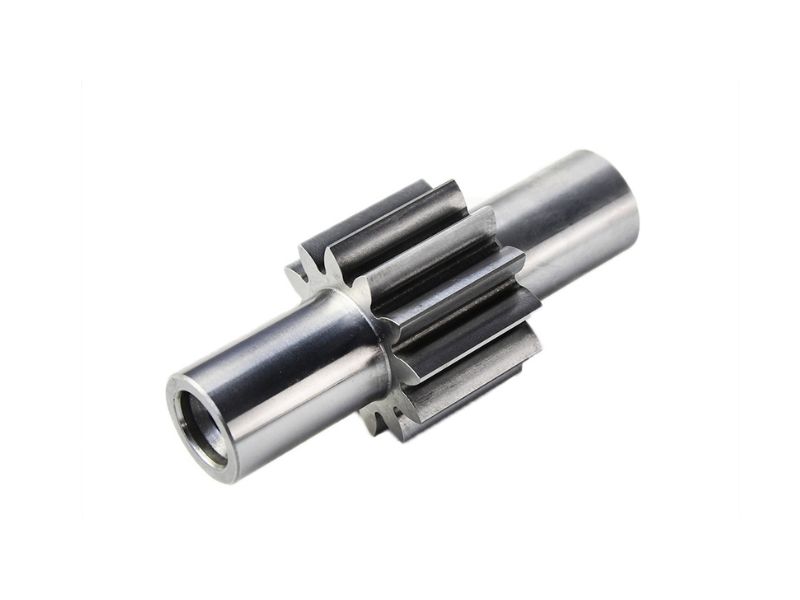
A stainless steel gear is a toothed wheel made from 304, 316L, or 17-4PH that transmits motion and torque between shafts and keeps working where wash water, salt, or chemicals would rust a carbon steel gear.

The gear type sets the shaft layout, the load, and the noise, so we choose the type first and then the module, the tooth count, and the grade. We make spur, miter, helical, bevel, and worm gears, and custom gears, to your drawing or sample.

Corrosion Resistance Outlasts Rusting Carbon Steel Made to Drawing or Sample
Product Range

Types of Stainless Steel Gears

The gear type decides the shaft arrangement, the load capacity, the noise level, and the efficiency. A gear type that does not suit your shaft layout will not mesh properly, so choose the type first and then the module and the grade.

Stainless steel spur gears

Stainless Steel Spur Gears

Parallel Shafts

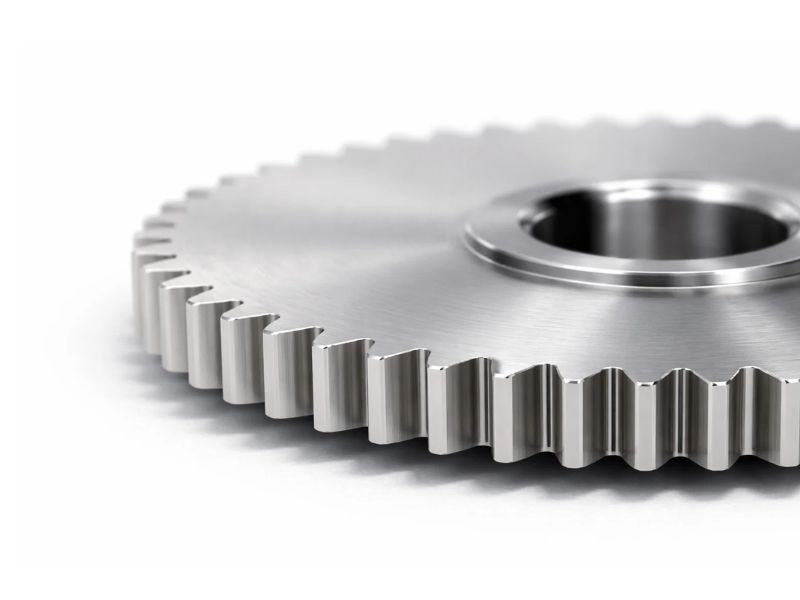
Stainless steel spur gears have straight teeth cut parallel to the gear axis, the simplest and most common type. They are easy to align and put no axial thrust on the bearings. They suit parallel-shaft drives in food equipment, pumps, conveyor gearboxes, and automation where speed is moderate.

Stainless steel helical gears

Stainless Steel Helical Gears

Smoother Quieter

Stainless steel helical gears have teeth cut at a helix angle, usually 15° to 30°, so several teeth are in contact at once. They carry more load and run more quietly at speed than a spur gear of the same size. They create axial thrust that the bearings must take. They suit food mixer drives, tablet press drives, and packaging machine shafts.

Stainless steel bevel gears

Stainless Steel Bevel Gears

Right-Angle Drive

Stainless steel bevel gears are conical gears that transmit torque between shafts that meet at an angle, most often 90°. Straight bevel gears suit low-speed right-angle drives such as cross-shaft drives and agitator gearboxes. Spiral bevel gears suit higher speeds where straight-tooth impact would be noisy. Miter gears are the 1:1 version.

Stainless steel worm gear sets

Stainless Steel Worm Gear Sets

Compact High Reduction

Stainless steel worm gear sets pair a worm with a worm wheel through 90° for a high reduction in one stage. The sliding contact makes more heat and needs better lubrication than rolling-contact gears, so efficiency is usually lower. They suit food index drives, chemical valve actuators, and slow agitator gearboxes.

Material Specification

Choosing the Right Grade

304 Stainless

304 stainless steel gears suit indoor machinery, dry or mildly humid areas, and food equipment with routine cleaning. The teeth cannot be hardened by heat treatment, so keep the tooth load light to moderate.

Food Automation Indoor

316L Stainless

316L stainless steel gears are the standard grade for marine, chemical, and CIP-cleaned equipment, thanks to 2 to 3% molybdenum. The teeth stay softer, so keep the tooth load light to moderate.

Marine Chemical Washdown

17-4PH

17-4PH stainless steel gears are precipitation hardened and reach about 1,310 MPa tensile strength in H900 condition, the stainless choice when the teeth carry real load.

High Load Wear

Two austenitic stainless gears running together can gall. Tell us the mating gear and the lubrication, and we will suggest a pairing.

Applications

Where Stainless Steel Gears Are Used

Stainless steel gears are chosen where a carbon steel gear would rust, contaminate the product, or fail a cleaning routine, and where the load is moderate enough for a stainless grade. Each application needs the gear type, the module, and the grade matched to it.

Selection Guide

How to Specify a Stainless Steel Gear

Work through these points before you request a quote, and send what you know.

FactorWhat to ConfirmWhy It Matters
Gear typeSpur, helical, bevel, miter, or wormThe type sets the shaft layout.
Module or pitchModule or diametral pitch, and pressure angleThe mating gear must match both.
Teeth and sizeNumber of teeth, face width, and outside diameterThey set the ratio and the strength.
Bore and keywayBore size, tolerance, keyway, or set screwThe fit decides how the gear sits on the shaft.
Material304, 316L, or 17-4PH, and any hardness needThe grade sets load and corrosion limits.
Mating gear and lubeThe mating gear material and the lubricantStainless pairs can gall.
Load and speedTorque, speed, and duty cycleThey decide the gear type and grade.
Why Profab

Your Reliable Stainless Steel Gears Supplier

01

Direct from the Manufacturer

We CNC machine your stainless steel gears ourselves, so you deal directly with the factory.

02

Engineering Support and Sampling

Send a CAD file, a sample, or a drawing. Our engineers will review the gear type, the module, the tooth count, and the material before cutting metal. Samples are typically ready in about 20 days.

03

Pricing That Scales With Your Order

Pricing is tiered by order quantity, so the price per gear falls as the quantity rises. We are glad to talk through terms for long-term partnerships.

FAQ

Common Questions

Not seeing your question? Email us at [email protected] and we typically reply same day.

More Questions
Can stainless steel gears be hardened?

304 and 316L cannot be hardened by heat treatment, so use them for light to moderate loads. 17-4PH is precipitation hardened and reaches about 1,310 MPa tensile strength in H900 condition.

Why do stainless gears gall?

Two austenitic stainless surfaces sliding together tend to pick up and tear, especially without lubrication. Use a different or harder mating material, a suitable lubricant, and a clean mesh, and tell us the mating gear.

Which stainless grade should I choose for a gear?

304 suits indoor and routine-wash food equipment, 316L suits marine and chemical service, and 17-4PH suits high load. Tell us the load, the speed, and the cleaning chemistry.

Can you copy a worn gear from a sample?

Yes, in most cases. Send the gear and its mate if you can, or a drawing, with the module or diametral pitch, tooth count, pressure angle, and bore. We confirm the gear type and tooling before we quote.

What should I send to quote a custom gear?

Send a drawing or sample, or list the gear type, module or diametral pitch, tooth count, pressure angle, face width, bore, keyway, grade, and quantity.

How to Order

From Inquiry to Delivery

1

Send Specs

Send the gear type, module or pitch, tooth count, pressure angle, bore, and grade, plus a drawing or sample.

2

Respond Within 24 Hours

Our engineers review your gear request or drawing and send you a specific quote within 24 hours.

3

Production

Standard lead time for gears is 30 days. Custom designs are sampled before the full production run.

4

Delivery

We ship gears by sea, air, or express courier. A tracking number follows once the order ships.

We support small-batch and prototype runs with no hard minimum order quantity. A first prototype run is typically around 100 pieces.

Get in touch with

Ready to Source Stainless Steel Gears?

If you already have drawings, email [email protected] directly and we will quote from them.

[email protected] ↗
Request a Quote

Include the key dimensions, grade, and quantity in your message.

Send Your Inquiry Today