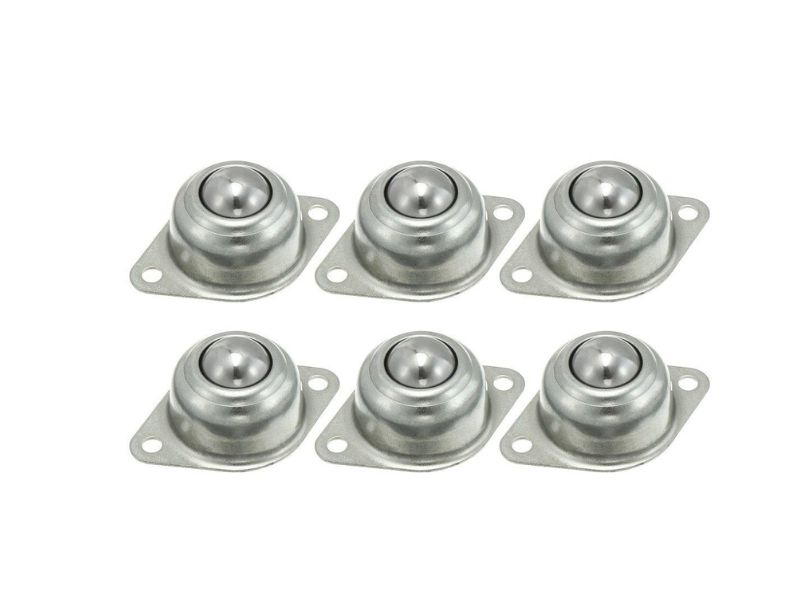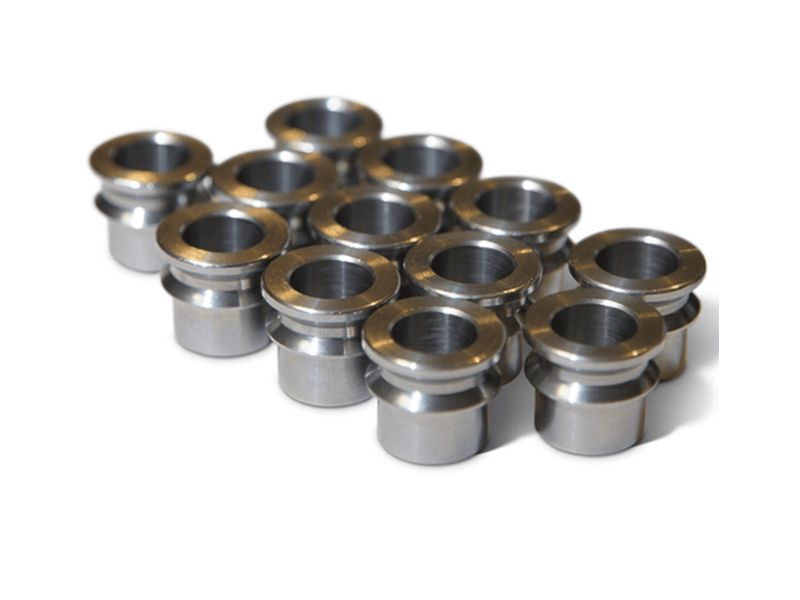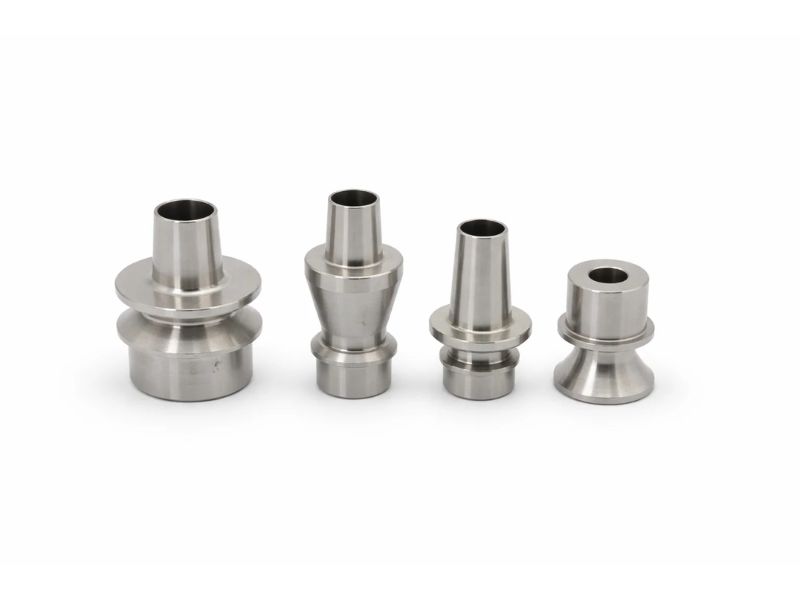

A miniature ball transfer unit has a small load ball and a compact body. It carries a light load on smaller support balls, so a part moves in any direction with little friction. It is not built for high impact loads.
Profab Machine makes miniature units to your drawing, with the ball diameter and the load you specify. Mounting styles include stud, drop-in, and pocket mount. The housing and the load ball are stainless steel in 304 or 316L. Other grades are available on request.
Applications: Measuring instruments, clean-room material conveyance, miniature mechanisms, and part positioning and alignment.
Say which style your base takes. Give the ball diameter and the load for the unit.
| Mounting Style | How It Fits | Typical Use |
|---|---|---|
| Threaded stud | A threaded stud screws into a tapped hole | Small plates and fixtures that take a tapped hole |
| Drop-in or press-fit | Sits in a drilled hole with a snug fit | Recessed fitting, level with the surface |
| Pocket mount | Sits in a round pocket, with the pocket floor taking the load | Fixture and machine construction |
| Flange mount | Bolts to the surface through holes in a flange | Panels and tables fixed from above |
| Custom mounting | Body, thread, and fixing to drawing | Styles that a standard unit does not cover |
The load rule and the spacing rule are published by ball transfer unit makers. Your drawing sets the final count and spacing.
| Item | What to Know | Rule |
|---|---|---|
| Load rating | Set by the ball size, the housing, and the ball material | Stated for your unit, to your drawing |
| Load per unit | Only about three units carry a load, because of tolerances in the load base | Divide the weight of the load by 3 |
| Spacing | Units placed too far apart let the load tip between them | No more than the shortest edge of the load divided by 2.5 |
| Impact | Small units are not designed for high impact loads | Choose a heavy duty unit for impact |
| Positioning | A ball unit gives low-friction guidance and does not hold a position | Do not use it for indexing |
Send a drawing, a DXF file, or a sample. Our engineers review the dimensions and the tolerance before cutting metal. We CNC machine the part ourselves, so you deal directly with the factory.
You set the ball diameter, the load, and the mounting. We check the housing and the ball material against that load. The rating is then stated for your unit, not copied from a catalog.
Salt, moisture, washdown chemicals, and load drive the choice between 304, 316L, and 17-4PH. We confirm the grade against your drawing before production. Tiered pricing is available on larger orders.


A miniature ball transfer unit has a small load ball and a compact body. It carries a light load and lets a part move in any direction.
Makers do not agree on one size limit. Give the ball diameter and the load you need. We make the unit to that drawing.
No. Miniature units are for light loads and are not designed for high impact. For heavy loads or impact, choose a heavy duty ball transfer unit.
Divide the weight of the load by 3 to find the rating each unit needs. Space the units no more than the shortest edge of the load divided by 2.5. Check the base of the load as well, because its size and condition matter.
Choose 316L where the unit sees salt, chlorides, or chloride-based cleaning chemicals, because it resists pitting better than 304. Choose 304 for indoor, dry, or mildly humid service, where it costs less.
Send the ball diameter, the load per unit, and the mounting style. Add the grade and the quantity. A drawing or a sample speeds up the quote.
If you already have drawings, email them to [email protected].
[email protected] ↗We use cookies to run this site, to measure how it is used, and to show relevant ads. You can accept all, reject all non-essential cookies, or choose by category. Privacy Policy