Even matte look
The non-directional texture leaves low glare, so fingerprints and handling marks show less than on a polished part.

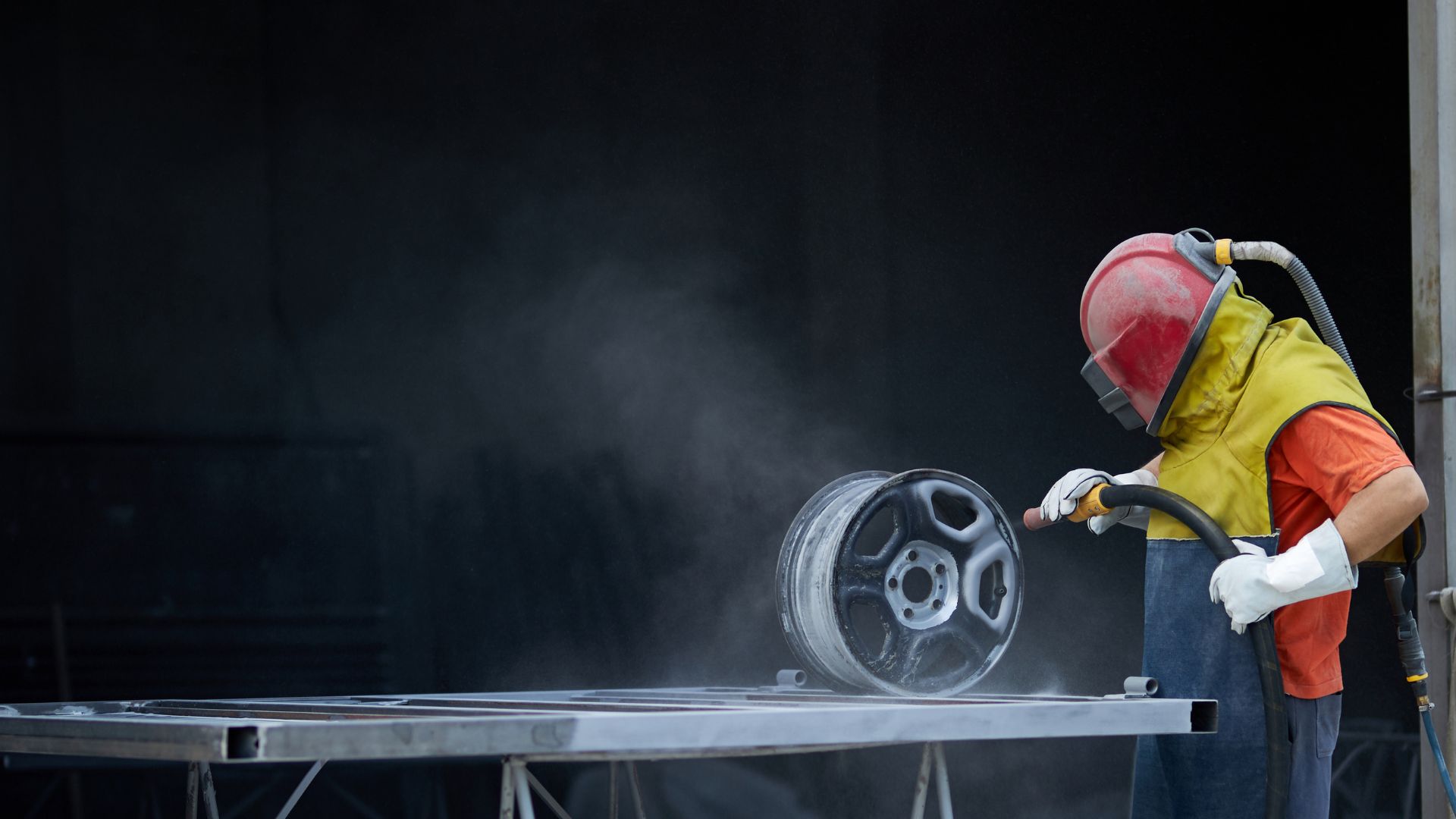
Sandblasting gives stainless steel parts an even matte satin surface that hides tool marks and light scratches, cleans off heat tint, and gives paint or powder coat something to grip. Profab Machine offers sandblasted stainless steel finishing for CNC machined parts, with clean glass bead, aluminum oxide, or ceramic media and passivation afterward.
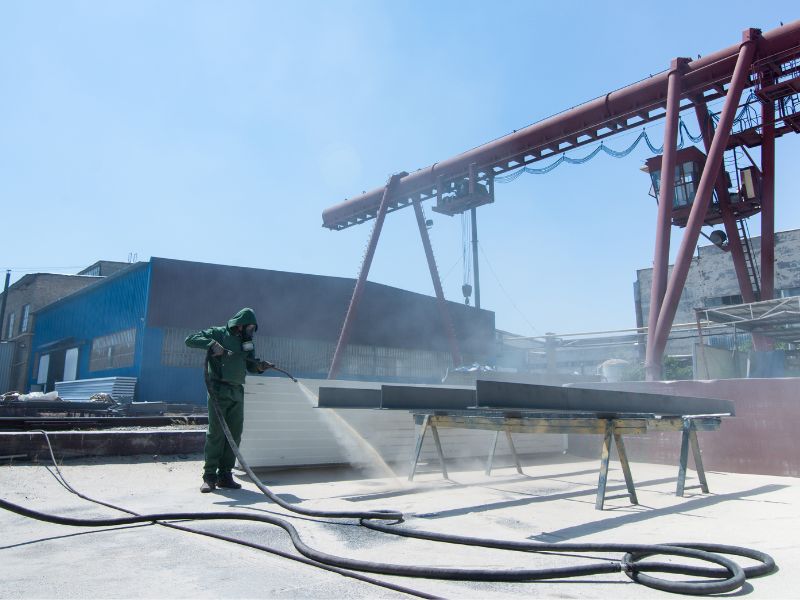
Sandblasted stainless steel is a part whose surface has been struck by fine abrasive media in a stream of compressed air, which leaves an even matte texture.
The texture is non-directional, so it looks the same from every angle, unlike the lines of a brushed finish. Light scratches and machining marks blend into it, and the surface scatters light instead of reflecting it.
Sandblasting and bead blasting belong to the same family. Spherical glass or ceramic beads give a soft satin, and harder angular media such as aluminum oxide give a rougher matte. Stainless parts are blasted with those media rather than sand.
The finish suits 304, 316L, and 17-4PH alike. For salt water or chlorides, the grade matters more than the finish, so choose 316L.
A blasted surface looks even, hides small flaws, and takes a coating well. It has limits, and the last card lists them.
The non-directional texture leaves low glare, so fingerprints and handling marks show less than on a polished part.
Fine machining lines and light scratches blend into the texture. Deep gouges and dents stay visible.
Light oxide and heat tint from welding or machining come off with the top skin of the surface. Passivation then restores the protective layer.
A uniform surface profile gives powder coat or paint something to key into.
You approve a sample first, and later batches are matched to that sample.
Blasting does not polish, fill scratches, or raise corrosion resistance by itself. A matte surface also holds dirt more readily than a polished one.
The media sets the texture. Glass bead leaves the finest satin, and aluminum oxide leaves the coarsest matte.
| Media | Surface look | Cutting action | Typical use on stainless | Watch for |
|---|---|---|---|---|
| Glass bead | Smooth, bright satin | Gentle | Visible housings and covers where appearance matters | Fine detail can soften at high pressure |
| Ceramic bead | Even matte, between the two | Medium | Machined parts that need an even texture across batches | Cuts more than glass bead, so test on a sample |
| Aluminum oxide | Rougher, duller matte | Aggressive | Heat tint, scale, and surface preparation before coating | Removes more material and holds dirt more readily |
Clean, non-ferrous media is specified for stainless steel. Steel grit or media that has blasted carbon steel can embed iron in the surface, and the iron shows up later as rust spots.
Stainless steel rod ends, spacers, clamps, and brackets are blasted when the part is seen, handled, or coated. Each card names what is masked.
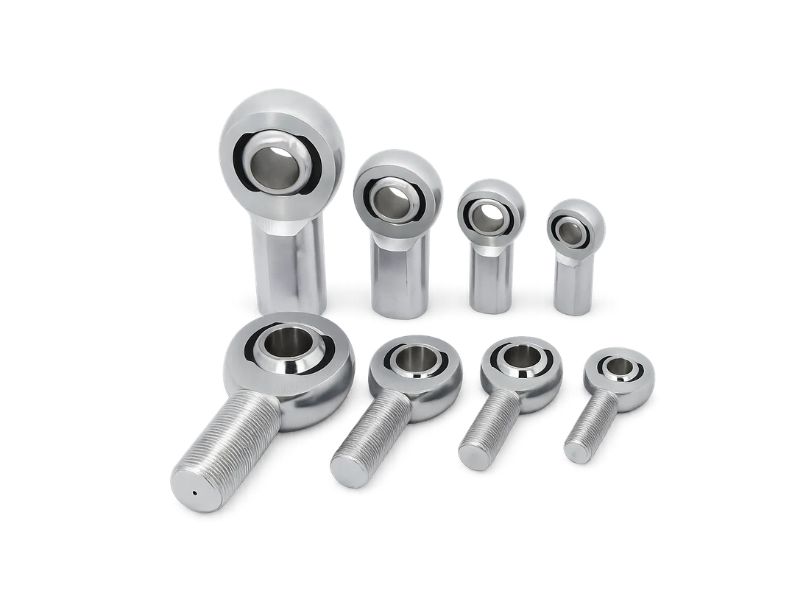
The body and shank are blasted for an even look on exposed linkages. The bore and bearing seat are masked.
Stainless Steel Rod Ends
Turned spacers lose their lathe lines. Faces that set a gap or seal are masked.
Stainless Steel Spacers
Clamp bands and housings take a low-glare surface for food lines and marine decks. The thread is masked.
Stainless Steel Clamps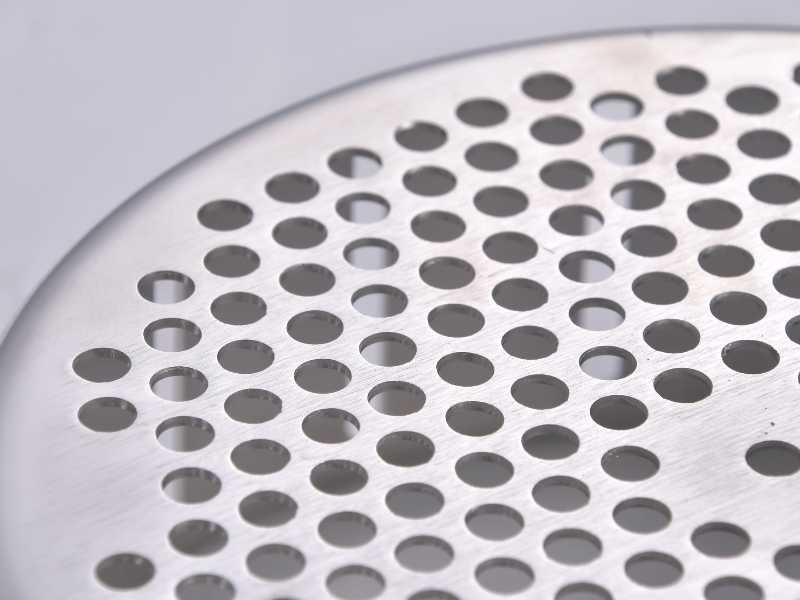
Machined and sheet metal parts are blasted before powder coat or for a uniform exposed finish.
Custom CNC PartsBlasting acts on every surface it reaches, so the drawing decides what is protected and what is finished.
List threads, bores, bearing seats, seal faces, and O-ring grooves. Blasting roughens and slightly wears any surface left uncovered.
Blasting removes a very small amount of material. Say whether a toleranced face is masked or measured after blasting.
Thin walls and sheet can distort under heavy blasting. A softer media or lower pressure protects them.
Sharp edges soften slightly, and light heat tint comes off. Weld spatter and deep pits should be dressed before blasting.
Texture changes with media, pressure, and angle. A sample you approve is the reference for every batch.
Blasting disturbs the passive layer. Passivation is offered afterward to restore corrosion resistance, and powder coat can follow on request.
Blasting comes after the last cut, and each step is tagged with where it happens.
An engineer reads the finish note, the masked features, and your reference sample before the part is quoted.
Parts are machined to size first, because blasting comes after the last cut.
Threads, bores, and seal faces marked on the drawing are covered before blasting.
Clean non-ferrous media gives the texture of the sample you approved.
Offered after blasting to restore the corrosion-resistant surface.
Parts return to the factory and are checked against the drawing and your approved sample before packing.
Pick the finish by what the part has to do. A matte blasted surface is one option among four.
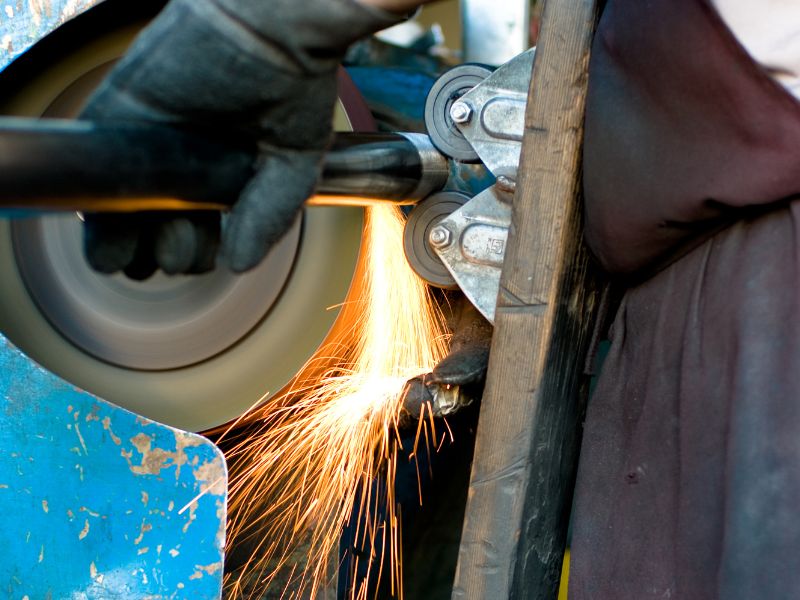
A smooth reflective surface instead of a matte one, chosen for looks and easier cleaning.
Mirror Polished Stainless Steel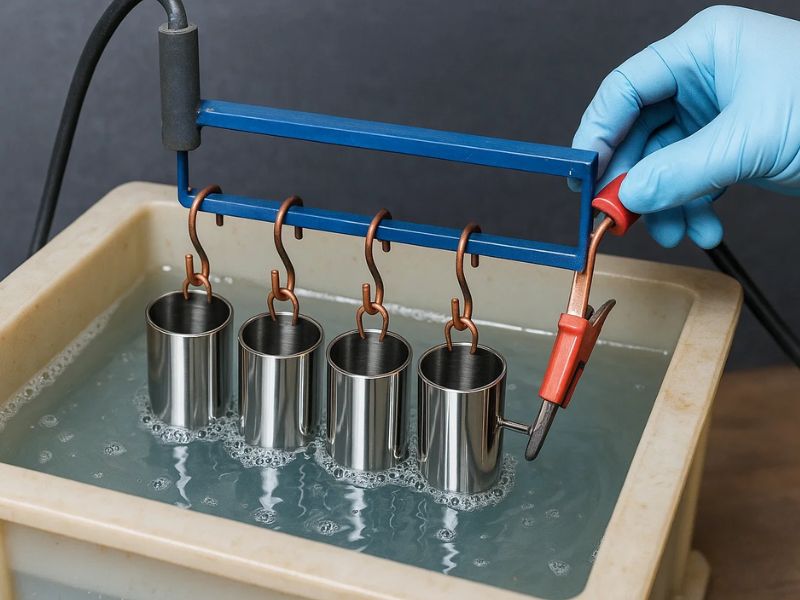
A smoother, easier-to-clean surface for hygiene parts, where a blasted texture would hold too much dirt.
Stainless Steel Electropolishing
A colored, durable coating. Blasting beforehand gives it a surface to grip.
Stainless Steel Powder CoatingThese six items let an engineer plan masking, media, and passivation before the quote.
The quote then lists the media, the masked features, and each step that follows.
Buyers usually ask about media, dimensions, passivation, and masking before a first order.
Not exactly. Sandblasting is the common name for abrasive blasting in general, while bead blasting means spherical beads, usually glass or ceramic, that leave a softer satin surface. Stainless parts are blasted with glass bead, ceramic, or aluminum oxide media rather than sand. The media is chosen from the look you want.
Slightly. Blasting removes a very small amount of material and can soften sharp edges, so features with tight tolerances are either masked or measured after finishing. Mark those features on the drawing. Thin sections can distort under heavy blasting, so give the wall thickness when you ask for a quote.
Yes, when corrosion resistance matters. Blasting disturbs the thin passive layer on stainless steel, and passivation restores it. Passivation is offered after blasting with your order through our production network. Name it on the drawing so the quote includes it.
Yes. Threads, bores, bearing seats, seal faces, and O-ring grooves can be masked so they keep their machined size and finish. List each masked feature on the drawing, because unmasked blasting wears every surface it touches. Say which faces are cosmetic and which are functional so the masking plan is clear.
Glass bead, aluminum oxide, or ceramic media, chosen from the finish you want. Glass bead gives a soft satin, aluminum oxide a rougher matte, and ceramic sits between them. The media should be clean and non-ferrous, because iron from steel grit or used media can embed in stainless steel and show up as rust spots.
Yes. Send a sample part or a photo, and the quote can include a blasted sample for your approval. Production batches are then matched to the sample you approve. Texture depends on media, pressure, and angle, so the approved sample, not a description, is the reference.
Yes. A uniform blasted profile gives powder coat or paint a surface to grip, which helps adhesion. Powder coating is offered as its own finish. Name the coating in your quote request so the blasting and the coating are planned together.
Light heat tint and oxide come off with blasting, which is why it is common on welded stainless parts. Heavy scale, spatter, and deep pits are better removed first, and passivation should follow to restore corrosion resistance. Photos of the welded area help us advise.
Mark the faces to blast and the features to mask, and attach a sample or a photo of the look you want. An engineer reviews the drawing before the quote goes out.
We use cookies to run this site, to measure how it is used, and to show relevant ads. You can accept all, reject all non-essential cookies, or choose by category. Privacy Policy