

- By Profab /
- April 8, 2026
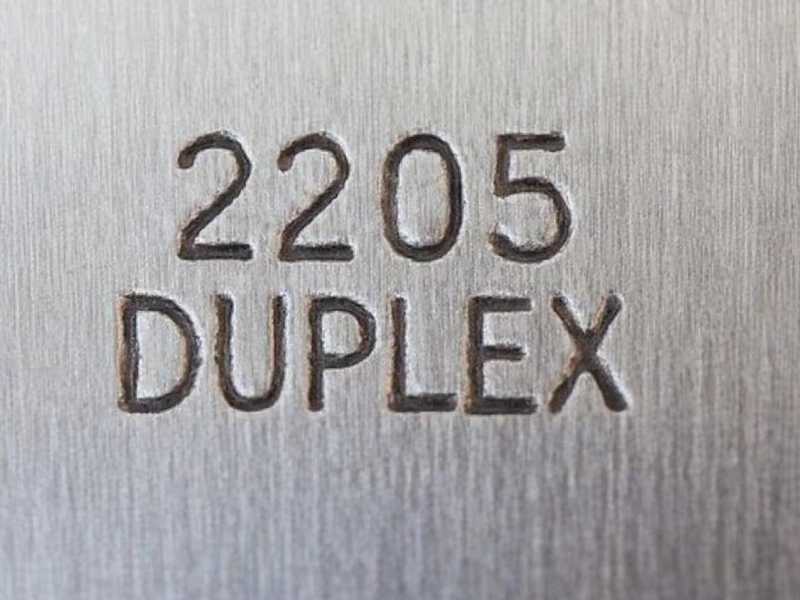
Table of Contents
316L is the default stainless steel specification for a wide range of process and mechanical components across the oil and gas industry. It handles moderate corrosion environments reasonably well, it is familiar to fabricators and inspectors, and it is widely available. The problem is that moderate corrosion performance is not what most oil and gas environments deliver. Chloride concentrations in produced water regularly reach tens of thousands of ppm. H₂S partial pressures in sour gas fields exceed the thresholds that trigger sulfide stress cracking in austenitic grades. Operating pressures in subsea and downhole applications demand yield strengths that 316L cannot provide without a wall thickness penalty that adds cost and weight the project cannot absorb. 2205 duplex stainless steel resolves each of these constraints through a different metallurgical architecture, and the engineering case for specifying it where conditions warrant is straightforward once the underlying numbers are understood.
The Metallurgy Behind the Gap
2205 duplex stainless steel takes its name from its approximate composition: 22% chromium, 5% nickel, with the addition of 3% molybdenum and 0.17% nitrogen. The designation matters for procurement: the original UNS S31803 and the tighter UNS S32205 both carry the “2205” commercial name, but they are not identical. S31803 permits molybdenum as low as 2.5% and nitrogen as low as 0.08%, which can produce a PREN as low as approximately 31 — enough to fall meaningfully short of the performance the 2205 name implies. S32205, which tightens the molybdenum floor to 3.0% and nitrogen floor to 0.14%, reliably delivers the PREN of 34–36 that oil and gas specifications expect. For any sour service or subsea application, specifying S32205 by UNS number rather than the generic grade name is a straightforward way to close that ambiguity.
The microstructure that results from solution annealing at 1050–1100°C and water quenching is roughly 50% ferrite and 50% austenite. This dual-phase structure is where 2205 derives both its mechanical and corrosion properties. The ferrite phase contributes high strength and resistance to chloride pitting and crevice corrosion. The austenite phase contributes toughness, ductility, and resistance to stress corrosion cracking. Neither phase alone achieves what both together produce: an alloy that is simultaneously stronger, tougher under cyclic load, and more resistant to the combined attack of chloride and H₂S than any single-phase austenitic grade.
The practical corrosion resistance comparison between 316L and 2205 is captured by the Pitting Resistance Equivalent Number, or PREN, calculated as %Cr + 3.3×%Mo + 16×%N. For 316L, the result is approximately 24–26. For 2205, it is approximately 34–36. The gap of roughly 10 PREN points is not a minor refinement. A PREN above 30 is considered the practical threshold for reliable performance in aggressive chloride environments, and 316L at 24–26 sits consistently below it. In produced water environments with chloride concentrations in the range of 50,000 to 150,000 ppm — conditions common across Gulf of Mexico deepwater, North Sea, and Middle East fields — this difference determines whether a component remains structurally sound through its intended service life or initiates corrosion within the first operational year.
Strength Is Half the Story
PREN addresses corrosion resistance. The mechanical property gap between 316L and 2205 addresses a separate set of engineering constraints that chloride resistance alone cannot solve.
Per ASTM A276, 316L minimum yield strength is 170 MPa. For 2205 per the same standard, the minimum is 450 MPa. That is not a marginal improvement. The 2205 yield strength is more than twice that of 316L, which has direct implications for component design in high-pressure service.
High-pressure piping and fittings are designed to pressure ratings that are a function of allowable stress, which derives from yield strength. When yield strength more than doubles, the same pressure rating can be achieved with a wall approximately 40% thinner than the 316L equivalent. In subsea flowline terminations, manifold bodies, and pump shaft components, this translates to weight reductions that affect lifting equipment requirements, installation time, and total project cost in ways that are not captured by a simple material price comparison.
| Property | 316L (ASTM A276) | 2205 (ASTM A276) | Practical Implication |
|---|---|---|---|
| Min. yield strength | 170 MPa | 450 MPa | ~40% wall thickness reduction at equivalent pressure rating |
| Min. tensile strength | 515 MPa | 620 MPa | Higher fatigue resistance under cyclic pressure load |
| PREN | ~24–26 | ~34–36 | Reliable pitting resistance above the 30-point threshold |
| Chloride SCC resistance | Susceptible above ~60°C | High resistance | Eliminates principal failure mode in produced water service |
| H₂S service (NACE MR0175) | Severely restricted: T ≤60°C, Cl⁻ ≤1,000 mg/L | Qualified at moderate H₂S partial pressure (~≤10 kPa) | Wider service envelope; meets sour well requirements |
The weight saving argument is reinforced by a related consideration: welding volume. Thinner walls require fewer weld passes and less heat input per joint. In duplex stainless steels, controlling heat input is a fabrication requirement, not an option. The thinner the wall, the easier it is to maintain the thermal cycles that preserve the ferrite-austenite balance through the weld zone. Down-gauging in 2205 is not just a weight saving — it makes the welding process more manageable.
NACE MR0175: The Compliance Threshold
In oil and gas, material selection for sour service — any environment containing H₂S — is governed by NACE MR0175/ISO 15156. This standard defines which metallic materials are qualified for use in H₂S-containing environments, under what conditions, and with what hardness limits.
316L does appear in NACE MR0175/ISO 15156 Part 3, which covers corrosion-resistant alloys. However, the environmental limits under which it is permitted are narrow: service temperature typically ≤60°C and chloride concentration ≤1,000 mg/L, with further constraints depending on pH and H₂S partial pressure. The conditions typical of produced water and sour gas service — chloride concentrations in the tens of thousands of mg/L, service temperatures above 60°C, and H₂S partial pressures above the minimum thresholds — consistently place 316L outside its qualified envelope. In practice, specifying 316L for modern deepwater, tidal, or sour gas applications means engineering against a material that the standard itself severely restricts under those conditions.
2205 qualifies under NACE MR0175/ISO 15156 Part 3 across a substantially wider service envelope, including moderate H₂S partial pressure service up to approximately 10 kPa (1.5 psi) at elevated temperature, subject to hardness limits — typically ≤HRC 28, which corresponds to approximately 286 HV per ASTM E140 — that prevent sulfide stress cracking. This qualification is a direct specification requirement in operator engineering standards and tender documents for sour service projects. When a procurement specification references NACE MR0175/ISO 15156 Part 3 compliance and the project conditions exceed 316L’s narrow permitted envelope, duplex stainless steel grades including 2205 enter the evaluation.
316L vs. 2205 at a glance for sour service:
- 316L: PREN 24–26, yield 170 MPa, NACE MR0175 Part 3 permitted only within narrow limits (T ≤60°C, Cl⁻ ≤1,000 mg/L) — frequently disqualified by actual field conditions
- 2205: PREN 34–36, yield 450 MPa, NACE MR0175/ISO 15156 Part 3 qualified across a wider service envelope
- Hardness control required for 2205 in H₂S service: ≤HRC 28 (≈286 HV per ASTM E140) — verify with MTR and hardness test certificate
- Applicable standards: ASTM A276 (bar/shapes), ASTM A790 (tube/pipe)
Where 2205 Belongs in an Oil & Gas Project
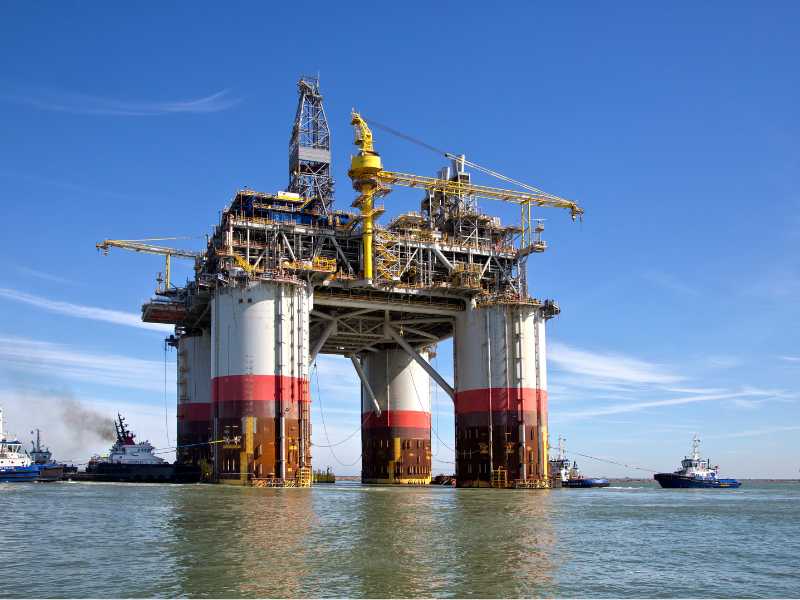
The applications where 2205 provides the most direct engineering benefit are those that combine aggressive corrosion environments with structural load requirements. These conditions appear repeatedly in subsea, downhole, and surface process equipment.
Subsea manifolds and flowline fittings: Produced water in subsea tie-back systems typically carries chloride concentrations well above the threshold where 316L’s passive film becomes unstable. Manifold bodies, tee connections, elbow fittings, and flowline termination assemblies in these environments are specified in 2205 or higher-grade duplex alloys as a matter of engineering practice, not premium specification. The NACE MR0175 requirement and the pressure rating requirements converge to eliminate 316L from consideration before material cost even enters the discussion.
Pump shafts and impellers in produced water service: Centrifugal pump shafts in produced water duty face both mechanical loading (bending, torsion under cyclic conditions) and corrosion attack at the shaft surface and any keyway or bore concentration. 316L shafts in high-chloride produced water service have demonstrated SCC initiation at stress concentrations — keyways, shrink fits, seal areas — within service periods that are economically unacceptable. 2205’s resistance to SCC in chloride environments and its higher fatigue strength address both failure modes simultaneously.
Valve bodies in sour service: Ball valves, gate valves, and check valves in sour service gas lines are directly subject to NACE MR0175/ISO 15156 material requirements. The combination of H₂S, chloride contamination in produced water carryover, and mechanical loading on valve bodies makes 316L an inappropriate specification. 2205 valve bodies machined to close tolerances meet both the corrosion and the hardness requirements of NACE Part 3.
Instrumentation and control line fittings: High-pressure sample lines, gauge ports, and hydraulic control line fittings in sour service must be fabricated from NACE-compliant materials. The small cross-sections and tight dimensional tolerances required in instrumentation fittings favor CNC-machined 2205 bar stock over cast alternatives, where dimensional consistency and grain structure uniformity are critical.
Heat exchanger tubesheets and shell components: In heat exchangers processing sour gas streams or high-chloride produced water, 2205 tubesheets provide both the corrosion resistance and the structural rigidity needed to manage differential thermal expansion without stress concentration at tube-to-tubesheet joints.
Where 2205 Falls Short
2205 is the right specification for a defined temperature and service window. Outside that window, it requires evaluation against alternatives.
High-temperature service: Two embrittlement mechanisms affect duplex stainless steels at elevated temperature. Between 300°C and 550°C, the ferrite phase undergoes chromium-rich precipitation — the 475°C embrittlement mechanism — which causes a progressive loss of toughness and corrosion resistance. Above approximately 600°C, sigma phase formation (a brittle Fe-Cr-Mo intermetallic) can occur rapidly, with severe impact on mechanical properties. The nominal upper service limit for 2205 is approximately 300°C, though some major operator standards (including Shell DEP and comparable BP specifications) limit 2205 to 250°C for long-term assets to provide margin against embrittlement over 20-plus year service lives. For process applications that cycle above these temperatures, higher-temperature austenitic or nickel-based alloys should be evaluated.
Welding discipline: 2205 requires controlled heat input and interpass temperature during welding to maintain the ferrite-austenite balance in the heat-affected zone. Improper welding — excessive heat input, incorrect interpass temperature, wrong filler metal — can shift the microstructural balance in the HAZ toward excessive ferrite or cause sigma phase precipitation, both of which reduce corrosion resistance at the joint. This is not an argument against specifying 2205; it is an argument for confirming that the fabricator has documented welding procedure specifications (WPS) and qualified welders for duplex stainless steel before committing to procurement.
Very high H₂S partial pressures: 2205 qualifies under NACE MR0175 at moderate H₂S partial pressures — generally up to approximately 10 kPa (1.5 psi) at the temperature and chloride conditions of the application, though the actual permitted envelope depends on the combination of temperature, chloride, and pH defined in the standard. At higher partial pressures, conditions found in highly sour reservoirs, 2205 may not provide adequate SSC resistance, and higher-grade duplex alloys (2507, with PREN >40) or nickel-based alloys (Alloy 625, Alloy 825) should be evaluated. The NACE standard defines the specific envelope; confirming which part of the H₂S partial pressure range the project falls into is an engineering calculation that must be completed before finalizing the material specification.
2205 application boundaries:
- Service temperature range: –50°C to ~300°C. Above this, evaluate austenitic or nickel-based alloys.
- H₂S partial pressure: moderate (as defined by NACE MR0175 Part 3). Very high H₂S → evaluate 2507 or Alloy 825.
- Welding: requires qualified WPS, controlled heat input, duplex-grade filler. Confirm fabricator qualification before procurement.
- Hardness: ≤HRC 28 (≈286 HV per ASTM E140) for NACE sour service compliance. Verify on MTR and hardness test certificate.
The Specification Decision
The engineering case for 2205 in oil and gas service is not about grade premium for its own sake. It is about matching material properties to the actual service environment rather than applying the familiar default until failure demonstrates the mismatch. In environments with chloride concentrations above the range where 316L’s passive film remains stable, with H₂S present at levels that trigger NACE MR0175 compliance requirements, and with pressure ratings that demand structural efficiency, 2205 addresses all three constraints simultaneously. The mechanical strength advantage also opens a wall thickness reduction that often offsets a substantial portion of the material cost premium over the project lifecycle.
Procurement documentation for 2205 in oil and gas service should include: ASTM A276 or ASTM A790 MTR confirming composition and mechanical properties, hardness test certificate confirming ≤HRC 28 for sour service applications, and passivation confirmation if the parts are machined from bar stock. Fabricator qualification records for duplex welding should be confirmed before the welding scope is released.
For oil and gas projects requiring NACE-compliant 2205 components machined from certified bar stock, Profab Machine produces precision-machined duplex stainless steel fittings, valve components, pump parts, and instrumentation fittings with full material traceability and MTR documentation.
Send Inquiry Now
316L is the default stainless steel specification for a wide range of process and mechanical components across the oil and gas industry. It handles moderate corrosion environments reasonably well, it is familiar to fabricators and inspectors, and it is widely available. The problem is that moderate corrosion performance is not what most oil and gas environments deliver. Chloride concentrations in produced water regularly reach tens of thousands of ppm. H₂S partial pressures in sour gas fields exceed the thresholds that trigger sulfide stress cracking in austenitic grades. Operating pressures in subsea and downhole applications demand yield strengths that 316L cannot provide without a wall thickness penalty that adds cost and weight the project cannot absorb. 2205 duplex stainless steel resolves each of these constraints through a different metallurgical architecture, and the engineering case for specifying it where conditions warrant is straightforward once the underlying numbers are understood.
The Metallurgy Behind the Gap
2205 duplex stainless steel takes its name from its approximate composition: 22% chromium, 5% nickel, with the addition of 3% molybdenum and 0.17% nitrogen. The designation matters for procurement: the original UNS S31803 and the tighter UNS S32205 both carry the “2205” commercial name, but they are not identical. S31803 permits molybdenum as low as 2.5% and nitrogen as low as 0.08%, which can produce a PREN as low as approximately 31 — enough to fall meaningfully short of the performance the 2205 name implies. S32205, which tightens the molybdenum floor to 3.0% and nitrogen floor to 0.14%, reliably delivers the PREN of 34–36 that oil and gas specifications expect. For any sour service or subsea application, specifying S32205 by UNS number rather than the generic grade name is a straightforward way to close that ambiguity.
The microstructure that results from solution annealing at 1050–1100°C and water quenching is roughly 50% ferrite and 50% austenite. This dual-phase structure is where 2205 derives both its mechanical and corrosion properties. The ferrite phase contributes high strength and resistance to chloride pitting and crevice corrosion. The austenite phase contributes toughness, ductility, and resistance to stress corrosion cracking. Neither phase alone achieves what both together produce: an alloy that is simultaneously stronger, tougher under cyclic load, and more resistant to the combined attack of chloride and H₂S than any single-phase austenitic grade.
The practical corrosion resistance comparison between 316L and 2205 is captured by the Pitting Resistance Equivalent Number, or PREN, calculated as %Cr + 3.3×%Mo + 16×%N. For 316L, the result is approximately 24–26. For 2205, it is approximately 34–36. The gap of roughly 10 PREN points is not a minor refinement. A PREN above 30 is considered the practical threshold for reliable performance in aggressive chloride environments, and 316L at 24–26 sits consistently below it. In produced water environments with chloride concentrations in the range of 50,000 to 150,000 ppm — conditions common across Gulf of Mexico deepwater, North Sea, and Middle East fields — this difference determines whether a component remains structurally sound through its intended service life or initiates corrosion within the first operational year.
Strength Is Half the Story
PREN addresses corrosion resistance. The mechanical property gap between 316L and 2205 addresses a separate set of engineering constraints that chloride resistance alone cannot solve.
Per ASTM A276, 316L minimum yield strength is 170 MPa. For 2205 per the same standard, the minimum is 450 MPa. That is not a marginal improvement. The 2205 yield strength is more than twice that of 316L, which has direct implications for component design in high-pressure service.
High-pressure piping and fittings are designed to pressure ratings that are a function of allowable stress, which derives from yield strength. When yield strength more than doubles, the same pressure rating can be achieved with a wall approximately 40% thinner than the 316L equivalent. In subsea flowline terminations, manifold bodies, and pump shaft components, this translates to weight reductions that affect lifting equipment requirements, installation time, and total project cost in ways that are not captured by a simple material price comparison.
| Property | 316L (ASTM A276) | 2205 (ASTM A276) | Practical Implication |
|---|---|---|---|
| Min. yield strength | 170 MPa | 450 MPa | ~40% wall thickness reduction at equivalent pressure rating |
| Min. tensile strength | 515 MPa | 620 MPa | Higher fatigue resistance under cyclic pressure load |
| PREN | ~24–26 | ~34–36 | Reliable pitting resistance above the 30-point threshold |
| Chloride SCC resistance | Susceptible above ~60°C | High resistance | Eliminates principal failure mode in produced water service |
| H₂S service (NACE MR0175) | Severely restricted: T ≤60°C, Cl⁻ ≤1,000 mg/L | Qualified at moderate H₂S partial pressure (~≤10 kPa) | Wider service envelope; meets sour well requirements |
The weight saving argument is reinforced by a related consideration: welding volume. Thinner walls require fewer weld passes and less heat input per joint. In duplex stainless steels, controlling heat input is a fabrication requirement, not an option. The thinner the wall, the easier it is to maintain the thermal cycles that preserve the ferrite-austenite balance through the weld zone. Down-gauging in 2205 is not just a weight saving — it makes the welding process more manageable.
NACE MR0175: The Compliance Threshold
In oil and gas, material selection for sour service — any environment containing H₂S — is governed by NACE MR0175/ISO 15156. This standard defines which metallic materials are qualified for use in H₂S-containing environments, under what conditions, and with what hardness limits.
316L does appear in NACE MR0175/ISO 15156 Part 3, which covers corrosion-resistant alloys. However, the environmental limits under which it is permitted are narrow: service temperature typically ≤60°C and chloride concentration ≤1,000 mg/L, with further constraints depending on pH and H₂S partial pressure. The conditions typical of produced water and sour gas service — chloride concentrations in the tens of thousands of mg/L, service temperatures above 60°C, and H₂S partial pressures above the minimum thresholds — consistently place 316L outside its qualified envelope. In practice, specifying 316L for modern deepwater, tidal, or sour gas applications means engineering against a material that the standard itself severely restricts under those conditions.
2205 qualifies under NACE MR0175/ISO 15156 Part 3 across a substantially wider service envelope, including moderate H₂S partial pressure service up to approximately 10 kPa (1.5 psi) at elevated temperature, subject to hardness limits — typically ≤HRC 28, which corresponds to approximately 286 HV per ASTM E140 — that prevent sulfide stress cracking. This qualification is a direct specification requirement in operator engineering standards and tender documents for sour service projects. When a procurement specification references NACE MR0175/ISO 15156 Part 3 compliance and the project conditions exceed 316L’s narrow permitted envelope, duplex stainless steel grades including 2205 enter the evaluation.
- 316L: PREN 24–26, yield 170 MPa, NACE MR0175 Part 3 permitted only within narrow limits (T ≤60°C, Cl⁻ ≤1,000 mg/L) — frequently disqualified by actual field conditions
- 2205: PREN 34–36, yield 450 MPa, NACE MR0175/ISO 15156 Part 3 qualified across a wider service envelope
- Hardness control required for 2205 in H₂S service: ≤HRC 28 (≈286 HV per ASTM E140) — verify with MTR and hardness test certificate
- Applicable standards: ASTM A276 (bar/shapes), ASTM A790 (tube/pipe)
Where 2205 Belongs in an Oil & Gas Project
The applications where 2205 provides the most direct engineering benefit are those that combine aggressive corrosion environments with structural load requirements. These conditions appear repeatedly in subsea, downhole, and surface process equipment.
Subsea manifolds and flowline fittings: Produced water in subsea tie-back systems typically carries chloride concentrations well above the threshold where 316L’s passive film becomes unstable. Manifold bodies, tee connections, elbow fittings, and flowline termination assemblies in these environments are specified in 2205 or higher-grade duplex alloys as a matter of engineering practice, not premium specification. The NACE MR0175 requirement and the pressure rating requirements converge to eliminate 316L from consideration before material cost even enters the discussion.
Pump shafts and impellers in produced water service: Centrifugal pump shafts in produced water duty face both mechanical loading (bending, torsion under cyclic conditions) and corrosion attack at the shaft surface and any keyway or bore concentration. 316L shafts in high-chloride produced water service have demonstrated SCC initiation at stress concentrations — keyways, shrink fits, seal areas — within service periods that are economically unacceptable. 2205’s resistance to SCC in chloride environments and its higher fatigue strength address both failure modes simultaneously.
Valve bodies in sour service: Ball valves, gate valves, and check valves in sour service gas lines are directly subject to NACE MR0175/ISO 15156 material requirements. The combination of H₂S, chloride contamination in produced water carryover, and mechanical loading on valve bodies makes 316L an inappropriate specification. 2205 valve bodies machined to close tolerances meet both the corrosion and the hardness requirements of NACE Part 3.
Instrumentation and control line fittings: High-pressure sample lines, gauge ports, and hydraulic control line fittings in sour service must be fabricated from NACE-compliant materials. The small cross-sections and tight dimensional tolerances required in instrumentation fittings favor CNC-machined 2205 bar stock over cast alternatives, where dimensional consistency and grain structure uniformity are critical.
Heat exchanger tubesheets and shell components: In heat exchangers processing sour gas streams or high-chloride produced water, 2205 tubesheets provide both the corrosion resistance and the structural rigidity needed to manage differential thermal expansion without stress concentration at tube-to-tubesheet joints.
Where 2205 Falls Short
2205 is the right specification for a defined temperature and service window. Outside that window, it requires evaluation against alternatives.
High-temperature service: Two embrittlement mechanisms affect duplex stainless steels at elevated temperature. Between 300°C and 550°C, the ferrite phase undergoes chromium-rich precipitation — the 475°C embrittlement mechanism — which causes a progressive loss of toughness and corrosion resistance. Above approximately 600°C, sigma phase formation (a brittle Fe-Cr-Mo intermetallic) can occur rapidly, with severe impact on mechanical properties. The nominal upper service limit for 2205 is approximately 300°C, though some major operator standards (including Shell DEP and comparable BP specifications) limit 2205 to 250°C for long-term assets to provide margin against embrittlement over 20-plus year service lives. For process applications that cycle above these temperatures, higher-temperature austenitic or nickel-based alloys should be evaluated.
Welding discipline: 2205 requires controlled heat input and interpass temperature during welding to maintain the ferrite-austenite balance in the heat-affected zone. Improper welding — excessive heat input, incorrect interpass temperature, wrong filler metal — can shift the microstructural balance in the HAZ toward excessive ferrite or cause sigma phase precipitation, both of which reduce corrosion resistance at the joint. This is not an argument against specifying 2205; it is an argument for confirming that the fabricator has documented welding procedure specifications (WPS) and qualified welders for duplex stainless steel before committing to procurement.
Very high H₂S partial pressures: 2205 qualifies under NACE MR0175 at moderate H₂S partial pressures — generally up to approximately 10 kPa (1.5 psi) at the temperature and chloride conditions of the application, though the actual permitted envelope depends on the combination of temperature, chloride, and pH defined in the standard. At higher partial pressures, conditions found in highly sour reservoirs, 2205 may not provide adequate SSC resistance, and higher-grade duplex alloys (2507, with PREN >40) or nickel-based alloys (Alloy 625, Alloy 825) should be evaluated. The NACE standard defines the specific envelope; confirming which part of the H₂S partial pressure range the project falls into is an engineering calculation that must be completed before finalizing the material specification.
- Service temperature range: –50°C to ~300°C. Above this, evaluate austenitic or nickel-based alloys.
- H₂S partial pressure: moderate (as defined by NACE MR0175 Part 3). Very high H₂S → evaluate 2507 or Alloy 825.
- Welding: requires qualified WPS, controlled heat input, duplex-grade filler. Confirm fabricator qualification before procurement.
- Hardness: ≤HRC 28 (≈286 HV per ASTM E140) for NACE sour service compliance. Verify on MTR and hardness test certificate.
The Specification Decision
The engineering case for 2205 in oil and gas service is not about grade premium for its own sake. It is about matching material properties to the actual service environment rather than applying the familiar default until failure demonstrates the mismatch. In environments with chloride concentrations above the range where 316L’s passive film remains stable, with H₂S present at levels that trigger NACE MR0175 compliance requirements, and with pressure ratings that demand structural efficiency, 2205 addresses all three constraints simultaneously. The mechanical strength advantage also opens a wall thickness reduction that often offsets a substantial portion of the material cost premium over the project lifecycle.
Procurement documentation for 2205 in oil and gas service should include: ASTM A276 or ASTM A790 MTR confirming composition and mechanical properties, hardness test certificate confirming ≤HRC 28 for sour service applications, and passivation confirmation if the parts are machined from bar stock. Fabricator qualification records for duplex welding should be confirmed before the welding scope is released.
For oil and gas projects requiring NACE-compliant 2205 components machined from certified bar stock, PROFAB MACHINE produces precision-machined duplex stainless steel fittings, valve components, pump parts, and instrumentation fittings with full material traceability and MTR documentation.