
- By Profab /
- December 10, 2025
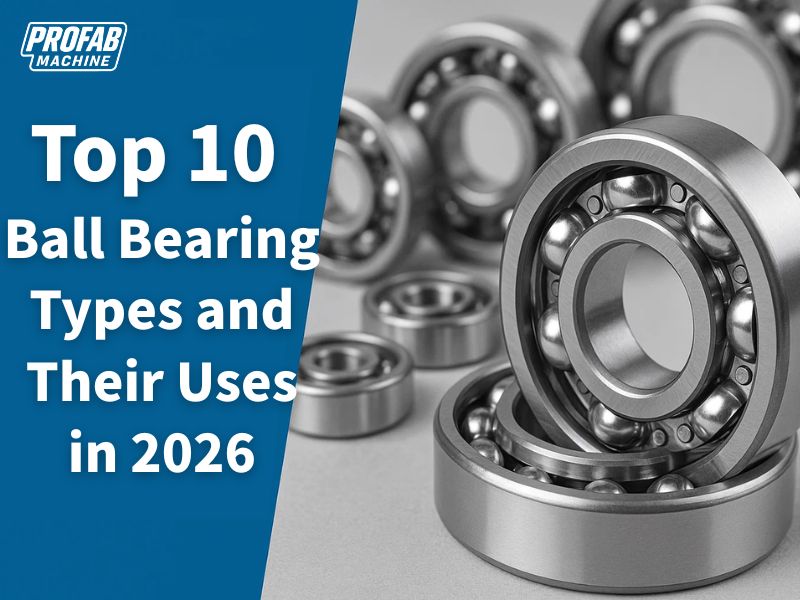
A ball bearing is a type of rolling-element bearing. They use spherical balls to maintain the separation between the two races of a rotating assembly. Its purpose is to reduce rotational friction and support loads. In 2023, the automotive bearing market was $14.76 billion. This shows that strong bearings are very important for cars and machines. The following are the top 10 ball bearing types that Profab Machine predicts will lead the market in 2026.
Table of Contents
Deep Groove Ball Bearing
Deep Groove Ball Bearing is the most common and widely used type of rolling-element bearing. They have deep, uninterrupted raceway grooves. Deep groove ball bearings are primarily designed to carry high radial loads. They are known for being robust, easy to mount, and requiring comparatively low maintenance. Especially when fitted with integral seals or shields.
Due to their versatility, low friction, and low noise capabilities, deep groove ball bearings can be found in electric motors, wheel hubs, drive shafts, gearboxes, and industrial pumps.
Angular Contact Ball Bearings
Angular contact ball bearings have a special angle, usually between 15 and 25 degrees. This angle lets them hold both radial and axial loads at once. These bearings have a raised shoulder on the outer ring. This part helps keep the balls in place. It also lets the bearing spin faster. The cage, ring, and ball materials make the bearing strong and tough.
You will find them in automotive, aerospace equipment, industrial robots, and high-speed machine tools.
Self-Aligning Ball Bearings
Self-aligning ball bearings can handle shafts that are not aligned. Their special design lets the inner ring and balls move inside the outer ring. This helps the bearing adjust if the shaft bends or is not set up straight. The bearing still works smoothly even if the shaft is crooked.
You can use them in conveyor systems, gearboxes, spinning machines, and farm equipment.
Thrust Ball Bearings
Thrust ball bearings help with forces that push along the shaft. They have two raceways and a group of balls inside. This design lets them hold strong axial pressure. Some types, like tapered roller thrust bearings, can hold small radial loads too.
In aerospace, thrust ball bearings help engines and controls work safely. In cars, clutch systems use them. Heavy machinery needs them to hold large loads while working. Wind turbines use thrust ball bearings to keep blades spinning smoothly.
Four-Point Contact Ball Bearings
These bearings touch the raceway at four spots. They let them hold both radial and axial loads. You can use these bearings for forces from different directions. They are good when the space is small or the weight must be low.
You can often see four-point contact ball bearings in gearboxes、compressors、pumps、slewing and positioning systems.
Miniature Ball Bearings
Miniature ball bearings are very small and made with care. The ID is between 1mm-10mm. OD is usually less than 30mm. These bearings are designed for high precision, low frictional torque, low vibration, and low noise.
Miniature ball bearings are used in applications that require high precision, high speed, and low friction. Like RC models、drones、medical devices and robotics components.
Stainless Steel Ball Bearings
Stainless steel ball bearings are a crucial material alternative to both standard chrome steel and ceramic bearings. They may not achieve the extreme speeds or minimal friction of all-ceramic bearings. But their primary strength lies in their outstanding resistance to corrosion and harsh operating environments.
Stainless steel ball bearings are indispensable in pumps, mixers, packaging machinery, surgical instruments, outboard motors, and offshore equipment.
Ceramic Ball Bearings
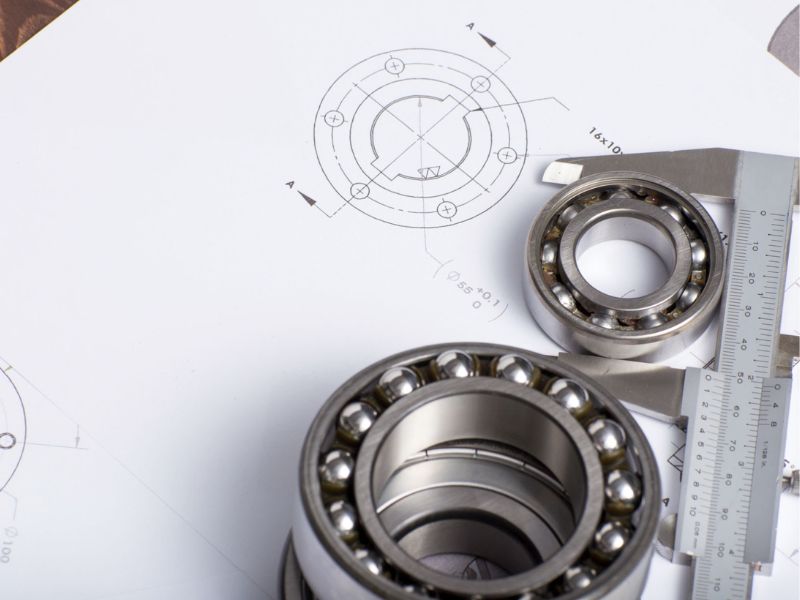
Ceramic ball bearings use materials like silicon nitride or PEEK. The hard surface helps them last longer and lowers friction. Steel ones might break more easily. Ceramic bearings are lighter, so machines can move faster and smoothly.
Ceramic ball bearings are used in many fast and hot machines in 2026. Here are some places where ceramic ball bearings help a lot: machine tool spindles, vacuum pumps, medical equipment, emergency bearings, and aeronautics and aerospace.
Rigid Ball Bearings
Rigid ball bearings help hold shafts and spinning parts steady. This power is called rigidity. There are two kinds: axial rigidity and radial rigidity. It takes more force to move a shaft with high rigidity. The balls and raceways work together to keep things stiff. Rigid ball bearings often use something called preloading. Makers build a small gap between the inner and outer rings. When you put in the bearing, the gap goes away. The balls push into the raceway before any outside force is added. This push is called preloading. Preloading makes the bearing stiffer and gives you better control.
Common applications include robots, CNC machines, and planes, electric motors, and pumps.
Spherical Ball Bearings
A typical spherical ball bearing has two rows of balls and a single, concave spherical raceway in the outer ring. They are designed primarily to carry radial loads and light axial loads. Spherical roller bearings roll by barrel-shaped rollers. Spherical plain bearings roll through a sliding ball-and-socket design.
Spherical ball bearings are chosen for conveyor systems, agricultural machinery, industrial fans and blowers.
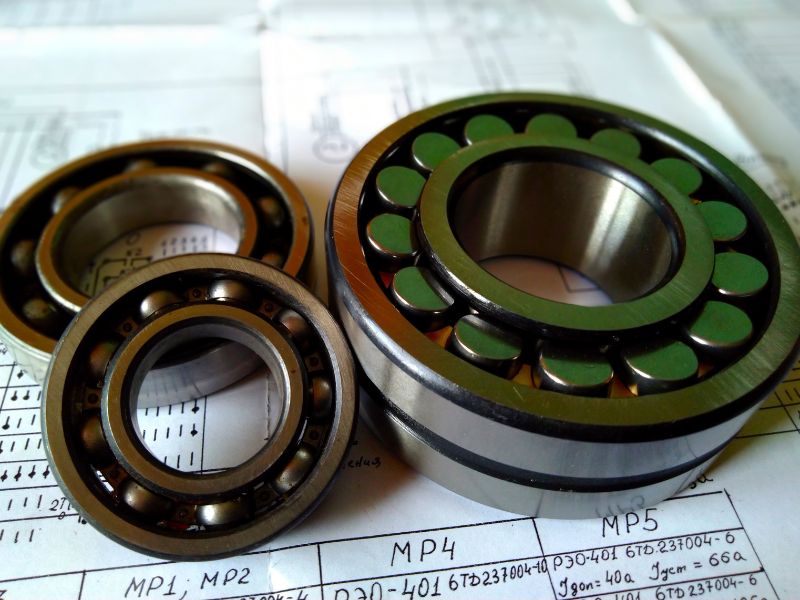
Looking toward 2026, the demand for high-performance bearings is accelerating, driven by global trends. The shift to Electric Vehicles requires high-speed, low-friction, and electrically insulated bearings for motors. The rise of robotics, drones, and medical micro-devices demands ultra-precise Miniature bearings capable of reliable operation in complex, space-constrained assemblies. The integration of IoT and sensors is creating “smart bearings”. These bearings provide real-time data on vibration and temperature, transitioning maintenance from reactive to predictive.
In environments such as food processing, marine, chemical, or wash-down applications, bearing failure due to corrosion remains a critical maintenance concern. Profab Machine has been dedicated to the development of stainless steel bearings for many years. We are committed to delivering exceptional durability and reducing downtime for your operations.
FAQ
What is the main difference between deep groove and angular contact ball bearings?
Deep groove ball bearings can hold both radial and axial loads. Angular contact ball bearings work better with fast speeds and heavy axial loads. This is because they have a special contact angle.
Why do ceramic ball bearings last longer?
Ceramic ball bearings do not wear out or rust easily. Their hard surface results in less friction. This means they last longer and need fewer repairs.
How do you choose the right ball bearing for your project?
Think about the load type, speed, size, and where you will use it.
Send Inquiry Now
Related Resource
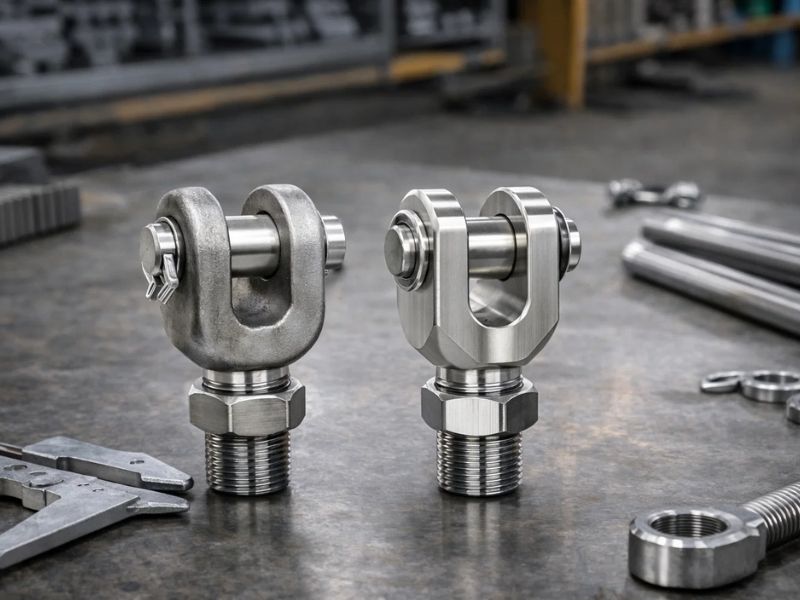
Forged vs. Machined Stainless Clevis Rod Ends
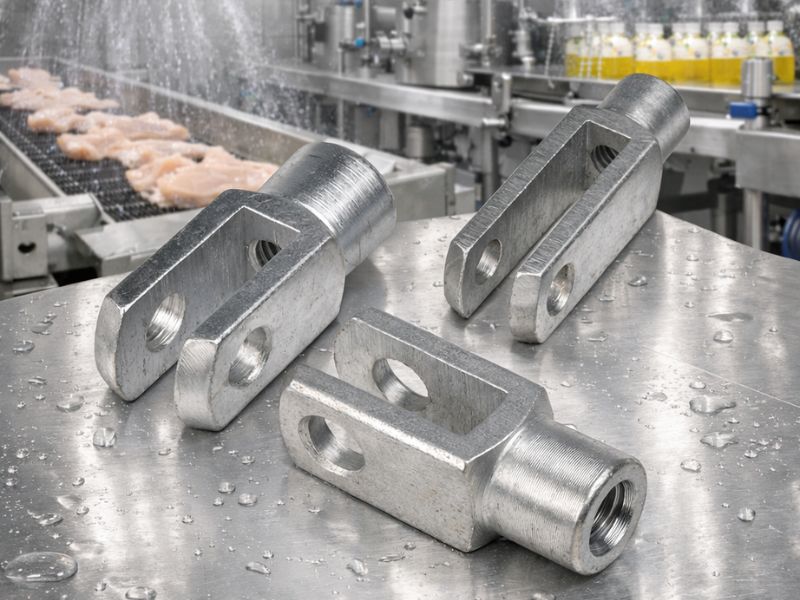
How Stainless Clevis Support Washdown Requirements in Food Processing Lines
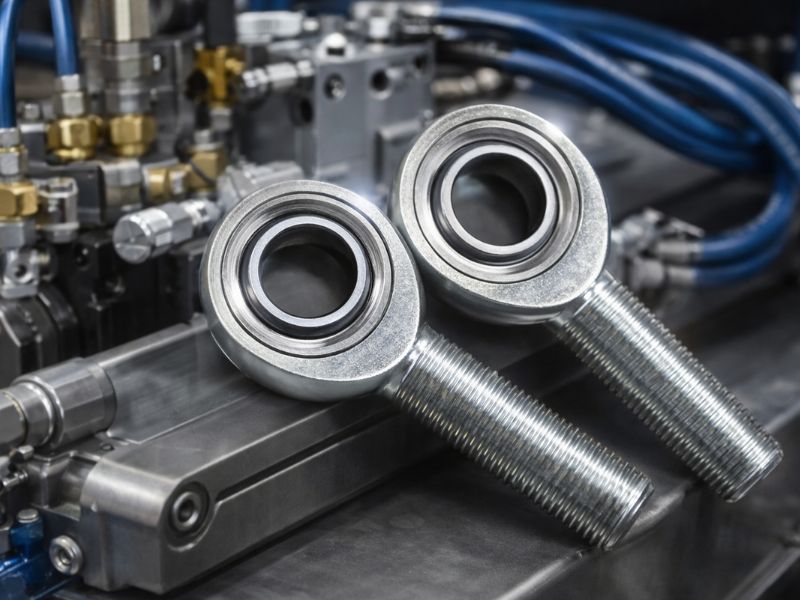
Advantages of Maintenance-Free Rod Ends in Hydraulic Applications