
- By Profab /
- February 24, 2026
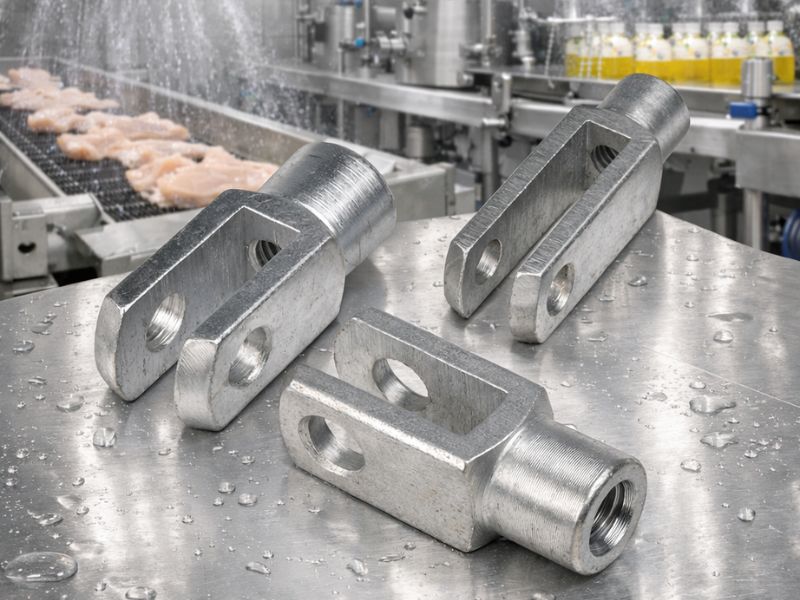
Table of Contents
During a routine USDA inspection at a dairy plant, auditors found bacterial colonies nesting in the clevis rod end connections of hydraulic cylinders. This discovery triggered immediate corrective action and revealed a hidden risk. Traditional zinc-plated carbon steel rod ends had created a “bacterial refuge.” Threaded grooves and seal gaps trapped residues after high-pressure washdowns, providing the perfect environment for microbial growth.
As hygienic design standards for food equipment tighten, these connections are no longer minor details—they are compliance essentials. Stainless Clevis Rod Ends must now balance mechanical strength with strict sanitary requirements. To pass inspection, components must withstand aggressive cleaning chemicals, prevent bacterial harborage, and maintain long-term stability.
Surface Finish: The First Line of Defense Against Bacteria
Food safety regulations focus on a simple goal: give microorganisms nowhere to hide. The 3-A Sanitary Standards require food-contact surfaces to have a roughness value (Ra) no greater than 0.8μm. However, meeting the bare minimum isn’t always enough.
Why Finer Polishing Matters
In high-risk dairy applications, engineers often demand a Ra of 0.4–0.6μm. Testing by cheese manufacturers showed that a 0.8μm surface retains 2.3 times more residue after cleaning than a 0.4μm surface. This difference can change microbial counts by an entire order of magnitude.
Eliminating Bacterial Sanctuaries
Surface defects like cracks, pits, or deep tool marks act as “sanctuaries” that shield bacteria from high-pressure water and sanitizers. Any defect deeper than 0.1mm can harbor colonies that standard cleaning won’t reach. One slaughterhouse resolved recurring microbial issues simply by switching from standard machined parts to electropolished sanitary clevis rod ends.
The Importance of Crevice-Free Design
Traditional joints often feature exposed threads and tight internal angles—classic “dead zones.” Following EHEDG guidelines, modern food-grade designs use minimum 3mm radius corners to ensure cleaning solutions reach every spot. The trend is moving toward monolithic structures and interference fits that eliminate exposed threads entirely.
⚙️ Surface Requirement Levels
General Food Processing: Ra ≤ 0.8μm (Meets 3-A baseline).
Dairy/High-Risk: Ra ≤ 0.6μm (60% lower bacterial attachment risk).
Aseptic/Pharmaceutical: Ra ≤ 0.4μm (Electropolished mirror finish).
Geometry: ≥3mm radius corners to eliminate dead zones.
Surviving the Chemical Stress of CIP Cleaning
Clean-in-Place (CIP) systems sanitize equipment without disassembly using a cycle of alkaline washes, acid washes, and hot water rinses. This means clevis connections must endure temperatures up to 85°C and pH levels ranging from 2 to 13.
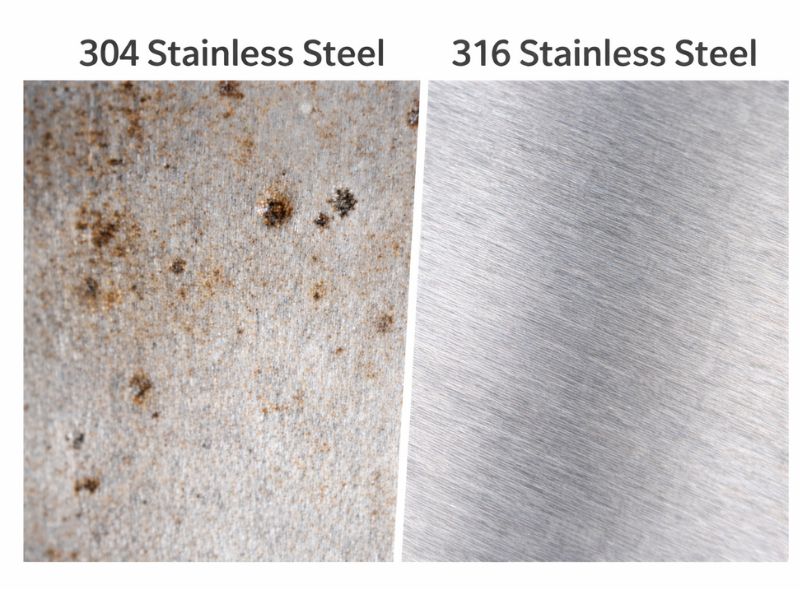
While 304 stainless steel offers basic protection, it often falls victim to pitting in salty or chlorinated environments. Type 316 stainless steel includes 2-3% molybdenum, which significantly boosts its resistance to chloride. In accelerated tests, 304 samples showed pitting after just 120 hours, while 316 samples remained pristine after 1,000 hours.
Enhancing Protection with Passivation
Mechanical processing can leave free iron on the surface, weakening the metal’s natural protective film. Professional passivation—using nitric or citric acid—removes these impurities and creates a dense chromium oxide layer. This step improves corrosion resistance by over 30%, preventing the “brown rust spots” often seen on lower-quality components.
The Shift to New Sanitizers
Many plants are moving away from chlorine-based cleaners in favor of Peracetic Acid (PAA). PAA is highly effective and leaves no residue, but it is a powerful oxidizer. This shift makes the integrity of the passive film even more critical, as any compromise in the surface layer can lead to slow chemical attack.
High-Pressure Washdown and Water Intrusion
Food plants use cleaning forces that would destroy standard industrial parts. The IP69K rating requires components to survive water jets at 1,450 psi and 80°C from a distance of only 10cm. This pressure can easily force moisture into standard seals, leading to internal rust and lubrication failure.
Food-grade designs use a “defense-in-depth” approach:
Outer Lip Seal: Blocks the primary high-pressure spray.
Middle O-Ring: Prevents pressure penetration.
Inner Seal: Keeps the actual bearing surface dry.
A dairy plant report confirmed that triple-stage seals kept internal bearings dry for two years, while single-stage seals failed within six months.
Water that sits on a flat surface is a breeding ground for microbes. Hygienic design requires slopes of at least 3° on all surfaces. Quality washdown-rated rod ends even feature tilted pin through-holes to ensure moisture drains completely within 10 seconds.
Long-Term Stability and Maintenance
Corrosion isn’t just a sanitation issue; it’s a mechanical one. Pitting as shallow as 0.15mm can create stress concentrations that slash the fatigue life of a connection by 75%. While 304 stainless steel might lose significant material over five years, 316 stainless stays within tolerance for over a decade.
The “self-healing” nature of the 316 passive film is the secret to this longevity. If a surface is scratched, the chromium reacts with oxygen to reform the shield within hours. To maximize this, industry experts recommend re-passivating critical parts every 2-3 years, which can double the component’s service life.
Compliance and Selection for Specific Environments
Selecting the right material depends on the food’s acidity and salt content. For low-acid foods like meat and dairy, 316 stainless with standard passivation is usually enough. For high-acid foods like juices or pickles, 316L (low carbon) is recommended to prevent intergranular corrosion.
In North America, 3-A certification is the benchmark, while EHEDG is the standard in Europe. Choosing components that meet these standards isn’t just about safety—it’s about market access. EHEDG-certified parts are often required in the EU because they are proven to clean to “detectable limit” standards.
Beyond the Price Tag: Total Cost of Ownership
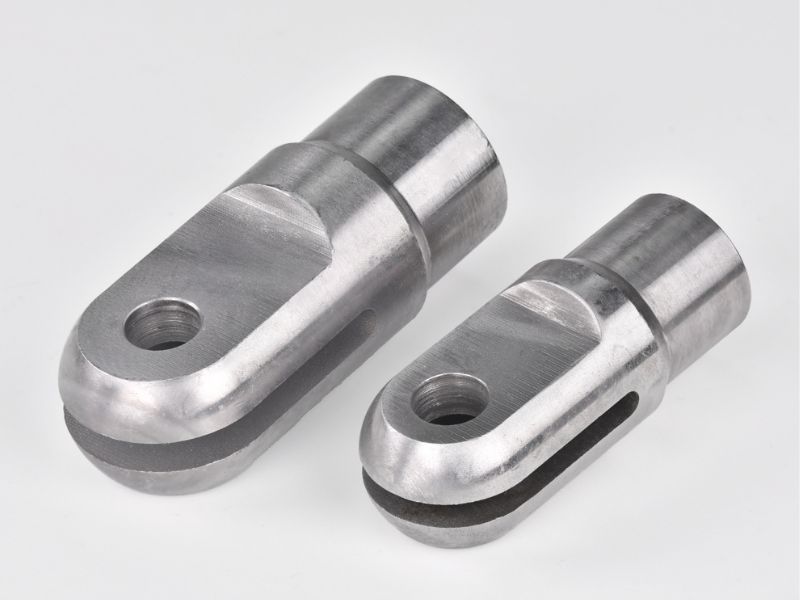
A food-grade 316 stainless rod end can cost 4 to 6 times more than an industrial version. However, looking at the 10-year Total Cost of Ownership (TCO) tells a different story.
When you factor in the cost of three replacements, the labor for those repairs, and the massive downtime losses, the “cheap” industrial part ends up being nearly three times more expensive. In one case, a single leak caused by a corroded rod end led to $30,000 in losses due to deep cleaning and microbial monitoring.
Under FSMA and HACCP, equipment design is a primary focus for auditors. An FDA warning letter regarding “hard-to-clean dead zones” can halt production for weeks. Investing in 3-A and EHEDG-compliant parts is a rational insurance policy against the catastrophic costs of a recall or a forced shutdown.
Choosing the right stainless clevis rod ends is a strategic decision that bridges the gap between mechanical engineering and microbiological safety. By prioritizing superior surface finishes, 316L material stability, and multi-stage sealing, manufacturers can eliminate bacterial refuges before they start. PROFAB MACHINE stands out as a leading manufacturer by delivering high-precision stainless clevis rod ends that exceed 3-A and EHEDG standards, ensuring both mechanical durability and uncompromising food safety compliance.
Send Inquiry Now
Related Resource
How Stainless Clevis Support Washdown Requirements in Food Processing Lines
Load Capacity Considerations For Clevis Rod Ends In Construction Machinery
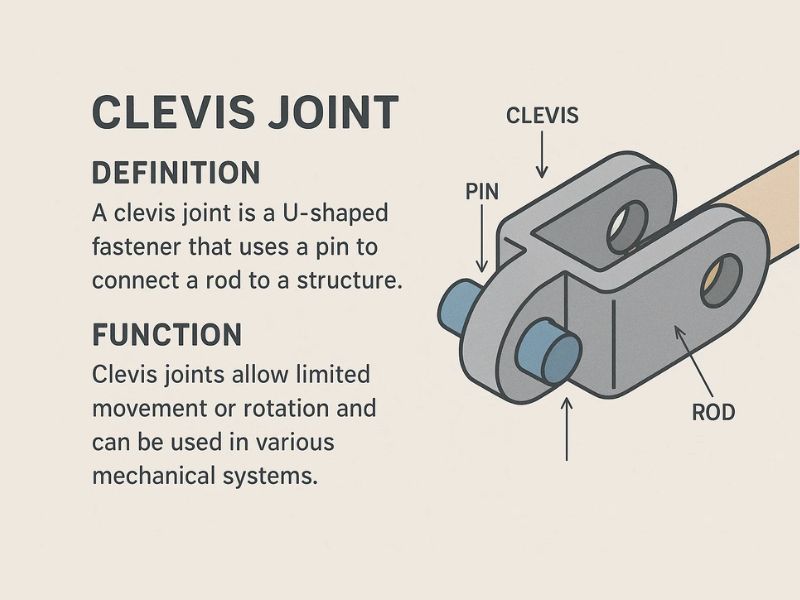
What Is A Clevis Joint And How Does It Work