
- By Profab /
- January 20, 2026
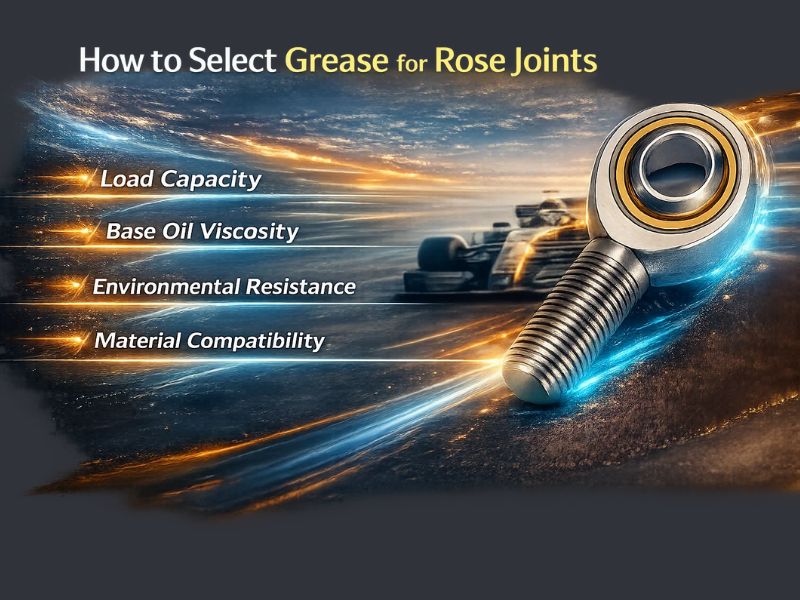
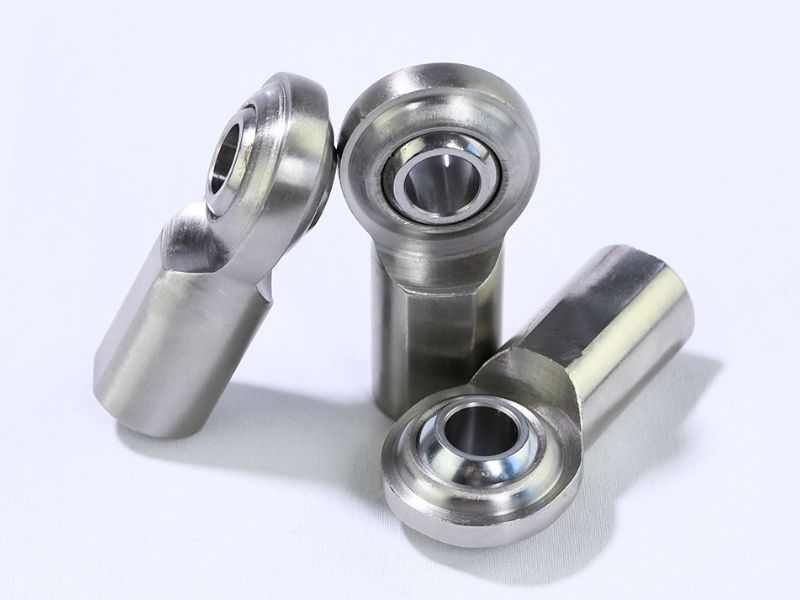
A rose joint, also known as a rod end bearing, is a specialized mechanical joint. It typically consists of a body, race, and ball. The primary functions of a rose joint include multi-angle articulation and load transmission. Structurally, rose joints are mainly divided into two types: metal-on-metal and self-lubricating.
Metal-on-metal rose joints require grease to maintain a lubricating film. Both the inner and outer components are made of steel, providing excellent impact resistance and high-temperature durability. These joints are commonly used in heavy-duty agricultural machinery and high-load motorsport suspension systems.
Self-lubricating rose joints do not require manual lubrication. They feature a PTFE liner embedded in the race, making them suitable for applications demanding high precision, such as aerospace and medical industries.
Table of Contents
Wear Factors and Signs of Rose Joints
Although small, rose joints are often among the first components to fail in a mechanical system. Understanding the factors that cause wear can help reduce failure rates and significantly extend the service life of the entire assembly.
- Contamination: Because the spherical surface is exposed, dust and debris entering the race act as abrasives. In PTFE-lined joints, hard particles can puncture the liner, causing permanent damage.
- Shock Loading: Frequent metal-to-metal impacts can create micro-indentations on the ball surface, compromising its roundness.
- Environmental Corrosion: Road salts, moisture, and chemical cleaners can corrode surface coatings, leading to pitting. Rusted surfaces become rough like sandpaper and quickly wear down mating components.
- Lubrication Dry-Out & Thermal Degradation: In metal-on-metal joints, this leads to adhesive wear (galling). High temperatures or pressures can cause the grease to separate or evaporate, resulting in molecular-level tearing between the inner and outer metal surfaces.
Detecting early failure can allow replacement before issues escalate, preventing accidents.
- Play / Slop: The most direct indicator. Manually move the linkage—if even 0.5 mm of “clicking” is felt, the internal ball surface or liner is worn. In steering systems, this manifests as “loose steering.”
- Audible Cues: Dry rose joints produce squeaks or metallic scraping noises during oscillation. Clicking or knocking sounds over bumpy terrain often indicate ball head damage.
- Binding / Stiction: If joint rotation becomes stiff or uneven, severe electrochemical corrosion or embedded debris may already be present inside.
The Importance of Grease
Unlike standard bearings, rose joints operate under high-pressure sliding contact on very small surface areas. The grease in rose joints not only reduces friction but also provides structural protection. High-quality grease forms a durable hydrodynamic film, preventing galling under extreme impact loads. In demanding applications such as motorsport or aerospace, thick grease can seal the entry points of the joint housing, effectively keeping out saltwater and dust.
Additionally, the chemical composition of the grease determines the reliability of rose joints under temperature cycles. When rose joints heat up due to high-speed vibration, the grease maintains its viscosity and does not leak. With extreme pressure additives, even if the liquid oil film is disrupted, the solid lubricants continue to provide boundary lubrication. This prevents stiction and ensures smooth steering or suspension operation.
For any load-bearing joint, regularly applying the correct grease is fundamental to maintaining precise control and reliable performance.
Types of Grease
Different greases can be classified based on their chemical composition and intended operating environment.
1. Molybdenum Disulfide Grease
Moly grease is widely regarded as the gold standard in motorsport and heavy-duty machinery. It contains solid molybdenum disulfide particles that adhere to metal surfaces. Even if the liquid oil is squeezed out under sudden impact loads, the moly particles continue to provide boundary lubrication for the metal surfaces. This prevents galling and ensures smooth movement under high-impact conditions.
2. Lithium Complex Grease
This is the most common “multi-purpose” high-performance grease. It is known for excellent mechanical stability and high drop point. It stays “tacky” and resists thinning out when the joint gets hot. It is highly compatible with most seals and provides a strong protective film for general industrial use. It’s often used in general automotive chassis parts, industrial pivot points, and agricultural equipment.
3. Calcium Sulfonate Grease
For rose joints that are frequently exposed to water, calcium sulfonate greases are often superior to lithium-based greases. Their inherent corrosion resistance makes them less likely to be washed away by heavy rain or muddy conditions. They also perform exceptionally well under extreme pressure without relying on large amounts of chemical additives, making them highly suitable for offshore applications, marine environments, and boat trailers.
4. Synthetic PAO Greases
This type of grease maintains consistent performance across a wide temperature range. It provides low “starting torque,” remaining fluid at extreme cold and stable at high temperatures without breaking down. This ensures that rose joints can move smoothly and immediately, even at sub-zero temperatures. Synthetic PAO grease is well-suited for aerospace components, high-altitude equipment, and precision laboratory machinery.
Factors to Consider When Selecting Grease
Load Capacity
Load capacity usually refers to the Timken OK Load rating. In professional motorsport or heavy industrial applications, it ensures that the grease remains in place when the joint is subjected to impact, preventing metal-to-metal adhesive wear. Rose joints must withstand extremely high pressures on very small contact surfaces, making the use of extreme pressure (EP) additives essential.
Base Oil Viscosity
Higher-viscosity base oils help maintain a thicker protective film. Since rose joints operate under continuous oscillating motion, the grease must exhibit excellent mechanical stability to retain its consistency and lubricating performance.
Environmental Resistance
For rose joints that are frequently exposed to saltwater environments, water washout percentage is another critical factor to consider. If your rose joints operate under such conditions, calcium sulfonate greases are recommended. Their superior corrosion resistance allows them to act as a physical barrier, helping to prevent contaminants from entering the joint.
Material Compatibility
As mentioned above, grease selection is generally required for metal-on-metal rose joints. Applying grease to PTFE-lined rose joints, however, can actually accelerate wear and lead to premature failure. If the joint has rubber dust boots, the grease must be compatible with that specific rubber to prevent the boot from swelling or cracking.
How to Lubricate Properly
Clean the Zerk Fitting
Use a lint-free rag and brake cleaner to wipe the fitting until it is spotless.
Attachment and Pressure Control
Connect your grease gun coupler to the Zerk fitting. Ensure it snaps on tightly to prevent grease from leaking out the sides.
Tips: If the handle becomes extremely hard to pump, the internal channels may be blocked, or the ball may be seized.
The “Purge” Technique
Slowly pump grease into the joint until you see the old, darkened lubricant begin to ooze out from the edges of the ball. This ensures that all moisture and metallic wear particles are flushed out.
Managing Booted Joints
If your Rose joints are fitted with Rubber Dust Boots, be extremely careful. Excessive pressure can blow the boot off the housing or tear the rubber.
Tips: Some boots have a small relief slit. If yours does not, watch the boot carefully and stop as soon as it begins to swell.
Record Keeping
Note the date and the type of grease used. Mixing incompatible grease types can cause the lubricant to “oil separate” and fail.
Signs of Poor Grease Selection
Choosing the wrong lubricant for a Rose joint is often worse than using no grease at all. In high-performance engineering, “grease failure” manifests in specific physical symptoms. Identifying these early can save a vehicle’s suspension or an industrial linkage from total failure.
Jerky and Inconsistent Movement
“Stiction” occurs when the grease lacks sufficient shear stability or the correct additive package. If the grease is too thick or “tacky”, the ball will stick to the race. When enough force is applied to break it free, it will cause a jerky, “notchy” movement.
Tips
In steering systems, this is often felt as “memory steer,” where the car doesn’t naturally return to center. This indicates the lubricant has failed to maintain a consistent hydrodynamic film, forcing the metal surfaces into direct contact during slow, precision movements.
Grease "Bleeding" and Oxidation
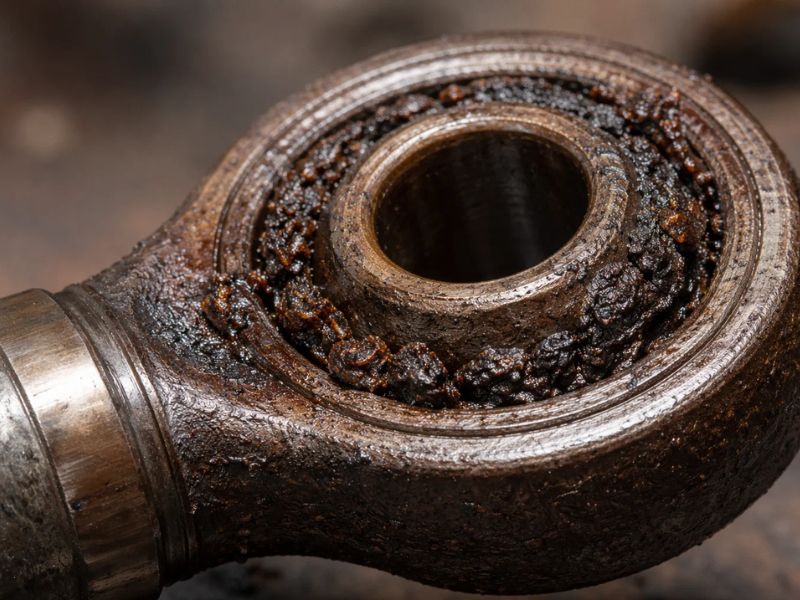
Selecting a grease without properly evaluating the operating temperature of rose joints can easily lead to grease bleeding. This condition is typically observed as dark residue forming around the edges of the ball. In some cases, visible oil separation is also a symptom. When the base oil evaporates under elevated temperatures, the steel ball may exhibit a rainbow-like discoloration, or the grease may harden into a crust. Rather than providing lubrication, this hardened residue acts abrasively, accelerating wear of the spherical bearing surface.
Premature Play
The most severe sign of poor grease selection is the early development of “slop” within the joint. If the grease lacks extreme-pressure additives, it cannot withstand shock loads.
Without the chemical protection of EP additives, there will be a gap between the ball and the housing. In a steering or suspension system, this “premature play” results in vibration and poor alignment. If you can feel the joint “click” when shaking it by hand, the lubrication has already failed to protect the metal interface.
As discussed, selecting the ideal lubricant requires careful consideration of all the factors above. This is not merely a maintenance task; It directly determines the service life and safety of the entire joint system. Profab Machine offers both greaseable rod ends and self-lubricating rod ends. We provide an ideal maintenance-free solution for demanding applications. With years of experience specializing in rod end manufacturing, we support drawing-based customization and a wide range of custom specifications. Our expertise is your assurance.
FAQ
How do we ensure the grease is compatible with different liner materials?
Steel-on-steel joints require extreme pressure additives, while PTFE-lined joints are generally “maintenance-free.” However, in corrosive environments, a chemically neutral synthetic grease is required to protect the housing without degrading the liner. We recommend a standardized synthetic PAO grease to simplify inventory.
Send Inquiry Now
Related Resource

What are Stainless Steel Ball Transfer Units Used For?
How to Select Grease for Rose Joints