

- By Profab /
- November 6, 2025
Table of Contents
What Is a Heim Joint?

A Heim joint, also known as a rod end bearing, is a spherical joint that allows smooth pivoting movement. Its design features a spherical pivot shaft enclosed within a housing with threaded shanks.
This construction enables full rotational movement and articulation. Consequently, Heim joint rod ends are ideal for high-performance or custom suspension systems. You’ll find them in off-road trucks, race cars, steering linkages, control arms, and even industrial machinery—where precise alignment and load support are critical.
What Is a Tie Rod End?
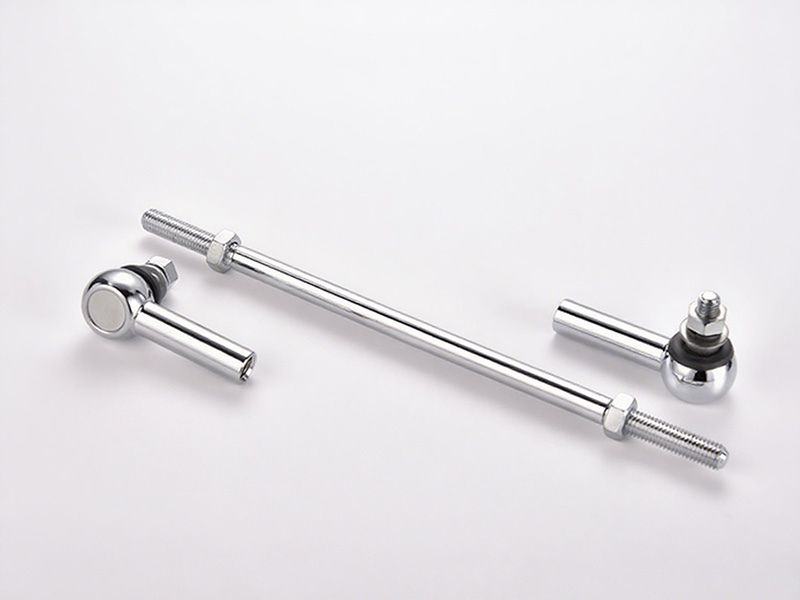
A tie rod end is a ball-and-socket joint that connects the steering rack to the wheel hub or spindle. It transmits steering system motion to the wheels while maintaining smooth handling and alignment. Unlike Heim joints, both ends of the tie rod are sealed with protective rubber boots. These boots retain grease internally while repelling contaminants. This low-maintenance design is ideal for road applications where comfort, noise reduction, and long service life are primary considerations.
Heim Joints vs Tie Rod Ends — Key Differences
Strength and Durability
In terms of raw strength, heim joints usually have the edge. Like stainless steel heim joints are capable of withstanding extreme loads and impacts. They are common in racing and off-road suspension systems. This is because these systems are subjected to tremendous stress and articulation.
Tie rods are suitable for everyday driving. Their closed design and smaller wheelbase limit their performance in high-stress conditions. If your vehicle regularly encounters rough terrain, a well built heim joints rod ends will last longer than a standard tie rod.
Movement and Flexibility
Heim joints are known for their wide range of motion. The spherical bearing enables the suspension or steering system to flex without constraint, even at tight joints. They are therefore suitable for suspension trucks, off-road vehicles, or rock crawlers that require great flexibility.
The sealed ball-and-socket design of the Tie rod ends makes it more restrictive. While this improves road stability, it also limits connectivity.
Maintenance and Lifespan
Heim joints are open-ended, providing greater adjustability and strength. They require regular cleaning and lubrication to prevent corrosion and wear. Dust, sand and moisture can enter the load area if not properly maintained.
Tie rod ends are sealed and offer less flexibility in performance tuning. They usually do not require maintenance. Once worn, replacement is a better option.
Noise, Vibration, and Comfort
Heim joints are metal-to-metal connections. They can transmit more vibration and noise through the chassis. This can lead to a bumpier ride, especially on paved roads.
Tie rods contain rubber or plastic liners that absorb vibrations. This makes for a quieter and smoother ride during normal driving. Tie rod ends offer the best balance between comfort and precision.
Application Comparison
Where Heim Joints Are Superior
When maximum strength and adjustability are required, heim joints are the preferred choice.
- Extreme off-roading and rock crawling: When suspension systems reach their absolute limits, extreme articulation angles can hinder articulation. Heim joint steering better handles the violent lateral impacts of rocky trails.
- Racing (drag, circuit, road racing): The precision construction of heim joints eliminates slack or “play.” This steering system delivers instant feedback and precise wheel positioning. Threaded bodies enable fine-tuning of suspension geometry.
- Custom Fabrication: The threaded design of the heim joint rod ends is exceptionally straightforward. This makes them ideal for custom linkages such as four-link suspensions or adjustable control arms.
Where Tie Rod Ends Are Superior
For any vehicle primarily driven on public roads, tie rods are the optimal choice.
- Daily Driving: Sealed design of tie rods can prevents exposure to water, road salt, and dirt. These are the primary causes of joint failure. Stainless tie rods offer low maintenance and corrosion resistance, making them an excellent choice.
- Passenger Comfort: Internal polymer or nylon liners provide cushioning. This absorbs road vibrations and shocks, creating a quieter, more comfortable ride.
- Safety and Compliance: Tie rod failure typically involves joint loosening before separation. This failure mode is generally considered safer for street use.
Whether you need stainless steel Heim joints or custom tie rods, Profab Machine delivers professional-grade solutions tailored to your requirements. With over two decades of stainless steel fabrication expertise, we’ve provided customized solutions for diverse industries, including automotive enthusiasts, original equipment manufacturers, and marine hardware suppliers.
FAQ
Which lasts longer: Heim joints or tie rod ends?
In standard road use, tie rods can last longer. In an extreme, high-articulation, off-road racing environment, heim joints wins.
Are stainless steel Heim joints better than carbon steel ones?
Yes, stainless steel heim joints offer superior corrosion resistance. They are ideal for marine, outdoor, or food-grade environments.
Send Inquiry Now
Related Resource