Most ball joint inspection advice boils down to the same checklist: look for rust, feel for play, listen for clunking. That checklist was written around standard steel ball joints, and it works well for them, because steel gives you a warning. Rust on the stud and housing, or a torn boot, often shows up before the joint wears loose. A stainless ball joint doesn't rust the same way, which means the early-warning sign the standard checklist relies on simply isn't there — and that changes what you should actually be checking for.
Why Steel Ball Joints Warn You Before They Fail
A standard steel ball joint corrodes visibly. Once the grease boot starts to crack or the plating wears through, exposed steel rusts, and that rust is easy to spot on a routine inspection — a strong hint that the joint's remaining service life is short even before play develops in the stud. That visible warning is baked into most DIY inspection guides, because it's genuinely useful information on the material most trucks and UTVs ship with from the factory.
Why Stainless Doesn't Give You the Same Warning
Stainless resists exactly the kind of surface corrosion that makes a failing steel joint visually obvious, thanks to the self-healing chromium oxide layer on its surface. A 304 or 316 stainless ball joint can look cleaner than a steel one at the same stage of wear, because the failure mode isn't the same. Stainless can be prone to crevice corrosion — localized attack that starts in a tight, low-oxygen gap, like the interface under a grease boot seal where road salt or moisture gets trapped and can't fully dry out or flush away. That kind of corrosion happens where you can't see it from a routine visual check, and it often produces little heavy surface rust, although brown staining around the boot edge can be an early sign.
This is why a straight visual inspection — the first step in most generic ball joint checklists — is less reliable on a stainless joint than on a steel one. The joint can look fine externally while corrosion is progressing under the boot.
What Actually Signals Wear on a Stainless Joint
Mechanical play still matters, and the basic check is the same regardless of material: with the vehicle safely supported on stands and the wheel off the ground, grab the tire at the top and bottom and rock it. Play here can come from the wheel bearing or the ball joint, so watch the joint itself, or pry up and down under the tire while watching the stud, to tell them apart. For a load-carrying joint, support the vehicle as the service manual specifies. Clunking over bumps and uneven tire wear are still real symptoms worth chasing down on any ball joint, stainless or not.
What's different on a stainless joint is where the extra attention needs to go. Look closely at the boot seal edge and the housing around it for pitting, brown staining or discoloration, rather than relying on the boot's outer surface looking intact. Do not pull the boot back or force it open, because that can break the seal. If the boot has any crack or tear, treat that joint as a corrosion risk even if there's no play yet. Corrosion under the boot can start before any visible rust shows. In marine, coastal, or heavy road-salt environments, that boot integrity check matters more on a stainless joint than the rust-spotting step that dominates standard inspection advice.
Why Upgrade to Stainless At All, Given This Tradeoff
The tradeoff is worth it in the environments that actually corrode standard joints fast — coastal roads, marine use, heavy winter salt exposure, anywhere a steel joint's factory plating gets compromised early and corrosion sets in well before the mechanical wear otherwise would. Stainless greatly reduces that failure mode on the parts of the joint exposed to the environment; it just shifts the remaining risk to the sealed interface under the boot, which is a smaller, more manageable inspection target than an entire joint surface that's actively rusting.
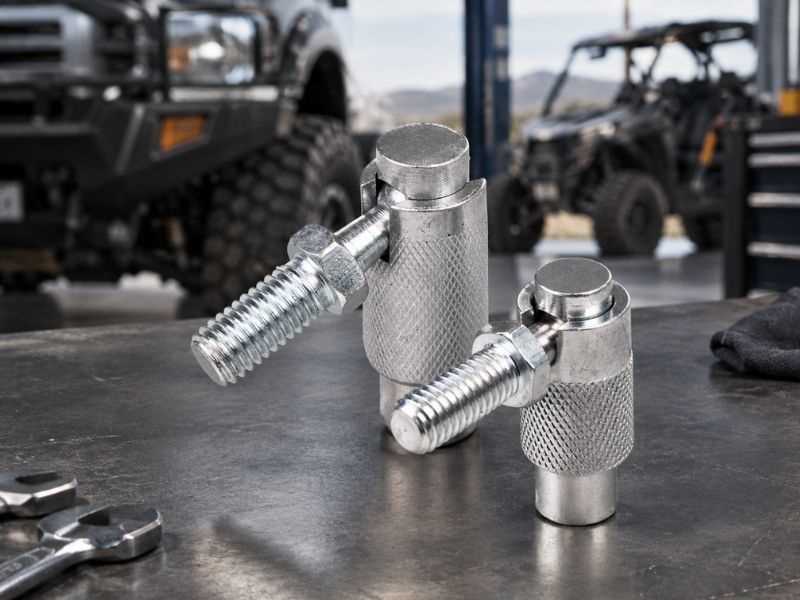
Profab Machine manufactures stainless steel ball joints in 304 and 316 for trucks, UTVs, and off-road applications where standard steel joints don't hold up to salt or marine exposure. If you're specifying replacement joints for a corrosive-environment application, send the application details for material grade guidance before you order.